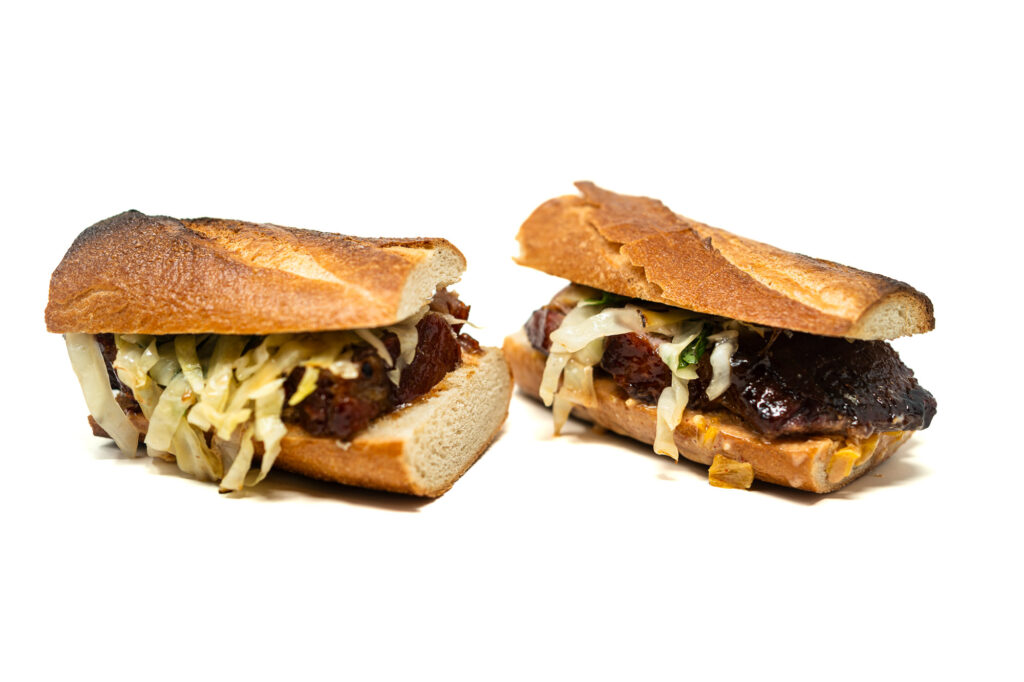
Pork belly requires patience to become something grand. In this baguette sandwich, the goal is to break down the dense network of fat and muscle until it offers no resistance, then build a contrasting structure of sharp, bright, and charred elements around it. The rich meat needs a sturdy foundation. A fresh French baguette provides the necessary exterior tension and an open crumb to absorb the seasoned mayonnaise.
Curing and Slow Roasting the Pork Belly
The process begins hours before the meat sees the oven. A heavy application of salt and brown sugar sits on the surface of the pork belly. Over several hours in the refrigerator, this dry cure penetrates the muscle. The salt moves inward, seasoning the interior of the thick cut, while the surface slowly dries out. A dry surface browns more evenly and rapidly once exposed to high heat.
When the pork belly enters a lowly heated oven, time does the work. At 275 degrees Fahrenheit, the dense connective tissue begins to soften. The fat slowly renders, basting the meat as it breaks down over two and a half hours. The meat must stay in the oven until a probe or knife slides through the thickest section with zero resistance. Once tender, the temperature is increased drastically. A glaze of apple butter and agave nectar is brushed over the hot surface. The sugars in the apple butter caramelize rapidly in the intense heat, forming a sticky, darkened crust that seals the exterior of the pork.
Building the Vidalia Onion Relish and Umami Sauce
A sandwich carrying this much fat requires acid and sharpness to remain balanced. The Vidalia onion relish provides both. Diced onions sweat in melted butter over medium heat. The goal is to evaporate their internal moisture until they turn translucent and soft. They should not take on color. Once they collapse, apple cider vinegar, brown sugar, mustard seeds, turmeric, sweet paprika, and celery seeds are stirred into the pan. As the vinegar reduces, the mixture thickens into a jammy consistency. The sharp bite of the vinegar mellows, leaving behind a concentrated sweet and sour base.
Once the relish cools, it is folded into mayonnaise along with fish sauce and soy sauce. The mayonnaise provides a rich fat to carry the flavors, while the fish sauce adds a deeply savory anchor that bridges the gap between the sweet glaze on the pork and the acidity of the relish.
Charring the Cabbage
Raw cabbage brings crunch, but charred cabbage brings depth. A dry skillet is brought to smoking heat before a small amount of avocado oil is added. The finely sliced cabbage drops into the pan and sits undisturbed. This direct contact with high heat blisters the edges, developing a bitter char that cuts through the sweetness of the apple butter glaze. Before the cabbage can soften completely, it is pulled from the heat and tossed with rice vinegar and salt. The residual heat in the pan flashes off the harshness of the vinegar, leaving a quick pickled slaw that retains its crunch while acting as an acidic reset for the palate.
Assembling the Sandwich
Construction matters as much as the cooking. The baguette is split horizontally. A generous layer of the Vidalia umami sauce coats the bottom half, creating a barrier that protects the bread while seasoning every bite. The thick slices of glazed pork belly are laid over the sauce. Finally, a heavy handful of the charred cabbage sits on top of the meat. The bread holds the structure together, forcing the crisp cabbage, sticky pork, and savory mayonnaise into a single, cohesive profile.
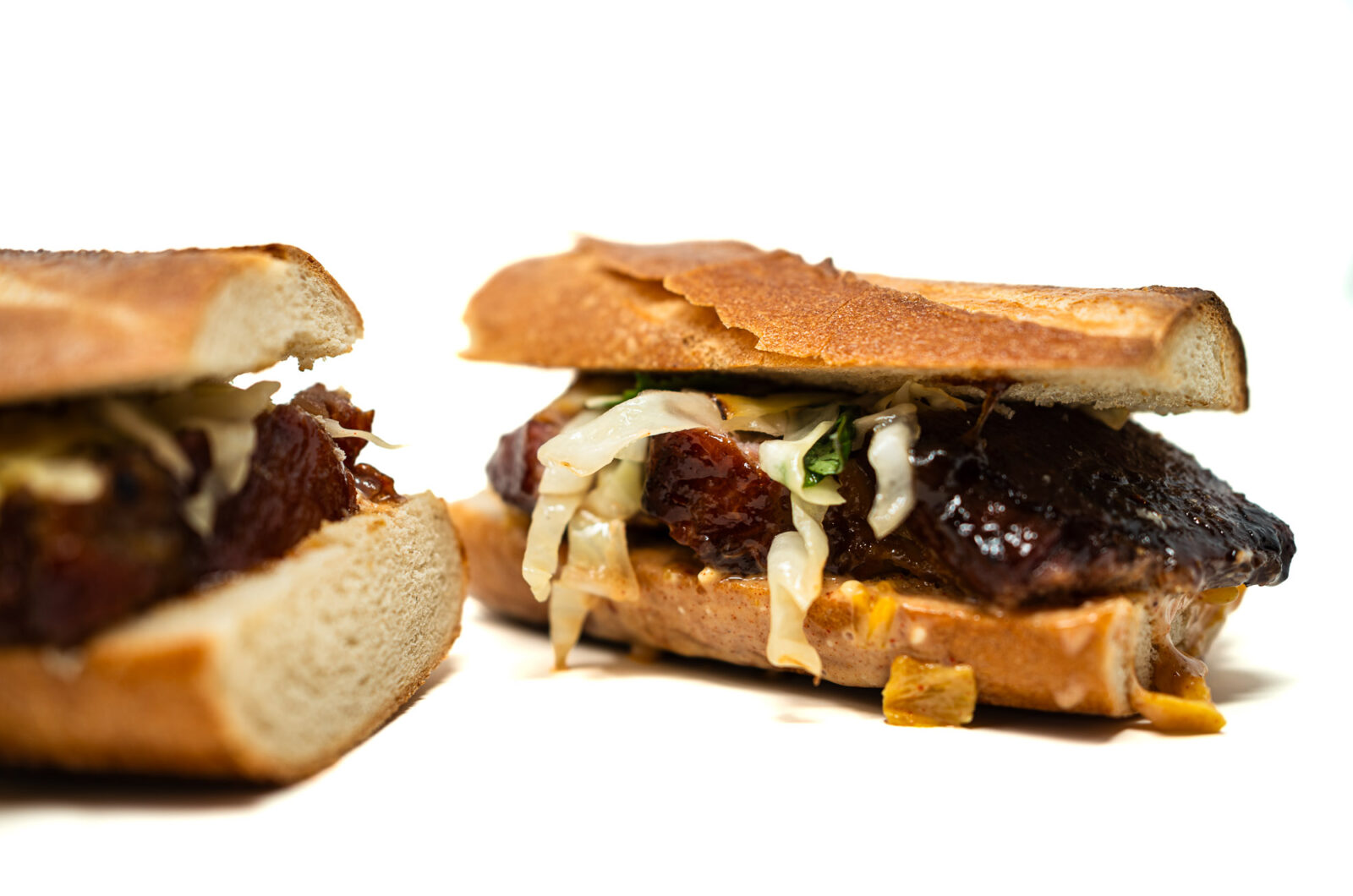
Apple Butter Glazed Pork Belly Baguette with Charred Cabbage
4
servings4
hours3
hours7
hoursThick slabs of slow-roasted pork belly are glazed with apple butter and agave before being layered onto a crisp baguette. The rich meat is cut by a quick-charred cabbage slaw and a sharp, fish sauce-spiked Vidalia onion relish.
Keeps the screen of your device on while you cook
Ingredients
- For the Pork Belly:
1 pound pork belly
1/4 cup salt
1/4 cup brown sugar
3 tablespoons apple butter
2 tablespoons agave nectar
- For the Cabbage:
1 head cabbage, finely sliced
1 tablespoon avocado oil
2 tablesponos rice vinegar
pinch of salt
- For the Vidalia Umami Sauce:
1/4 cup mayonnaise
1/4 tablespoons Vidalia onion relish
1 teaspoon fish sauce
1 teaspoon soy sauce
- For the Vidalia Onion Relish:
3 large Vidalia onions, diced
1/2 cup apple cider vinegar
1/4 cup brown sugar
1 teaspoon mustard seeds
1/2 teaspoon ground turmeric
1/2 teaspoon sweet paprika
1/2 teaspoon celery seeds
1/2 teaspoon salt
1/2 teaspoon ground black pepper
1 tablespoon unsalted butter
- For Serving:
1 French baguette, sliced into sandwich lengths
Directions
- Dry-Brine the Pork:
- Generously season the pork belly with salt and brown sugar on all sides. Leave it uncovered in the refrigerator for at least 4 hours, ideally overnight, to deeply season the meat.
- Make the Relish:
- Melt the unsalted butter in a saucepan over medium heat. Add the diced Vidalia onions and cook until very soft and translucent, 10 to 15 minutes. Stir in the apple cider vinegar, brown sugar, mustard seeds, ground turmeric, sweet paprika, celery seeds, salt, and black pepper. Reduce the heat and simmer until the liquid evaporates and the onions take on a jammy consistency. Let cool.
- Roast the Pork:
- Preheat the oven to 275°F (135°C). Place the pork belly in a roasting pan and slow-roast for 2 to 2.5 hours, or until completely tender and the fat has rendered.
- Whisk together the apple butter and agave nectar. Turn the oven heat up to 425°F (220°C). Brush the glaze over the pork belly and roast for another 10 to 15 minutes, until the glaze bubbles and caramelizes. Remove and let rest before slicing.
- Mix the Umami Sauce:
- Combine the mayonnaise, your cooled Vidalia onion relish, fish sauce, and soy sauce. Stir until integrated.
- Char the Cabbage:
- Heat a dry skillet over high heat. Add in the sliced cabbage. Let it sit undisturbed for 2 to 3 minutes to develop a hard char, then toss. Add the avocado oil and cook for 2 to 3 minutes more. Remove from heat, immediately add rice vinegar and a pinch of salt, and toss to coat. Let it cool.
- Assemble and Serve:
- Slice the baguette lengths open. Spread a generous layer of the Vidalia umami sauce on the bottom bun. Layer the sliced, glazed pork belly on top, and finish with a heavy handful of the cooled, charred cabbage.
Did you make this recipe?
Tag @hecooksco on Instagram
Like this recipe?
Follow @hecooksco on Pinterest
Frequently Asked Questions
Why dry brine the pork belly overnight?
Applying salt and brown sugar ahead of time allows the seasoning to penetrate deeply into the thick muscle. The extended time uncovered in the refrigerator also dries out the surface of the meat, which helps develop a better crust when it is glazed and roasted at a high temperature later.
Why cook the pork belly at a low temperature before glazing?
Pork belly contains dense fat and tough connective tissue. Cooking it at 275 degrees Fahrenheit allows the fat to slowly render and the collagen to break down into gelatin without drying out the muscle fibers. Once the interior is entirely tender, the high heat is used strictly to set the apple butter glaze.
What is the purpose of charring the cabbage before adding vinegar?
Blistering the cabbage in a smoking hot pan with avocado oil introduces a bitter, smoky flavor profile that contrasts with the sweet apple butter pork belly baguette. Adding the rice vinegar immediately off the heat slightly softens the cabbage while preserving its crunch, acting as a quick pickle.
Why sweat the onions for the relish instead of browning them?
Sweating the Vidalia onions in butter over medium heat releases their internal moisture and softens their structure without caramelizing their sugars. This gentle cooking method allows them to absorb the apple cider vinegar and spices fully, resulting in a cohesive, jammy relish rather than a deeply roasted onion flavor.
Why add fish sauce to the mayonnaise?
The pork belly relies on sweet components like apple butter and agave. Fish sauce introduces a concentrated source of savory glutamates. When mixed into the mayonnaise with the sweet onion relish, it balances the overall profile of the sandwich by providing a heavy savory anchor.