Building the Blackened Tuna Tataki
Ahi requires cold temperatures and clean cuts to maintain its dense texture. Applying a heavy blackening spice introduces a bitter, earthy contrast to the raw muscle. The rub relies on smoked paprika, cayenne pepper, dried thyme, dried oregano, salt, and ground black pepper. To set this crust without cooking the interior, the pan needs high heat and a very thin layer of avocado oil. Avocado oil holds up to the intense heat without smoking out the kitchen.
When dropping the ahi into the cast iron, the oil should be shimmering and smoking just slightly. The paprika and cayenne in the rub will darken instantly. If the heat is too low, the fish sits in the pan too long, and the muscle fibers begin to turn gray and flake. You want a violent, rapid sear. Press the block down firmly so the spices make full contact with the metal. As soon as the edge toasts, flip it. The fish spends seconds on the cast iron. You are toasting the spices, not cooking the protein.
The transition from the hot pan to the ice bath is the most critical step. Sealing the hot tuna in a plastic bag and submerging it in ice water drops the surface temperature rapidly. This stops any residual heat from pushing into the center, leaving a sharp line between the dark crust and the ruby flesh. The plastic acts as a barrier, preventing the ice water from washing away the toasted spices or waterlogging the exterior of the fish.
Structuring the Green Curry Aguachile
Aguachile relies on the aggressive bite of raw jalapeno and fresh lime juice. Adding Thai green curry paste and fish sauce deepens the profile, grounding the sharp acidity with aromatics and salt. Blending peeled cucumber, fresh cilantro, and mint leaves into the liquid provides volume and a cooling, herbaceous vegetable note. The mint lifts the entire profile, preventing the heavy green curry paste from dominating the bowl.
In the blender, the mixture transforms from chunky vegetables into a bright green suspension. The friction of the blades will generate heat, so it is important to work quickly. Passing the liquid through a fine sieve removes the fibrous pulp from the cucumber, mint, and cilantro stems. This leaves a thin, potent broth that pools easily in the bowl. The liquid must go straight into the refrigerator. If the aguachile warms up, the acid becomes flat and the heat from the jalapeno spikes out of balance.
Controlling the Raspberry Fluid Gel
To cut through the heavy spice and sharp broth, the dish relies on a raspberry fluid gel. Fruit purees naturally bleed water on a plate. By hydrating agar agar powder in the boiling liquid of raspberries, water, sugar, lemon juice, and salt, you force the moisture into a rigid structure. The addition of lemon juice and salt brightens the fruit, sharpening the tartness against the sugar. The liquid requires precision on the stove. Agar agar must boil aggressively to hydrate. If the liquid merely simmers, the gel will not set completely.
Once it cools and firms up in a shallow container, it forms a hard block. The mechanical force of the blender shears that solid mass. As it blends, the structure breaks and looks clumpy before it finally catches, turning into a smooth, glossy puree. You know it is ready when it holds a clean peak. It provides concentrated tartness without watering down the aguachile.
Plating the Cold Elements
Assembling the dish requires speed and cold plates. Pour a shallow pool of the aguachile down first. The thick slices of blackened tuna tataki sit directly in the acidic broth. Transferring the fluid gel to a squeeze bottle gives you control to pipe dots directly around the fish. Finishing the plate with fried shallots adds a necessary brittle texture against the soft fish and liquid base. A final pinch of ground black pepper applied directly to the tuna reinforces the crust right before the plate leaves the kitchen.
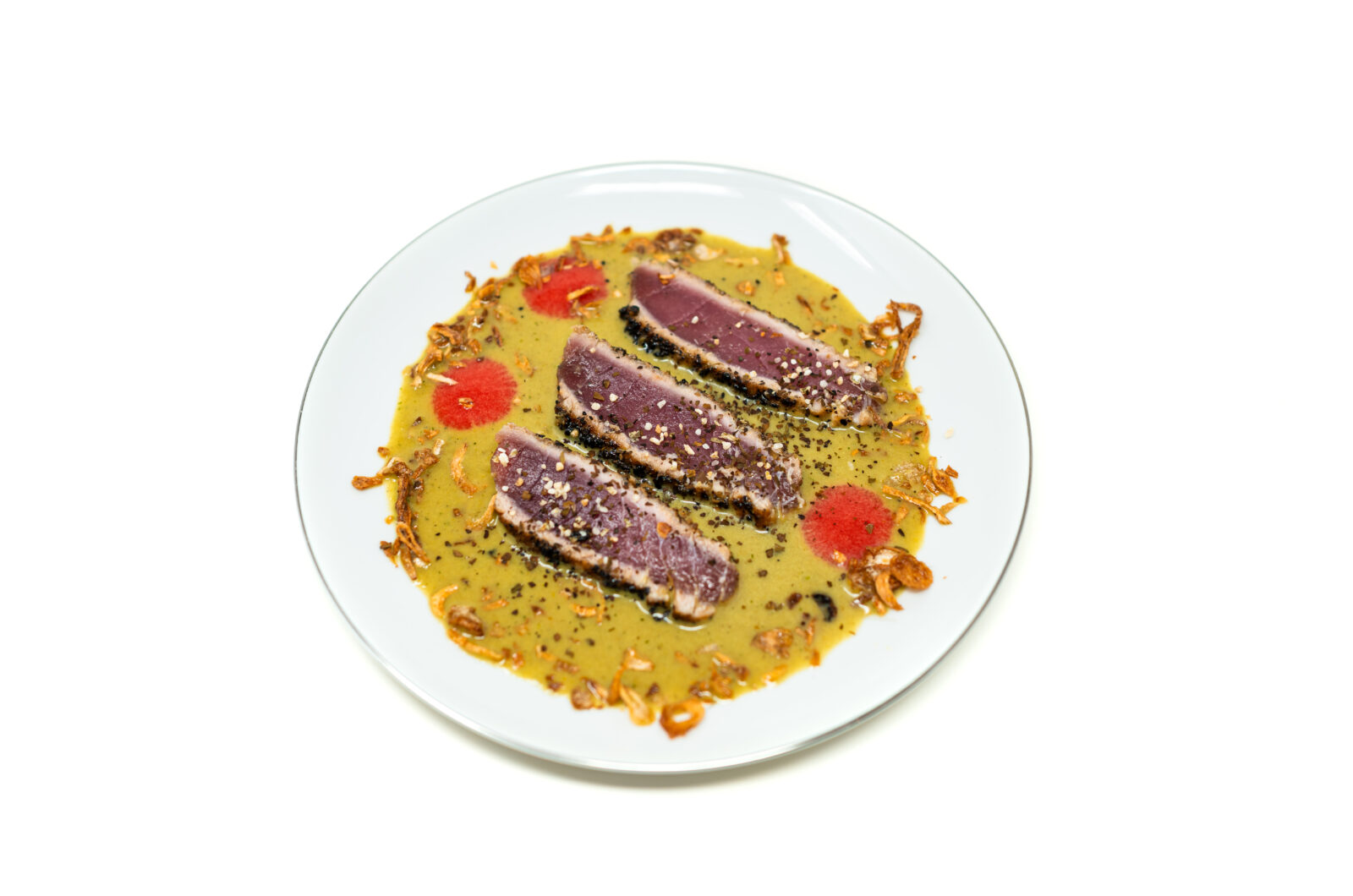
Blackened Tuna Tataki and Green Curry Aguachile
4
servings35
minutes20
minutes55
minutesThick cuts of ahi tuna receive a rapid, high-heat spice sear in avocado oil before being shocked cold and sliced raw. The dense fish is plated over an acidic green curry and mint broth, anchored by the firm structure of a stabilized raspberry fluid gel.
Keeps the screen of your device on while you cook
Ingredients
- For the Tuna:
12-14 ounces 340 g ahi tuna
1 teaspoon 1 teaspoon smoked paprika
1 teaspoon 1 teaspoon ground black pepper
1/4 teaspoon 1/4 teaspoon cayenne pepper
1/2 teaspoon 1/2 teaspoon dried thyme
1/2 teaspoon 1/2 teaspoon dried oregano
1/2 teaspoon 1/2 teaspoon salt
1-2 tablespoons 1-2 tablespoons avocado oil
- For the Green Curry Aguachile:
1 large 1 large cucumber, peeled
1 1 jalapeno pepper, stem removed
1 handful 1 handful cilantro
3 3 limes, juiced
1 small handful 1 small handful mint leaves
1 tablespoon 1 tablespoon green curry paste
1 teaspoon 1 teaspoon fish sauce
- For the Raspberry Fluid Gel:
1 cup 120 g raspberries
2 tablespoons 2 tablespoons sugar
1/4 cup 60 ml water
1/2 teaspoon 1/2 teaspoon agar agar powder
1 teaspoon 1 teaspoon lemon juice
pinch of pinch of salt
- For Garnish:
fried shallots
ground black pepper
Directions
- Prepare the Fluid Gel:
- Blend the raspberries, water, and sugar until completely smooth, then pass through a fine-mesh sieve to remove all seeds. Transfer the smooth liquid to a small saucepan, whisk in the agar-agar, and bring it to a rolling boil for exactly one minute to activate the hydrocolloid. Pour the liquid into a shallow container and chill in the fridge until completely set into a firm, rubbery puck. Once set, transfer the solid gel to a blender and blitz aggressively until it shears into a perfectly smooth, pipeable purée. Transfer to a squeeze bottle.
- Blend the Aguachile:
- Roughly chop the cucumber, chili, mint, and cilantro. Drop them into a blender with the lime juice, green curry paste, and fish sauce. Blitz on high until it forms a vibrant, deeply green liquid. Pass it through a fine sieve so you are left with a potent, intensely flavored broth. Keep this ice-cold until the exact moment of plating.
- Black and Sear the Tuna:
- Generously coat the tuna block on all sides with the spices, pressing firmly into the flesh so it adheres. Heat a cast-iron skillet with a thin layer of neutral oil until it is as hot as it can possibly get. Sear the tuna rapidly—no more than 30 seconds per side—just long enough to toast the spices and form a crust.
- To halt the cooking process without washing off your crust or waterlogging the fish, immediately seal the hot tuna in a plastic bag, press out the air, and plunge it into the ice bath for 10 minutes. Once cold, slice into thick, uniform medallions.
- Garnish and Serve:
- Pour a shallow, ice-cold pool of the green curry aguachile directly into the center of a wide bowl. Shingle the chilled blackened tuna slices slightly off-center in the broth. Pipe precise dots of the raspberry fluid gel around the fish and directly into the aguachile. Finish by scattering the crispy fried shallots and a heavy pinch of the black pepper and garlic rock salt directly over the tuna to ensure the crust remains highly textured.
Notes
- Fluid Gels and Agar-Agar: Agar-agar is a highly stable hydrocolloid (a structural agent that traps water) that must be aggressively boiled to activate; once it sets into a firm, heat-resistant puck, violently blending it shears the rigid matrix into a silky, fluid gel that pipes perfectly, holds a razor-sharp edge, and will never bleed water into your plate.
Did you make this recipe?
Tag @hecooksco on Instagram
Like this recipe?
Follow @hecooksco on Pinterest
Frequently Asked Questions
Why wrap the blackened tuna tataki before chilling it in the ice bath?
Direct contact with ice water will wash off the toasted spices and waterlog the exterior of the fish. Wrapping it creates a barrier that halts the cooking process rapidly while keeping the crust dry and intact.
Why use avocado oil to sear the ahi tuna?
Avocado oil has a very high smoke point, allowing the cast iron skillet to reach the extreme heat necessary to toast the dry spices quickly without burning the oil or leaving a bitter residue on the fish.
Why add mint leaves to the green curry aguachile?
The heavy aromatics of the green curry paste can easily overpower the raw fish. Blending fresh mint leaves into the broth lifts the profile and provides a cooling, herbaceous contrast to the sharp heat of the jalapeno.
What causes the raspberry fluid gel to hold its shape on the plate?
Blending the solid agar block shears the rigid structure into a thick, smooth puree. Unlike a standard fruit reduction, this sheared gel traps all the water, preventing it from bleeding into the surrounding broth.
Why strain the aguachile after blending the vegetables?
The blender leaves behind fibrous pulp from the cucumber, jalapeno, and herb stems. Passing the liquid through a fine sieve removes this rough texture, leaving a clean, potent broth that pools smoothly in the bowl.