The kitchen smells of rendered chicken fat, ginger, and caramelized sugar.
That final blast under the broiler is what gives this chicken its character. The glaze hits intense direct heat, the moisture cooks away, and the sugars tighten against the skin until they become dark, sticky, and just slightly brittle. It is the same basic idea behind Hong Kong style barbecue chicken: fat, heat, sugar, and time building a lacquered exterior around deeply seasoned meat.
Classic versions, like those mastered by institutions such as HK BBQ Master in Richmond, lean heavily on duck, pork belly, or other fatty cuts cooked in very hot ovens. (Since the region is on the board, check out the Vancouver Palate Passport episode if you haven’t seen it). This recipe takes that approach in a more practical direction, using skin-on chicken breast. The skin does two important jobs. It protects the lean meat from the heat while giving the glaze a fatty, textured surface to cling to.

Building the Tomato Umami Glaze
Hoisin, soy, and sugar form the backbone of the glaze, but tomato paste gives this version another layer of depth.
It brings concentrated savory flavor and enough body to turn the marinade into something that will actually cling to the chicken. Once the reserved marinade is simmered down, the water cooks off and everything becomes more concentrated: the sweetness, the salt, the acidity, and the tomato’s natural umami.
The result lands somewhere between Hong Kong barbecue and the darker, heavier flavors of Southern barbecue. That overlap is what makes the glaze work.
Getting More From the Aromatics
The ginger-scallion oil starts with something most recipes throw away.
Ginger peels, scallion ends, and shallot skins still contain plenty of aromatic flavor, particularly the fat-soluble compounds that carry much of their fragrance. Infusing those scraps into neutral oil before making the actual ginger-scallion oil gives them another job before they hit the trash.
After several hours, the oil gets strained and heated. Fresh ginger, garlic, scallions, shallot, and red pepper flakes are waiting in the bowl.
Then the hot oil hits.
The aromatics sizzle immediately. Their edges fry, the rawness disappears, and the oil takes on all of that ginger, allium, and chile character in seconds. It is a simple technique, but the difference between pouring hot oil over raw aromatics and building the oil in two stages is noticeable.
Getting the Skin Right
The chicken starts at 425°F, giving the skin time to render while the breast cooks through.
The important part is when the glaze goes on.
Because it contains honey, hoisin, and dark soy, it has plenty of sugar that can burn long before the chicken is finished. Brushing it on toward the end lets the chicken cook first, then gives the glaze a short, violent encounter with the broiler.
That final heat is where everything comes together. The skin is already rendered. The glaze is concentrated. The broiler turns the surface dark and glossy, with little spots of char where the sugars go just past caramelized.
That’s the texture you’re after: sticky underneath, brittle at the edges, deeply savory, and dark enough to taste like the heat actually did something.
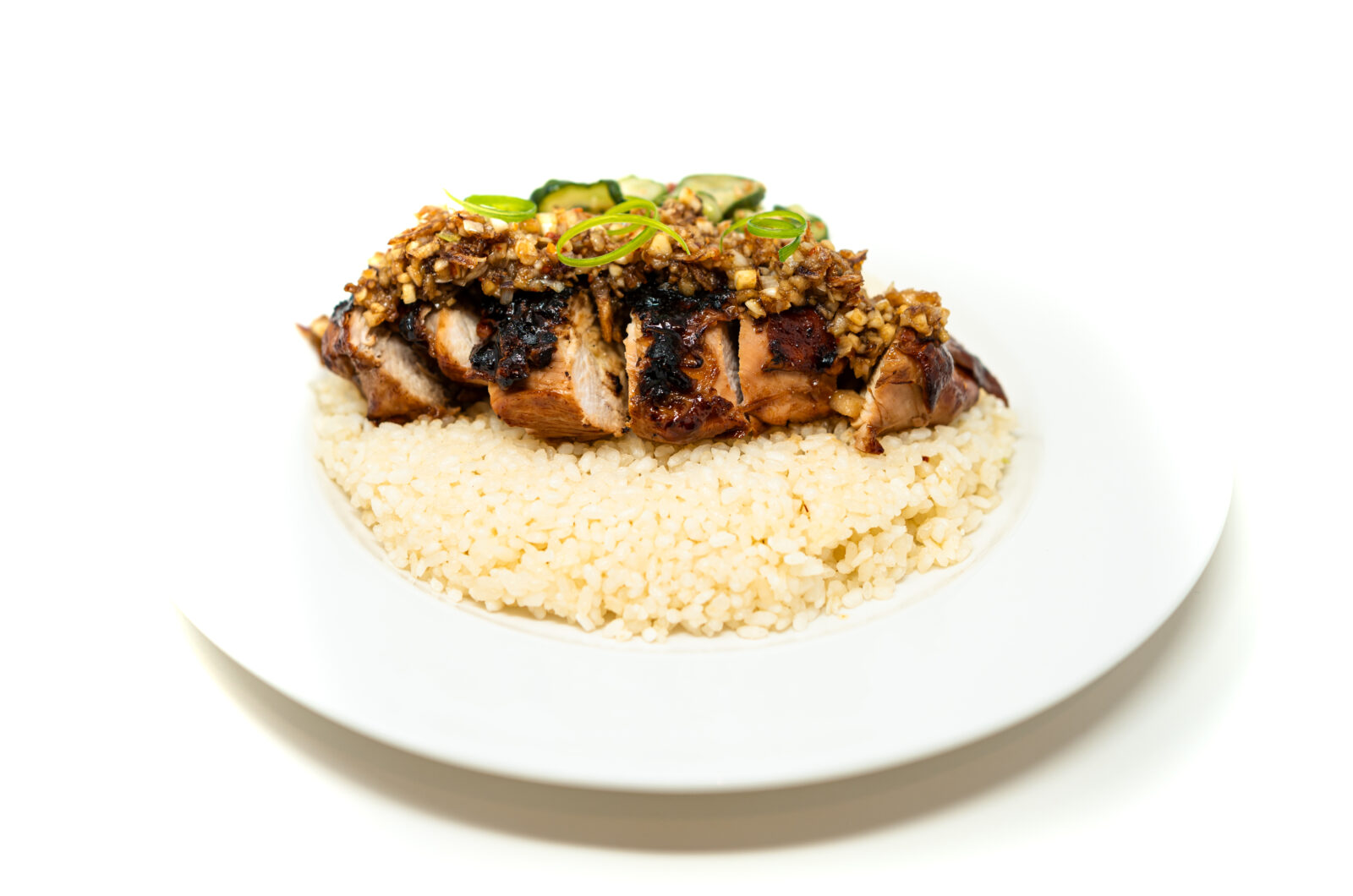
Hong Kong Style Barbecue Chicken
4
servings4
hours30
minutes30
minutes5
hoursSkin-on chicken breasts roast at high heat before a reduced marinade of dark soy and tomato paste is brushed on and broiled into a lacquered crust. A cold infusion of ginger and scallion scraps extracts maximum essential oils for the blistering relish.
Keeps the screen of your device on while you cook
Ingredients
- For the Chicken and Marinade:
2 chicken breasts, boneless skin-on
1/4 cup soy sauce
3 tablespoons hoisin sauce
1 tablespoon brown sugar
2 tablespoons honey
2 tablespoons tomato paste
1 tablespoon Shaoxing wine (or dry sherry)
1 teaspoon Chinese five-spice powder
3 cloves garlic, grated
1 tablespoon ginger, freshly grated
- For the Zero-Waste Ginger-Scallion Oil:
1 bunch scallions, thinly sliced (reserve the root ends)
1-inch piece ginger, peeled and grated (reserve the peels)
1 shallot, minced (reserve the dry skins)
3 cloves garlic, minced
1/4 cup neutral oil (canola or grapeseed)
1 teaspoon red pepper flakes
1 teaspoon toasted sesame oil
1 teaspoon soy sauce
pinch of salt
- For Serving:
steamed jasmine rice
cucumber salad
Directions
- Cold-Infuse the Oil:
- Combine the 1/4 cup of neutral oil with the reserved ginger peels, scallion root ends, and dry shallot skins in an airtight container. Let this sit at room temperature for at least 4 hours, or ideally overnight, to extract the fat-soluble essential oils. Strain out and discard the scraps before using.
- Marinate the Chicken:
- In a bowl, whisk together the soy sauce, hoisin, brown sugar, honey, tomato paste, Shaoxing wine, five-spice, grated garlic, and grated ginger. Place the chicken breasts in a ziplock bag or airtight container, pour the marinade over them, and massage to coat. Refrigerate for at least 4 hours.
- Blister the Aromatics:
- In a heat-proof bowl, combine the sliced scallions, minced shallot, grated ginger, minced garlic, red pepper flakes, and salt. Heat your strained, cold-infused neutral oil in a small pan until shimmering, then carefully pour it over the aromatics in the heat-proof bowl to flash-cook them. The thermal shock rapidly extracts the capsaicin from the pepper flakes, tinting the oil red, while the expansion of steam ruptures the allium cell walls and neutralizes their raw bite. Stir in the sesame oil and soy sauce.
- Roast the Chicken:
- Preheat your oven to 425°F (220°C). Remove the chicken from the marinade, allowing excess to drip off (reserve the remaining marinade). Place the chicken skin-side up on a wire rack set over a foil-lined baking sheet. Roast for 18 to 20 minutes, or until the internal temperature reaches 155°F.
- Glaze and Char:
- While the chicken cooks, simmer the reserved tomato-laced marinade in a small saucepan over medium heat for 5 to 10 minutes until reduced to a thick glaze. Remove the chicken from the oven and brush the reduced glaze heavily over the chicken skin. Switch the oven to broil for 2 to 3 minutes to achieve a deep, bubbling char.
- Plate and Serve:
- Let the chicken rest on a cutting board for 10 minutes, then slice into 1/2-inch strips. Serve over warm steamed jasmine rice, spoon generously over the infused ginger-scallion oil, and serve alongside your cucumber salad.
Did you make this recipe?
Tag @hecooksco on Instagram
Like this recipe?
Follow @hecooksco on Pinterest
Frequently Asked Questions
Why use a cold infusion for the ginger scallion oil?
Soaking ginger peels and scallion roots in neutral oil allows the oil to act as a solvent. Over several hours, it slowly extracts fat-soluble volatile compounds from the scraps without degrading them through heat, resulting in a more complex baseline flavor for the zero-waste cooking process.
What happens when tomato paste is added to the Hong Kong style barbecue chicken marinade?
Tomato paste introduces a high concentration of natural glutamates and pectin. The glutamates increase the umami profile of the dish, while the pectin increases the viscosity of the liquid, allowing the marinade to adhere tightly to the chicken skin during roasting.
How does the broiler affect the tomato umami glaze?
The direct radiant heat of the broiler causes the water in the brushed-on glaze to evaporate rapidly. Once the moisture is gone, the sugars from the honey and hoisin surpass their caramelization point, bubbling and hardening into a tight, dark crust.
Why leave the skin on the chicken breast during roasting?
The skin acts as a protective thermal barrier for the lean muscle underneath. As the high heat of the oven liquifies the subcutaneous fat, it bastes the meat. The exterior skin also provides a solid structural substrate for the heavy glaze to grip and caramelize upon.
What causes the aromatics to blister when hot oil is applied?
When oil heated to 350 degrees Fahrenheit hits raw ginger and garlic, it causes thermal shock. The internal water inside the cellular structure of the vegetables boils instantly, expanding into steam and rupturing the cell walls, which cooks the exterior and neutralizes the raw bite.