
Pork belly requires a two-step thermal process. The connective tissue needs time and liquid to soften, while the exterior fat needs dry, direct heat to render and crisp. You begin by building a braising liquid anchored in kombu dashi. The kelp provides a dense baseline of glutamates. You layer in smashed garlic, sliced ginger, halved shallots, bay leaf, and whole cloves. Submerging the pork belly in this broth and holding it at a slow, continuous simmer allows the tough collagen in the muscle to convert into gelatin. The meat becomes yielding without turning dry.
Reducing the Kombu Dashi Braise
Once the pork offers no resistance to a probe, pull it from the liquid. The meat needs to rest and cool slightly so it holds a clean edge when sliced into heavy squares. The remaining braising liquid in the pot holds the extracted gelatin from the pork and the aromatic oils from the ginger and clove. Strain this liquid into a clean saucepan and apply high heat. Boiling it down drives off the water, concentrating the salt and savory notes. As the volume drops, the natural gelatin thickens the broth into a dark, sticky glaze that will cling to the meat.
Broiling the Pork Belly
Braised pork belly is soft but lacks structural contrast. Placing the portioned squares onto a wire rack under a high broiler introduces intense, direct radiant heat. The surface moisture evaporates immediately. The exposed fat cap begins to render, essentially frying the top layer of the pork in its own expelled lipids. You want the edges to darken, blister, and turn brittle. This rapid application of heat provides the necessary crunch while protecting the tender interior. Pull the pork just as the corners begin to char.
Building the Sushi Spiced Orzo
Rich, fatty proteins demand an acidic counterweight on the plate. Instead of serving the pork over standard short grain rice, you use orzo. Cook the pasta in heavily salted water until just tender. Drain it completely and immediately fold in a seasoned mixture of rice vinegar, sugar, and salt. This mimics the sharp, bright profile of seasoned sushi rice. As the hot pasta absorbs the vinegar mixture, the surface starches firm up. Fold in finely diced cucumber for a watery, textural snap. Finish the pasta with perilla oil. The perilla oil introduces a distinct, toasted herbal note and coats the pasta to prevent clumping.
Plating and Acidity
Plating requires managing temperatures and acid levels. Spread a wide foundation of the dressed, room temperature orzo. Place the hot, broiled pork belly directly in the center. Spoon the hot, reduced kombu glaze over the pork, letting it drip down and pool slightly around the pasta. Cap the meat with a tight pile of finely minced pickled shallots. The aggressive acid of the vinegar pickling liquid cuts straight through the dense fat of the pork and the heavy savory notes of the reduction. This final addition of acid ensures the dish does not become overwhelming.
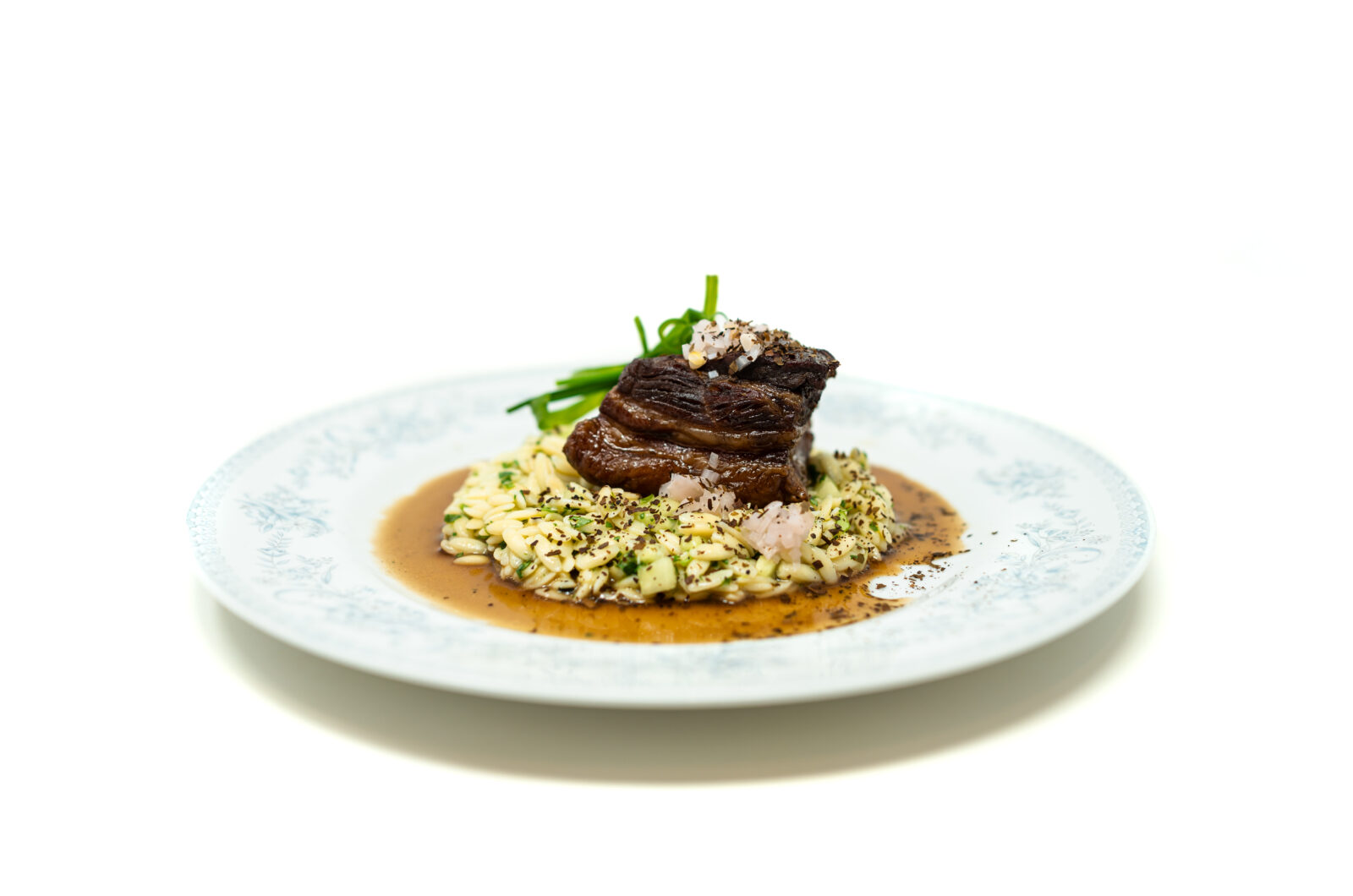
Kombu Glazed Pork Belly with Sushi Spiced Orzo
4
servings30
minutes3
hours3
hours30
minutesThis dish utilizes a low-temperature kombu dashi braise to break down the dense fat and connective tissue of pork belly before finishing it under direct broiler heat to crisp the exterior. The rich, reduced braising liquid is offset by an acidic, sushi-spiced orzo folded with fresh cucumber and perilla oil.
Keeps the screen of your device on while you cook
Ingredients
- For the Pork Belly & Braise:
2 pounds pork belly
1 quart water
1 large piece kombu
6 cloves garlic, smashed
2-inch piece ginger, thinly sliced
2 shallots, halved
1 bay leaf
3 whole cloves
1/4 cup soy sauce
2 tablespoons brown sugar
- For the Sushi Spiced Rice:
16 ounces orzo
3 tablespoons rice vinegar
1 tablespoon sugar
1 teaspoon salt
1 small English cucumber, finely diced
1 tablespoon perilla oil
- For Serving:
2 tablespoons pickled shallots, finely minced
sliced green onion
toasted dulce flakes
Directions
- Braise the Pork:
- In a heavy pot, combine the water, kombu, garlic, ginger, shallots, bay leaf, cloves, soy sauce, and sugar. Bring to a simmer, then submerge the pork belly. Cover and cook over low heat for 2.5 to 3 hours until the meat offers zero resistance when pierced. Carefully remove the pork belly to a tray and let it cool completely.
- Reduce the Glaze:
- Strain the remaining braising liquid through a fine-mesh sieve into a wide saucepan. Discard the solids. Boil the liquid over medium-high heat until it reduces into a thick, dark syrup that coats the back of a spoon. Keep warm.
- Build the Orzo:
- Boil the orzo in heavily salted water until just tender. Drain well. While the pasta is still hot, fold in the rice vinegar, sugar, and salt. Allow the pasta to cool slightly, then stir in the finely diced cucumber, raw shallot, and the perilla oil. Toss until the grains are coated and separate.
- Broil the Pork:
- Cut the cooled pork belly into equal square portions. Place the squares on a wire rack set inside a sheet tray. Place under a preheated broiler set to high. Broil for 5 to 7 minutes, watching closely, until the top fat cap blisters, darkens, and forms a crispy crust.
- Plate and Serve:
- Spoon a wide, flat circle of the dressed orzo onto the center of a plate. Place the hot, broiled pork belly directly on top of the pasta. Pour the hot kombu glaze generously over the pork. Top the meat with a tight pile of minced pickled shallots, sliced scallions, and toasted dulce flakes. Serve immediately.
Did you make this recipe?
Tag @hecooksco on Instagram
Like this recipe?
Follow @hecooksco on Pinterest
Frequently Asked Questions
Why use a kombu dashi for braising pork belly?
Kombu introduces high levels of glutamic acid into the braising liquid. As the pork cooks, these marine glutamates combine with the savory compounds naturally found in the meat, creating a highly concentrated base that becomes the final glaze.
Why must the pork belly be cooled before slicing?
Hot braised pork belly is structurally fragile. Letting it cool allows the rendered fat and internal juices to stabilize, ensuring you can slice clean, uniform squares that will hold their shape under the broiler.
How does the broiler change the texture of the braised pork?
The intense, direct heat of the broiler rapidly evaporates surface moisture and forces the exterior fat to render and fry. This creates a brittle, caramelized crust that contrasts heavily with the soft, yielding interior of the braised meat.
Why season the sushi spiced orzo while it is still hot?
Hot pasta absorbs liquids more effectively. Folding the rice vinegar, sugar, and salt mixture into the orzo immediately after draining allows the acid to penetrate the starch structure before it cools and sets.
What role does the perilla oil play in the pasta?
Perilla oil adds a distinct toasted, herbal flavor while physically coating the individual pieces of orzo. This prevents the pasta from clumping together as it cools, keeping the grains separate and distinct on the plate.


