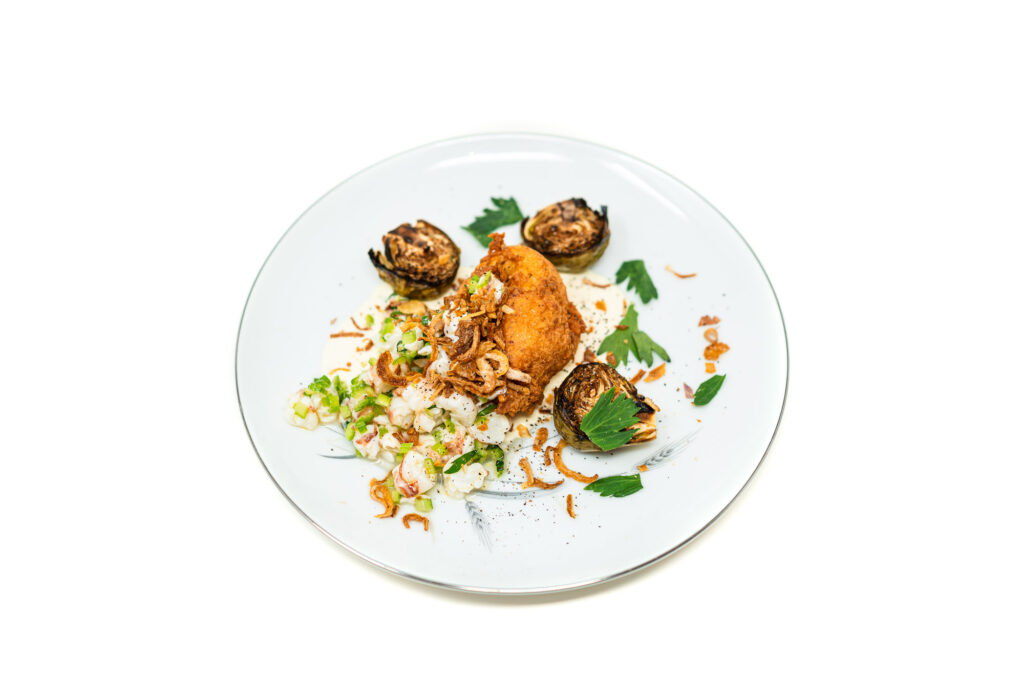
The fundamental requirement of this dish is managing temperature and texture across two distinct ingredients. Royal Red shrimp naturally carry a high fat content and profound sweetness. They require high heat to loosen that fat. Gulf White shrimp possess a firm, snapping texture that holds up to raw applications. Attempting to cook both using the same method ignores their physical differences. So, we separate them.
The Royal Reds are bound in a hydrated batter and dropped into hot oil to steam within a protective shell. The Gulf Whites remain raw and are cured briefly in citrus to maintain their structural resistance. When plated together, the extreme heat of the Royal Red shrimp fritter and the bracing cold of the Gulf White shrimp tartare force a sharp contrast on the plate.
Building a Rigid Potato Starch Shrimp Fritter Batter
Frying delicate seafood requires a batter that sets into a rigid structure before the interior protein turns tough. This shrimp fritter batter relies on a high ratio of potato starch to wheat flour. Because potato starch lacks gluten, when it hits hot canola oil, it forms a dry, shatter-crisp shell rather than a heavy, breaded crust. Using cold liquid limits the hydration of the wheat proteins, preventing the batter from turning dense. The carbonation in the sparkling water introduces trapped air pockets that expand rapidly in the frying oil. As the batter drops into the 375-degree oil, the exterior starches dehydrate instantly. A firm crust locks in place. The chopped Royal Red shrimp trapped inside are insulated from the direct heat of the oil, allowing them to gently steam in their own moisture.
Curing the Gulf White Shrimp Tartare
Raw Gulf White shrimp provide a necessary snap to offset the texture of the hot fritter. First, we peel and finely dice the shrimp to expose maximum surface area to the marinade. Lemon juice acts on the exposed protein strands, lightly denaturing the exterior of the diced shrimp just as heat would. This cold-acid application turns the translucent flesh opaque and firms the bite. Timing is critical for a cured shrimp tartare. No more than 10 minutes. Allowing the cure to extend past ten minutes forces the muscle fibers to tighten completely, turning the meat rubbery.
Blending the Garlic Confit Buttermilk Emulsion
A dish built on opposing temperatures and heavy frying oil requires a stable, rich foundation to anchor the plate. We use a base of thick buttermilk and mayonnaise, but it needs depth to stand up to the sharp tartare. Smashed raw garlic cloves are submerged in avocado oil and held over the lowest possible heat for an hour. The gentle heat breaks down the pungent allicin within the garlic, yielding soft, caramelized cloves with concentrated sweetness. Avocado oil is chosen here because of its completely neutral profile. It extracts the roasted allium notes without imparting the heavy, grassy bitterness often associated with heated olive oil.
To build the garlic confit buttermilk emulsion, the reserved garlic confit cloves go into a tall container with the mayonnaise and heavy buttermilk. Using an immersion blender is a structural requirement. The shear of the spinning blades violently breaks the fat molecules into microscopic droplets, forcing them to suspend evenly within the water-based buttermilk. The resulting sauce is thick, perfectly smooth, and completely stable. It pools on the plate as a cool canvas, absorbing the citrus runoff from the tartare while providing a dense coating for the hot fritter. Heavy scatterings of fried shallots and roughly chopped parsley finish the dish, introducing a final layer of dry crunch and bitter herbal notes.
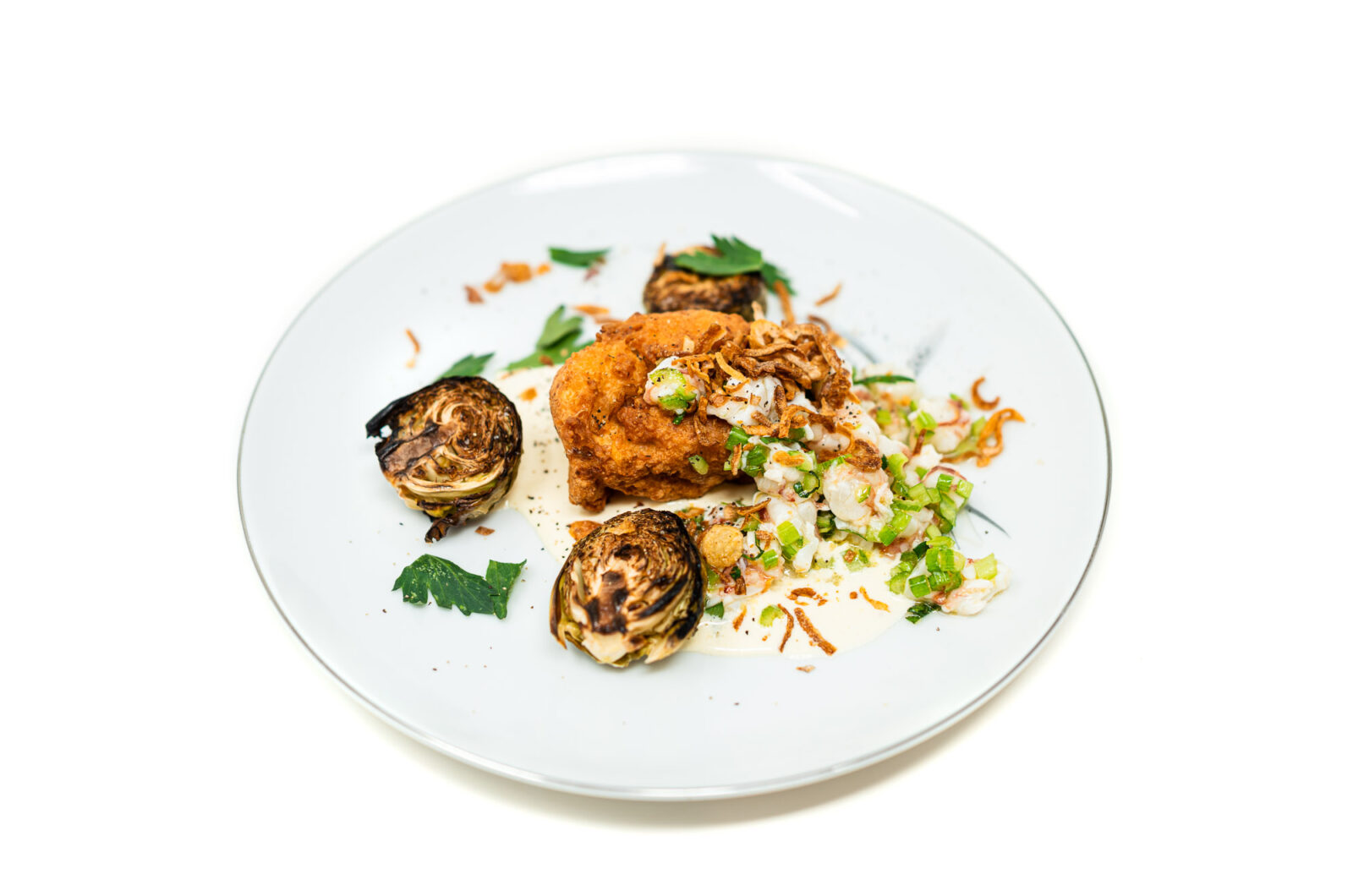
Royal Red Shrimp Fritter and Gulf White Shrimp Tartare
4
servings20
minutes1
hour1
hour20
minutesThis dish contrasts the high fat content of Royal Red shrimp inside a rigid, hot potato-starch fritter with the snapping texture of cold, acid-cured Gulf White shrimp tartare. Both preparations are anchored by a dense garlic confit buttermilk emulsion that bridges the sharp citrus and heavy frying oil.
Keeps the screen of your device on while you cook
Ingredients
1/2 pound royal red shrimp, peeled roughly chopped
1/2 pound gulf white shrimp, peeled and finely diced
1/4 cup flour
2 tablespoons potato starch
1 teaspoon smoked paprika
1/2 teaspoon baking powder
1 teaspoon onion powder
1 teaspoon garlic powder
1/4 cup sparkling water, ice cold
1 tablespoon lemon juice, freshly squeezed
1 tablespoon celery, finely minced
1 tablespoon shallot, finely minced
1/4 cup buttermilk
6 cloves garlic, smashed
1/4 cup avocado oil
1 tablespoon mayonnaise
2 tablespoons fried shallots
1 tablespoon parsley
for frying canola oil
to taste salt
to taste ground black pepper
Directions
- Confit the Garlic:
- Place the smashed garlic cloves in a small saucepan and cover them completely with the avocado oil. Set over the lowest possible heat and cook gently for 45 to 60 minutes, ensuring the oil never boils, until the garlic is completely soft, sweet, and golden brown. Remove from heat and let cool. Pull the smashed cloves for the emulsion and reserve the infused avocado oil for another use.
- Prepare the Emulsion:
- Place the reserved garlic confit cloves, mayonnaise, and buttermilk into a tall, narrow container. Submerge an immersion blender and process on high until the garlic is completely pulverized and the mixture forms a tight sauce. Season lightly with salt. Cover and store in the refrigerator to keep chilled until plating.
- Cure the Tartare:
- In a mixing bowl, combine the finely diced gulf white shrimp, minced celery, minced shallot, and lemon juice. Season with salt and pepper. Toss well and let the mixture sit for exactly ten minutes to allow the acid to lightly denature the shrimp proteins without turning the meat rubbery.
- Fry the Fritters:
- Heat a pot of canola oil to 375°F (190°C). In a separate bowl, whisk together the flour, potato starch, smoked paprika, baking powder, onion powder, garlic powder, and a pinch of salt. Stream in the ice-cold sparkling water and mix gently until a loose batter forms. Fold in the chopped royal red shrimp. Carefully drop spoonfuls of the batter into the hot oil. Fry for 3 to 4 minutes until the exterior is deeply golden and rigid. Transfer to a wire rack and season immediately with salt.
- Assemble and Serve:
- Pool the chilled garlic confit buttermilk emulsion onto the center of a wide plate. Place the hot royal red fritter directly in the middle of the sauce. Spoon the cold gulf white tartare right next to the fritter. Finish by scattering the top heavily with the fried shallots and parsley. Serve immediately.
Did you make this recipe?
Tag @hecooksco on Instagram
Like this recipe?
Follow @hecooksco on Pinterest
Frequently Asked Questions
Why use potato starch in the Royal Red shrimp fritter batter?
Potato starch lacks gluten and creates a more rigid, shatter-crisp matrix when fried compared to standard flour. This sets up rapidly in the hot oil, protecting the delicate Royal Red shrimp inside from overcooking or absorbing excess grease.
Why limit the Gulf White shrimp tartare cure to exactly ten minutes?
Lemon juice rapidly denatures the exterior proteins of the raw shrimp. Leaving the shrimp in the acid for longer than ten minutes causes the muscle fibers to tighten completely, resulting in a tough, rubbery texture rather than a crisp snap.
Why use an immersion blender for the garlic confit buttermilk emulsion?
The high-speed shear of the immersion blender permanently forces the separated fats from the mayonnaise and the water-based buttermilk into a stable suspension. Whisking by hand often leaves the garlic chunky and increases the risk of the emulsion breaking on the plate.
Why must the sparkling water in the batter be ice cold?
Cold liquid slows gluten development when mixed with the flour. It also creates a dramatic temperature differential when the batter hits the hot frying oil, ensuring the exterior starches dehydrate and crisp rapidly before the interior proteins dry out.
Why cook the garlic in avocado oil rather than butter?
Avocado oil has a neutral profile that allows the raw garlic cloves to slowly caramelize and release their natural sugars over low heat without introducing the toasted dairy solids or grassy bitterness found in heated butter or olive oil.