
Raw shoulder meat demands aggressive treatment before hitting the heat. Tossing thin slices of unseasoned pork directly into a pan results in seized muscle fibers and gray proteins. Building a proper liquid foundation changes this trajectory entirely. We lean on a triple garlic marinade to force structural breakdown. Blending raw cloves alongside pickled and fermented black garlic establishes a sharp and volatile base. Dropping in a cored pear introduces natural calpain enzymes directly into the mixture. Adding soy sauce and rice vinegar creates a highly acidic environment that attacks the exterior of the meat immediately upon contact.
Passing this blended liquid through a fine mesh strainer remains a nonnegotiable step in the prep process. Solid particles of fruit and allium will scorch instantly when subjected to high heat. Leaving those solids behind ensures only the clean infused liquid coats the meat. Thirty to sixty minutes is all it takes. Allowing the pork to sit in this acidic solution any longer will severely degrade the structural proteins and turn the raw muscle into mush.
Executing Cast Iron Seared Pork
Heavy skillets rely entirely on moisture control and heat transfer. Pans need to sit on the burners until the metal physically smokes. Pulling the meat from the liquid is only half the job. Patting every shaved slice completely dry with paper towels dictates the success of the sear. Water destroys browning. Dropping wet meat into hot metal forces the thermal energy of the pan to evaporate water rather than crisping the pork. This drops the surface temperature and effectively steams the meat in its own juices.
Hitting smoking iron with dry pork forces the internal fat to render outward instantly. Shredding the meat with a spatula as it cooks maximizes the surface area exposed to the heat. While the edges crisp and darken, that reserved straining liquid goes into a small saucepan over an open flame. Boiling the water away concentrates the suspended sugars and soy proteins. Viscosity increases rapidly as it reduces into a tight glaze. Ladling this reduction directly into the hot cast iron during the final moments of cooking binds the syrup tightly to the fried muscle fibers.
Anchoring the Plate with Caramelized Cumin Rice
Building a proper starch base requires deliberate neglect. Toasting dry jasmine grains and whole cumin seeds together initiates a slight fracturing of the exterior starches. Pouring in the vegetable broth drops the temperature and begins the standard absorption phase. Once that liquid fully absorbs, human intervention must stop. Keeping the lid closed on low heat allows the dissolved brown sugar to sink and concentrate against the bottom of the pot.
Listening to the pan tells you exactly what is happening inside. Hollow bubbling transitions into a distinct and sharp crackling noise. That audio shift indicates the water is completely gone and the sugar is actively frying against the dry metal. This friction creates a rigid bottom crust that anchors the entire dish. Scraping that hardened layer and folding it back into the softer steamed grains above produces a massive textural contrast.
Structural Tension in the Green Tomato Relish
Heavy plates need sharp structural tension. Diced green tomatoes bring an abrasive raw acidity to the cutting board. Mincing shallots and sweet onions alongside fresh basil, mint, and cilantro creates a vibrant green tomato relish. Pouring a single tablespoon of olive oil over the mixture acts as a hydrophobic binder. Oil coats the raw cell walls of the vegetables, trapping the water soluble compounds while simultaneously carrying the fat soluble aromatics from the torn herbs evenly throughout the bowl. Stacking this cold and acidic garnish directly over the glazed pork forces a strict thermal boundary. Acid slices through the hot rendered fat, clearing the palate entirely.
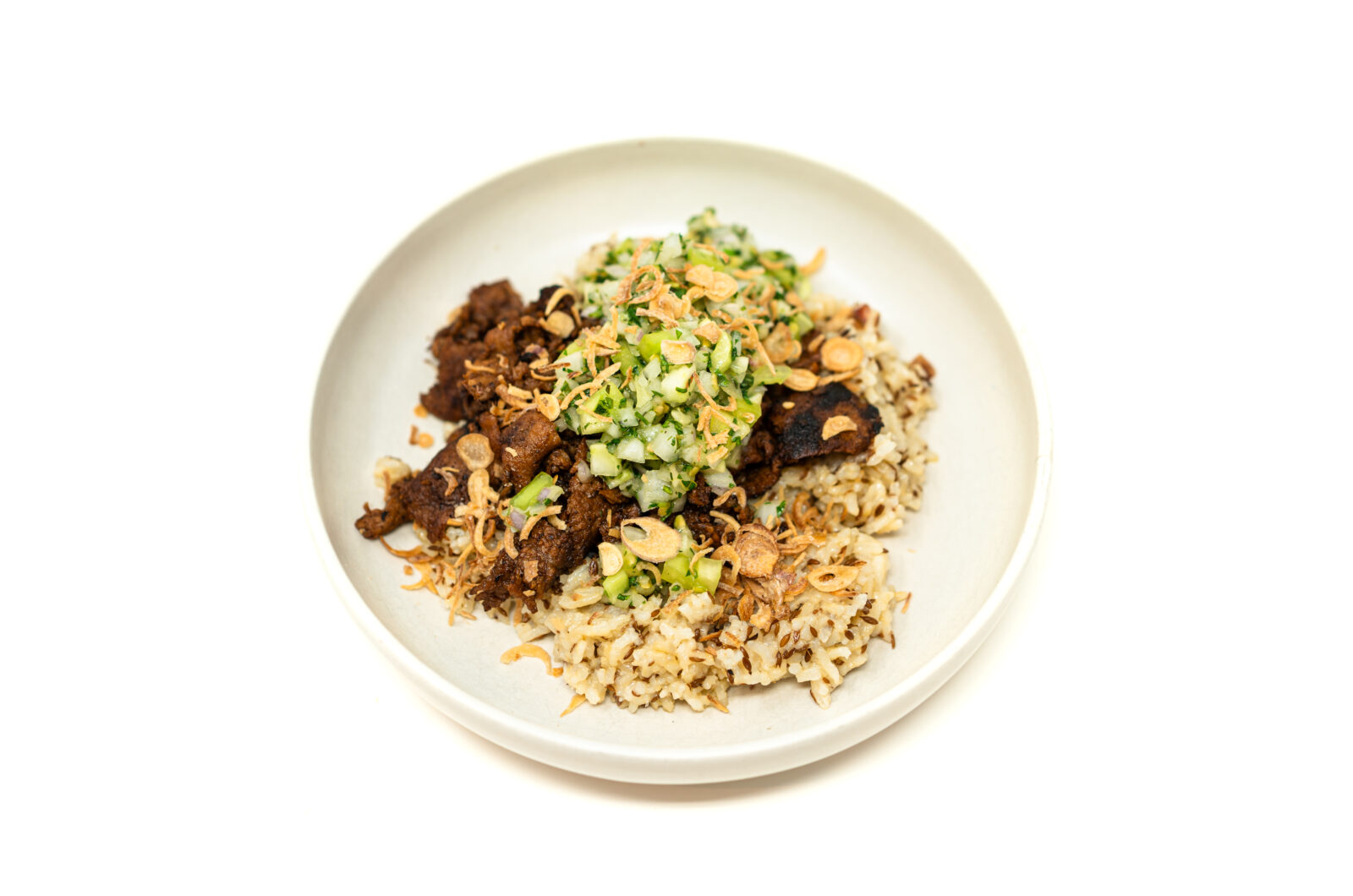
Shaved Pork Butt with Caramelized Cumin Rice and Green Tomato Relish
4
servings1
hour30
minutes1
hour30
minutesThinly shaved pork butt absorbs a high acid triple garlic marinade before hitting a blistering cast iron skillet to sear and shred. The rendered pork fat coats a bed of toasted cumin rice featuring a heavily caramelized brown sugar bottom crust, all cut by the sharp acidity of a raw green tomato relish.
Keeps the screen of your device on while you cook
Ingredients
- For the Pork
2 pounds pork butt, thinly shaved
2 ripe tomatoes, roughly chopped
2 ripe pears, cored
2 cloves garlic, peeled
2 cloves black garlic
2 cloves pickled garlic
1/4 cup soy sauce
1 tablespoon rice vinegar
pinch of salt
pinch of ground black pepper
- For the Caramelized Cumin Rice
1 cup jasmine rice, rinsed and drained
1 1/2 cups vegetable broth
1 teaspoon whole cumin seeds
1 tablespoon brown sugar
pinch of salt
- For the Green Tomato Relish:
2 medium green tomatoes, diced
1 tablespoon extra virgin olive oil
1 shallot, minced
1 medium sweet onion, diced
1 tablespoon basil, freshly chopped
1 tablespoon cilantro, freshly chopped
1 tablespoon mint, freshly chopped
pinch of salt
- For Serving:
fried shallots
Directions
- Marinate the Pork:
- Combine the tomatoes, pears, raw garlic, black garlic, pickled garlic, soy sauce, rice vinegar, salt, and black pepper in a blender. Blend on high until completely liquefied, then pass through a fine-mesh strainer to remove all solids.
- Submerge the thinly shaved pork butt in the strained marinade. Marinade for 30 minutes to 2 hours. When ready to cook, remove the pork and pat it completely dry with paper towels to ensure a proper crust. Reserve the leftover marinade liquid.
- Make the Green Tomato Relish:
- In a mixing bowl, combine the diced green tomatoes, minced shallot, diced sweet onion, basil, cilantro, and mint. Season with a pinch of salt to taste and toss well. Set aside to allow the flavors to meld.
- Caramelize the Rice:
- In a heavy-bottomed pot, toast the whole cumin seeds over medium heat until fragrant. Add the rinsed jasmine rice, brown sugar, vegetable broth, and a pinch of salt. Bring to a simmer, then cover and reduce the heat to low. Crucially, do not stir the rice. Let it cook completely undisturbed so the brown sugar and starches can caramelize against the bottom of the pot, forming a crispy crust. Once the liquid is absorbed and the rice is tender, after about 20 to 25 minutes, gently scrape and fold that caramelized bottom layer into the rest of the rice.
- Cook the Pork:
- Get a cast-iron skillet ripping hot. Add the dried pork, searing it hard and shredding it with your spatula as it cooks. Simultaneously, pour the reserved marinade into a separate small saucepan and reduce it over medium-high heat. As the pork finishes cooking and the edges crisp, ladle the reduced sauce directly into the cast iron to douse and glaze the meat.
- Assemble and Serve:
- Spoon a bed of the caramelized cumin rice into a shallow bowl. Lay the glazed, shredded pork directly over the rice. Top generously with the fresh green tomato relish and finish the bowl with a heavy scatter of crispy fried shallots.
Did you make this recipe?
Tag @hecooksco on Instagram
Like this recipe?
Follow @hecooksco on Pinterest
Frequently Asked Questions
Why must we strain the triple garlic marinade before soaking the shaved pork butt?
Straining removes solid particles of allium and fruit that scorch instantly upon contacting hot cast iron. Filtering ensures only clean liquid coats the meat, preventing bitter ash from forming during the high-heat sear.
What physical cue indicates the caramelized cumin rice has formed its crust?
Evaporating broth produces a hollow rolling boil that eventually shifts to a sharp crackling noise. This audible friction signals the liquid is completely gone and residual brown sugar is actively frying against the dry metal pot.
Why pat the meat completely dry before cooking the cast iron seared pork?
Surface moisture actively prevents the Maillard reaction. Dropping wet meat into hot metal forces thermal energy to boil water away, dropping pan temperatures rapidly and steaming the proteins instead of rendering internal fat.
How does the green tomato relish interact with the rendered animal fat?
High concentrations of malic and citric acids in raw green tomatoes physically cut through heavy lipid structures. Stacking this cold garnish over hot rendered lard forces a strict thermal boundary and clears the palate.
What role does fresh pear serve in breaking down the muscle tissue?
Pears contain calpain, a natural enzyme that actively attacks structural proteins. Incorporating this fruit into the highly acidic liquid rapidly breaks down tough muscle fibers within a strict thirty-minute window.


