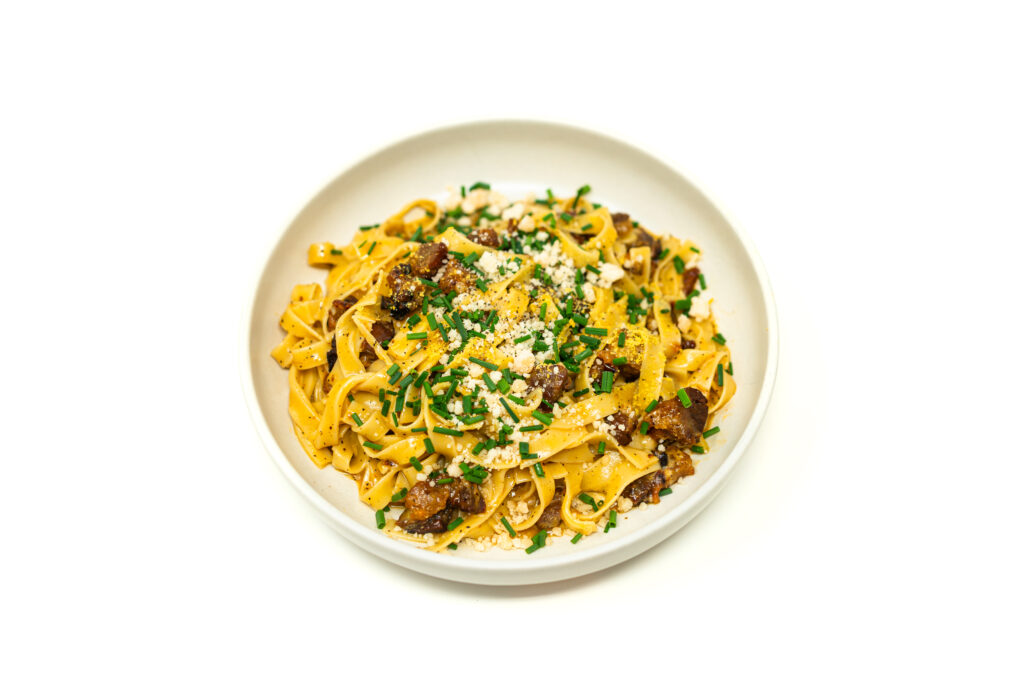
The sound of pork belly hitting a dry, hot skillet is the beginning of something important. Fat renders. The meat crisps into golden, armored cubes. This is the foundation of miso pork belly carbonara. It takes the classic Roman technique and drags it through a completely different pantry, trading traditional guanciale for the deep, savory weight of pork belly and white miso. The kitchen smells like toasted fat and garlic. It feels grounded. Real. Dice the belly into small, uniform cubes. Consistency in the cut ensures an even render. You want the exterior to shatter slightly when you bite into it, giving way to a tender, fatty center.
The Mechanics of Miso Pork Belly Carbonara
You have to respect the emulsion. A traditional carbonara relies strictly on egg, cheese, and pasta water. Here, we build a bridge. We introduce heavy cream, soy sauce, and a whisper of honey. The white miso paste is the anchor. It gives the sauce a fermented, savory depth that clings to the tagliatelle. Whisking the warm pasta water into the miso first is non-negotiable. Miso clumps if you shock it. You want it dissolved, smooth, and ready to incorporate with the eggs and cream. When you mix the sauce for this miso pork belly carbonara, you are building velvet. The lemon juice might seem out of place, but it provides a necessary acid. It cuts through the heavy cream and the rich pork fat, waking up the palate so the dish never feels overly heavy.
Building the Skillet for Miso Pork Belly Carbonara
Once the pork belly reaches a deep golden brown, the pan is slick with rendered fat. Do not pour it out. That fat is liquid gold. Drop in the minced garlic and red pepper flakes. The garlic hits the hot grease and immediately blooms. It takes exactly one to two minutes before it turns fragrant. Any longer and it burns. You drop the hot, al dente tagliatelle directly into that skillet. The noodles drink the fat. Every ribbon gets coated in that savory, spicy oil before the sauce even enters the picture.
Achieving the Perfect Creamy Miso Pasta Texture
Heat control is everything. If the pan is too hot when you pour in the egg mixture, you get scrambled eggs. Off the heat. Always off the heat. You pour the miso and egg base over the fat-coated noodles and you move fast. Toss aggressively. The residual heat from the pasta and the pan gently cooks the eggs, thickening the cream and miso into a glossy, heavy coat. The friction of the toss emulsifies the fat and water. The sauce tightens. It becomes one cohesive body. This is where a simple plate of noodles transforms into miso pork belly carbonara.
Plating and Finishing Touches
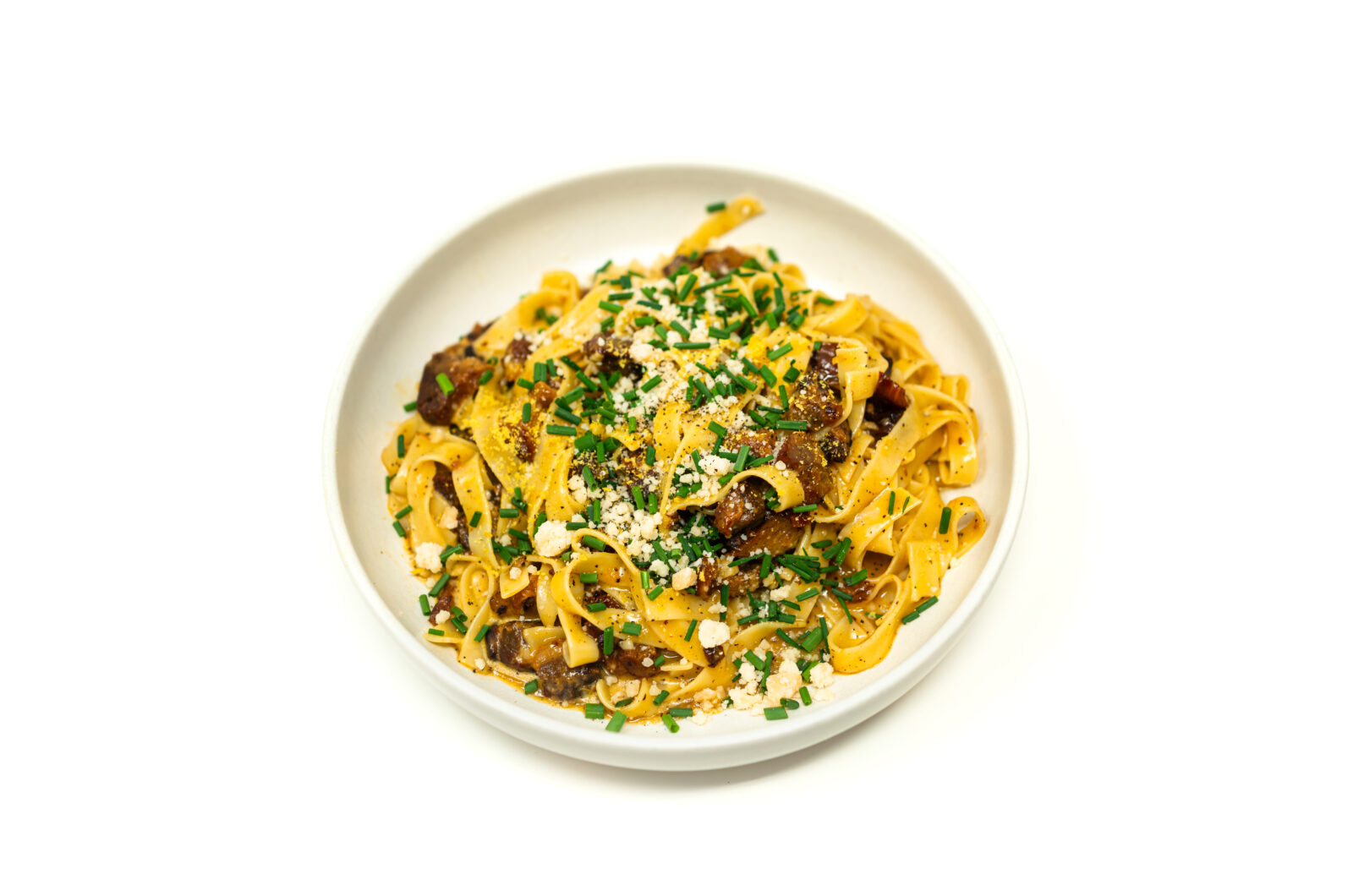
Serve it hot. A cold carbonara is a heavy, broken thing. Twirl the tagliatelle high in the bowl to create height. Spoon extra crispy pork pieces over the top. The garnish matters here. Freshly chopped chives bring a sharp, onion-like bite that slices right through the heavy fat of the pork and the rich umami of the sauce. Finish with cracked black pepper and a final dusting of parmesan. Every bite of this miso pork belly carbonara balances crunch, salt, cream, and earth. It is a heavy, satisfying meal built on technique and instinct.
Pork Belly Carbonara
4
servings15
minutes20
minutes35
minutesThick ribbons of tagliatelle are coated in a rich, umami-heavy egg and cream sauce laced with white miso. Crispy cubes of golden pork belly provide a savory crunch that cuts through the deep, comforting richness.
Keeps the screen of your device on while you cook
Ingredients
12-16 ounces tagliatelle pasta
1 pound pork belly, diced into small cubes
1 tablespoon extra virgin olive oil
4 cloves of garlic, minced
3 large eggs
1 cup Parmesan cheese, grated
1/2 cup heavy cream
1 tablespoon soy sauce
1 tablespoon white miso paste
1/2 tablespoon honey
1 lemon, juiced
1/2 teaspoon red pepper flakes
for garnish, freshly chopped chives
to taste, salt and ground black pepper
Directions
- Cook the Pasta:
- Bring a large pot of salted water to a boil. Cook the pasta according to the package instructions until al dente. Drain the pasta and set it aside, reserving about 1 cup of pasta cooking water.
- Make the Carbonara Base:
- Whisk together the eggs, Parmesan cheese, heavy cream, soy sauce, lemon juice, and a pinch of salt and ground black pepper. Separately, whisk the warm pasta water with the miso paste until fully incorporated. Set aside.
- Prepare the Pork Belly:
- Heat a dry skillet over medium heat. Add the diced pork belly and cook until it becomes crispy and golden brown, about 7-10 minutes.
Add extra virgin olive oil, garlic, and red pepper flakes to the skillet with the crispy pork belly. Sauté for an additional 1-2 minutes, until the garlic is fragrant. - Combine Pasta, Pork Belly, and Sauce:
- Add the pasta to the skillet. Toss everything together to evenly coat the noodles in grease. Combine the sauce bases and then pour over the noodles. Remove from heat and mix until combined.
- Serve:
- Divide into pasta bowls. Serve immediately while hot. Garnish with freshly chopped chives, a pinch of ground black pepper, and extra Parmesan cheese.
Did you make this recipe?
Tag @hecooksco on Instagram
Like this recipe?
Follow @hecooksco on Pinterest
Miso Pork Belly Carbonara Kitchen Notes
Why did the eggs scramble in my miso pork belly carbonara?
Heat control. You must remove the skillet from the heat completely before adding the egg and heavy cream mixture. The residual heat from the pasta is enough to thicken the sauce without scrambling the eggs.
Can I substitute bacon for the crispy pork belly in this recipe?
Yes, thick-cut bacon works if pork belly is unavailable. However, pork belly provides a richer, more tender bite without the heavy smoked flavor of bacon, allowing the white miso and soy sauce to remain the dominant flavors in the dish.
How do I properly dissolve the white miso paste for the sauce?
Never add cold miso paste directly into the hot pan. Whisk it vigorously with a splash of warm, reserved pasta water in a separate bowl until it is completely smooth and liquid. This prevents clumps in your final creamy miso pasta sauce.
Why does the recipe call for heavy cream instead of just eggs and cheese?
While traditional recipes rely strictly on eggs, adding heavy cream stabilizes the emulsion. When combined with soy sauce and miso, the cream provides a luxurious, foolproof texture that holds up well to the rich, fatty pork.
How can I reheat leftover Asian fusion carbonara without breaking the sauce?
Reheating emulsified pasta is difficult. The best method is placing the noodles in a skillet over low heat with a splash of water or milk. Toss continuously until just warmed through. Do not use a microwave, or the sauce will separate into an oily mess.