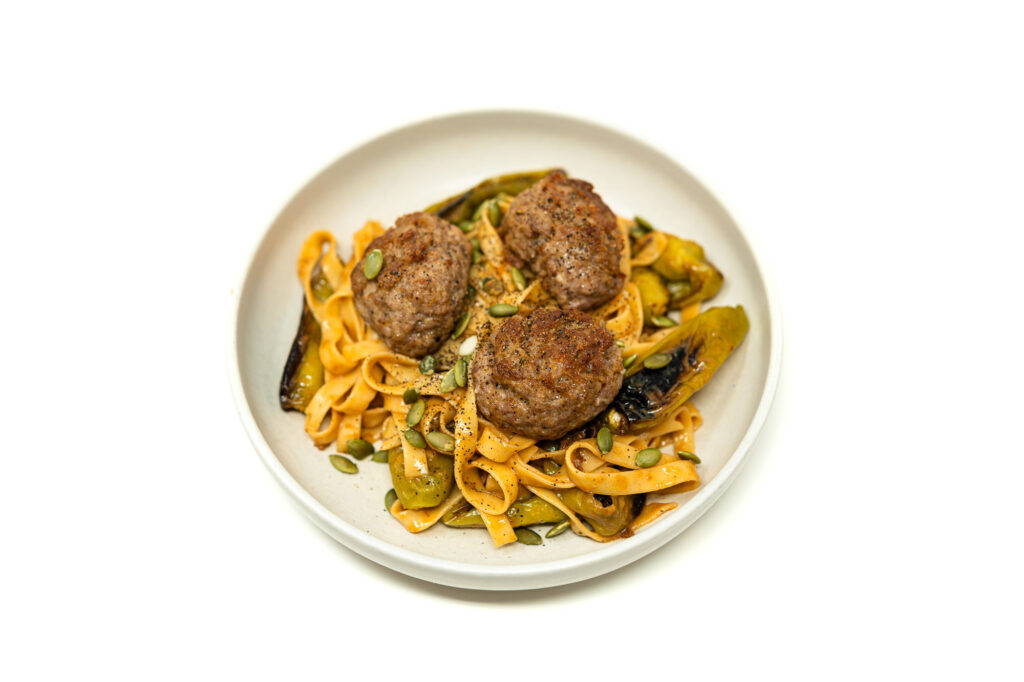
Fortifying Seared Turkey Meatballs
Building a proper meatball from ground poultry requires acknowledging the physical limitations of the meat. Turkey lacks the inherent fat structure of beef or pork. When exposed to a hot cast-iron skillet, a standard turkey meatball will dry out long before it develops any meaningful color. To survive a hard sear, the meat needs fortification.
Adding mayonnaise and grated Parmesan to the ground turkey introduces necessary fat and moisture into the mixture. The oil and egg yolk in the mayonnaise insulate the protein fibers, while the melting cheese binds the breadcrumbs. Forming the meatballs with a gentle hand is crucial here. Overworking the ground meat compacts the proteins, leading to a dense and rubbery final texture. Mix the ingredients until they just hold together. The resulting coarse structure leaves small pockets for the melting cheese and fat to occupy.
Once shaped, the meatballs require a cold resting period. Transferring them to the refrigerator for at least thirty minutes allows the dry breadcrumbs to fully hydrate from the moisture in the meat and mayonnaise. The drop in temperature also solidifies the fats. A cold, rested meatball will hold its shape when it hits the hot cast iron, preventing the mixture from crumbling into the pan.
This structured fat allows the seared turkey meatballs to stay in the skillet long enough to build a heavy, deeply browned crust. Once the exterior is set, the skillet moves to a hot oven so the center can finish cooking through ambient heat. This protects the exterior from burning against the hot metal. Resting the meatballs on a plate after baking prevents them from overcooking and allows their internal juices to settle.
Building the Apple Cider Mustard Sauce
The roasting process leaves a layer of rendered fat and caramelized turkey in the pan. This fond forms the foundation of the apple cider mustard sauce. Instead of washing it away, the skillet goes back to the stove. Grated garlic, Dijon mustard, and paprika hit the residual heat first. Cooking the mustard and spices in the fat blooms their volatile oils, removing the raw bite of the garlic and deepening the color of the paprika.
Pouring cold apple cider into the hot pan instantly halts the frying process. The liquid boils aggressively, lifting the browned bits from the cast iron. As the cider reduces by half, its water evaporates. This concentrates the natural sugars and tartness of the apple cider, transforming a thin liquid into a structured syrup that will hold the rest of the pan sauce together.
Emulsifying with Pasta Water and Butter
This reduced syrup is too concentrated to coat a pan of pasta on its own. It needs volume and fat. Adding a ladle of reserved starchy pasta water adds volume, while a piece of butter adds fat. Vigorously swirling the pan forces the free starch to trap the melting butterfat, creating a stable, glossy emulsion that clings tightly to the tagliatelle.
When boiling the long flat pasta, pull the noodles from the water just before they reach their final texture. They will finish cooking directly in the skillet, absorbing the cider sauce as they soften. A final splash of raw apple cider vinegar, stirred in off the heat, restores the sharp acidity that the reduction process cooked away.
The Role of Broiled Shishitos
Rich meat and a glossy, sweet sauce require an aggressive counterpoint. Broiled shishitos serve this exact purpose. Sautéing them in oil can leave the skin slick and greasy. Instead, the peppers are spread dry on a bare baking sheet directly under the broiler. The intense, dry radiant heat aggressively blisters the skin and chars the edges while keeping the interior flesh firm.
These charred peppers bring an earthy, slightly bitter snap to the plate, breaking up the heavy fat of the meatballs and the concentrated sweetness of the glaze. A handful of toasted pepitas scattered over the top finishes the pasta with a necessary dry crunch.
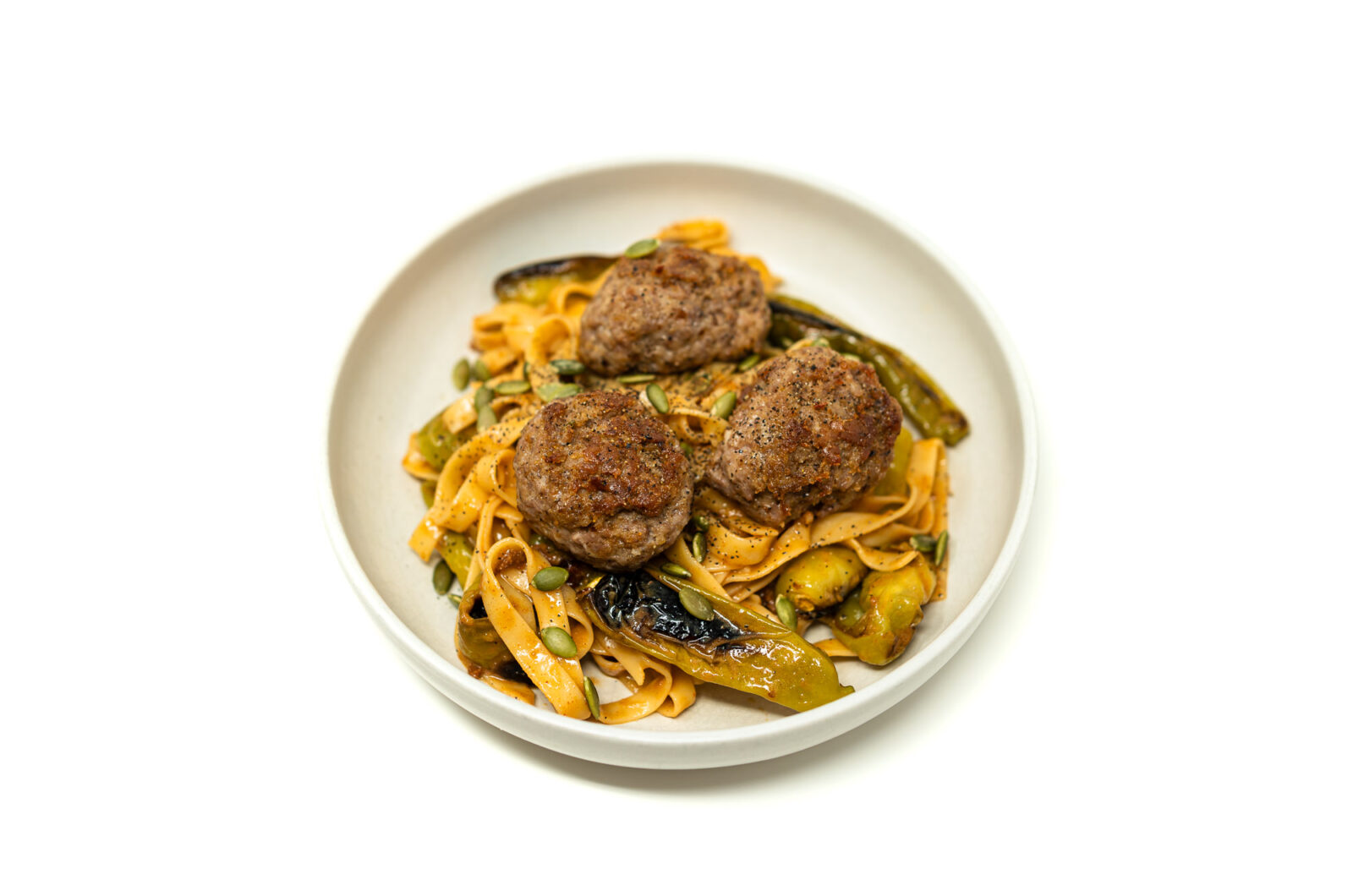
Seared Turkey Meatballs with Apple Cider Mustard Pan Sauce and Blistered Shishito Peppers
4
servings45
minutes25
minutes1
hour10
minutesGround turkey is mixed with mayonnaise and Parmesan to survive a hard cast-iron sear, then refrigerated to set the fat and hydrate the breadcrumbs. The resulting fond anchors a sharp pan sauce, using an apple cider reduction and Dijon mustard to coat long flat pasta and dry-broiled shishito peppers.
Keeps the screen of your device on while you cook
Ingredients
- For the Meatballs:
1 pound ground turkey
1/4 cup Parmesan cheese, grated
1/4 cup breadcrumbs
2 tablespoons mayonnaise
to taste salt
to taste ground black pepper
2 tablespoons extra virgin olive oil
- For the Pasta and Sauce:
8-12 ounces tagliatelle pasta
3 cloves garlic, grated
1 tablespoon Dijon mustard
1 teaspoon smoked paprika
1/2 cup apple cider
2 tablespoons unsalted butter
1 tablespoon apple cider vinegar
reserved pasta cooking water
- For the Peppers and Plating:
1/2 pound shishito peppers
toasted pepitas
ground black pepper
Directions
- Mix and Shape:
- In a mixing bowl, combine the ground turkey, Parmesan, breadcrumbs, mayonnaise, salt, and black pepper. Mix gently until just combined. Form the mixture into evenly sized meatballs.
- Sear and Bake:
- Preheat the oven to 400°F (200°C). Heat a large oven-safe skillet over medium-high heat with a splash of neutral oil. Drop the meatballs into the pan and sear until a hard, golden-brown crust forms on the exterior, 4 to 6 minutes. Transfer the skillet directly to the oven, leaving the fat and fond in the skillet, and roast until the meatballs are cooked through, 8 to 10 minutes. Remove the meatballs to a plate and set aside.
- Broil the Shishitos:
- Switch the oven to the broiler setting on high. Spread the dry shishito peppers on a bare baking sheet and place them directly under the broiler. Let them dry-toast until heavily blistered and charred in spots, 4 to 5 minutes. Remove and set aside. Drop your pasta into heavily salted boiling water and cook until al dente. Reserve ½ cup of the starchy pasta water before draining.
- Build the Sauce:
- Return the original meatball skillet to medium heat on the stove. Add the grated garlic, Dijon mustard, and paprika, stirring for 1 minute until fragrant. Pour in the apple cider, scraping the bottom of the pan to lift the fond, and let the liquid reduce by half.
- Emulsify and Toss:
- Stir a splash of the reserved pasta water into the reduced cider along with the butter and apple cider vinegar. Swirl the pan until the butter melts and the sauce becomes glossy and emulsified. Drop the cooked pasta and broiled shishitos into the skillet, tossing vigorously to coat everything in the sauce.
- Plate and Serve:
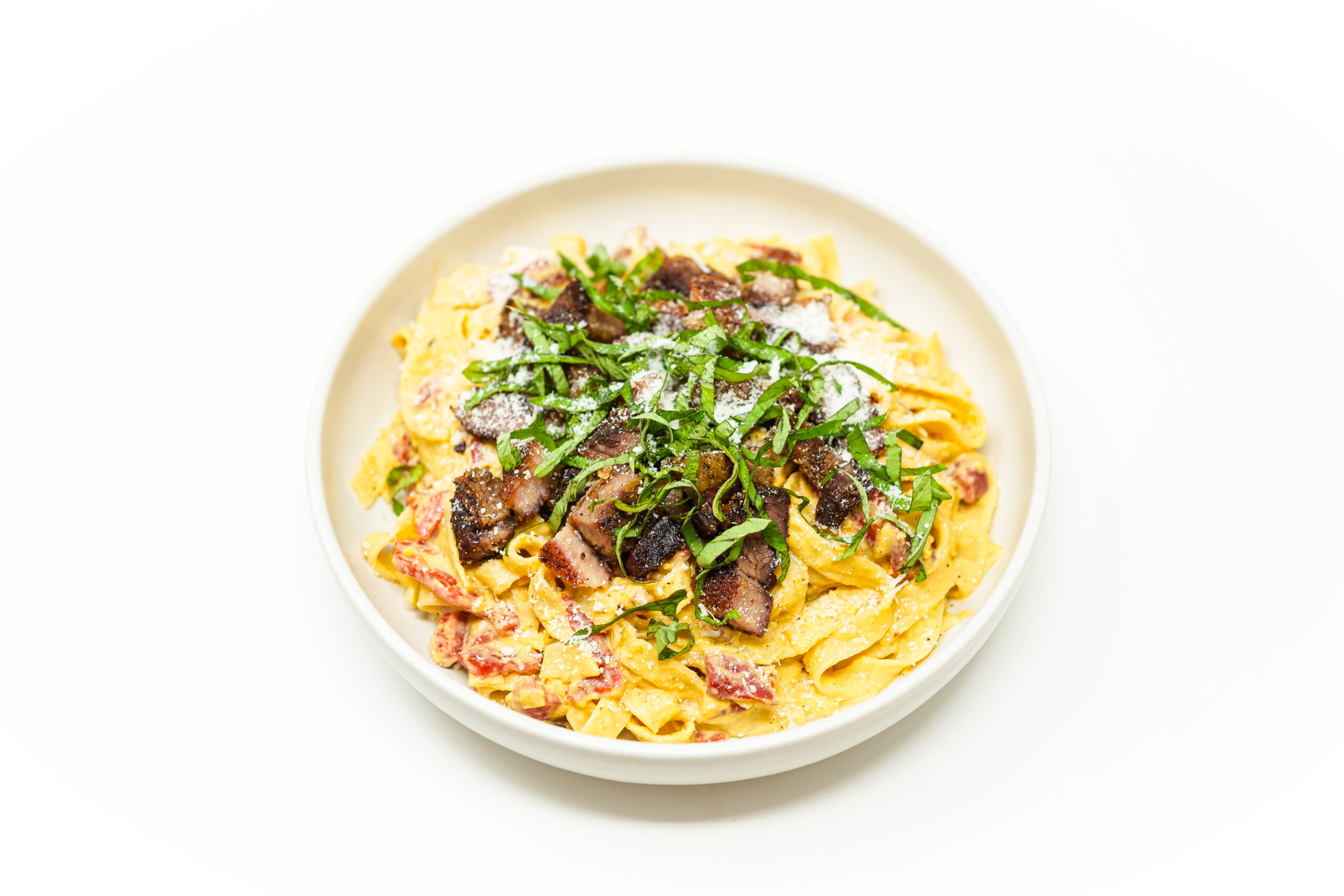
- Divide the coated pasta and shishitos into shallow bowls. Rest the seared meatballs on top. Finish with a heavy scatter of toasted pepitas and cracked black pepper.
Did you make this recipe?
Tag @hecooksco on Instagram
Like this recipe?
Follow @hecooksco on Pinterest
Frequently Asked Questions
Why add mayonnaise to the ground turkey mixture?
Turkey is notoriously lean and prone to drying out under high heat. Mayonnaise introduces fat and moisture directly into the grind, allowing the seared turkey meatballs to develop a heavy, browned crust in the skillet without overcooking the center.
Why refrigerate the meatballs before searing them?
Resting the formed meatballs in the cold allows the breadcrumbs to fully hydrate and the added fats from the mayonnaise to solidify. This resting period ensures the ground turkey mixture holds its shape and prevents it from crumbling apart when it hits the hot cast iron.
Why dry broil the shishito peppers instead of sautéing them in oil?
Tossing the peppers in oil before cooking often leads to a greasy texture. Dry broiling exposes the skin to direct, intense heat, creating deep blisters and charred edges while keeping the interior of the broiled shishitos firm and bright.
What does the apple cider reduction do for the pan sauce?
Boiling down the apple cider evaporates its water content, concentrating its natural sugars and acidity. This reduced liquid acts as the base for the apple cider mustard sauce, providing enough structural body to emulsify with the butter and pasta water.
How do you prevent the pan sauce from breaking when adding butter?
The reserved pasta water contains free starch from the boiling process. When vigorously stirred into the reduced cider and cold butter, this starch prevents the butterfat from separating, creating a stable, glossy emulsion that clings evenly to the pasta.