The Impact of Nukadoko Fermentation on Brussels Sprouts
Raw brassicas carry a distinct sulfuric bitterness. Subjecting them to nukadoko fermentation changes their fundamental character. Burying the trimmed sprouts whole in an active roasted rice bran bed introduces them to a high-salt, lactic acid environment. Over the course of 24 to 36 hours, the salt draws internal moisture out of the dense vegetable core. In exchange, the lactic acid penetrates the layers. When pulled from the nuka bed, the sprouts feel slightly softened and carry a deep, funky salinity. This process removes the sharp cabbage notes entirely, leaving behind a cured ingredient ready to handle intense heat.
Broiling for Char and Texture
Cured vegetables carry excess moisture from the fermentation process. To achieve proper caramelization and char, the surface needs to be completely dry. Rinsing the nuka bran off under cold water is the first step, but aggressively patting the sprouts dry prevents them from steaming in the oven.
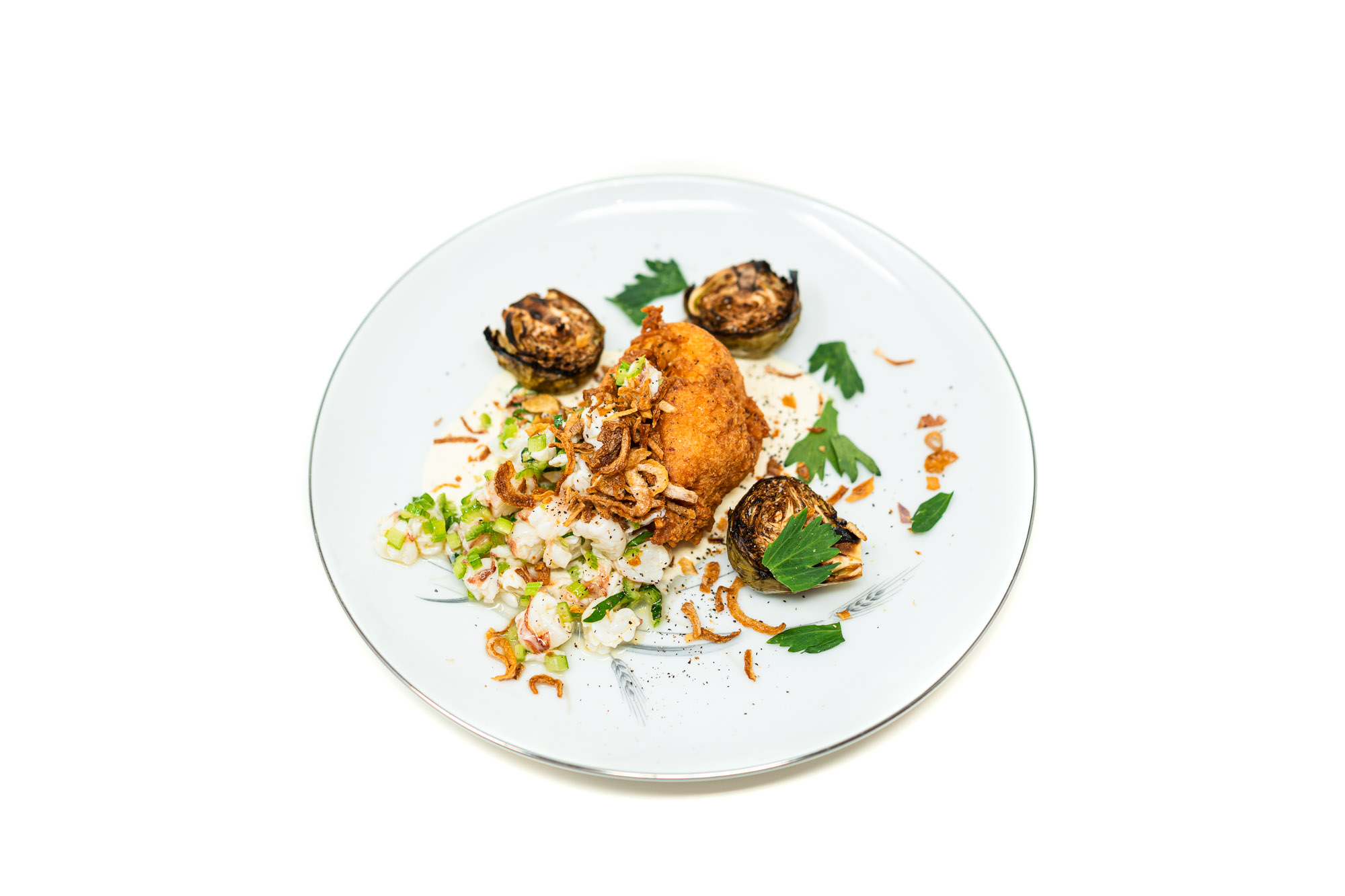
Quartering the sprouts exposes the dense internal layers. Coating them lightly in neutral oil and placing them on a ripping hot sheet pan under the broiler applies rapid, intense heat. The high temperatures blister and darken the outer leaves quickly. This heavy char provides a sharp, bitter contrast to the lactic sourness developed in the nuka bed. By limiting the cook time to just five to seven minutes, the center of the sprout retains a slight textural resistance rather than turning to mush.
Building the Caesar Emulsion
A stable emulsion relies on steady agitation and a slow introduction of fat. Whisking the egg yolks, Dijon mustard, and lemon juice creates the base. The mustard provides additional stability as the neutral oil is streamed in. Pouring the oil drop by drop initially allows the fat to break down and suspend within the water-based ingredients. Once the mixture becomes thick and pale, the oil can be added in a steady stream.
This dressing leans away from a standard Caesar by incorporating soy sauce alongside the traditional smashed anchovy, grated garlic, and Parmigiano-Reggiano. The soy sauce acts as a bridge, linking the Japanese fermentation profile of the nukazuke sprouts with the heavy umami of the European cheese and preserved fish.
Tossing the Caesar Dressed Broiled Nukazuke Brussels Sprouts
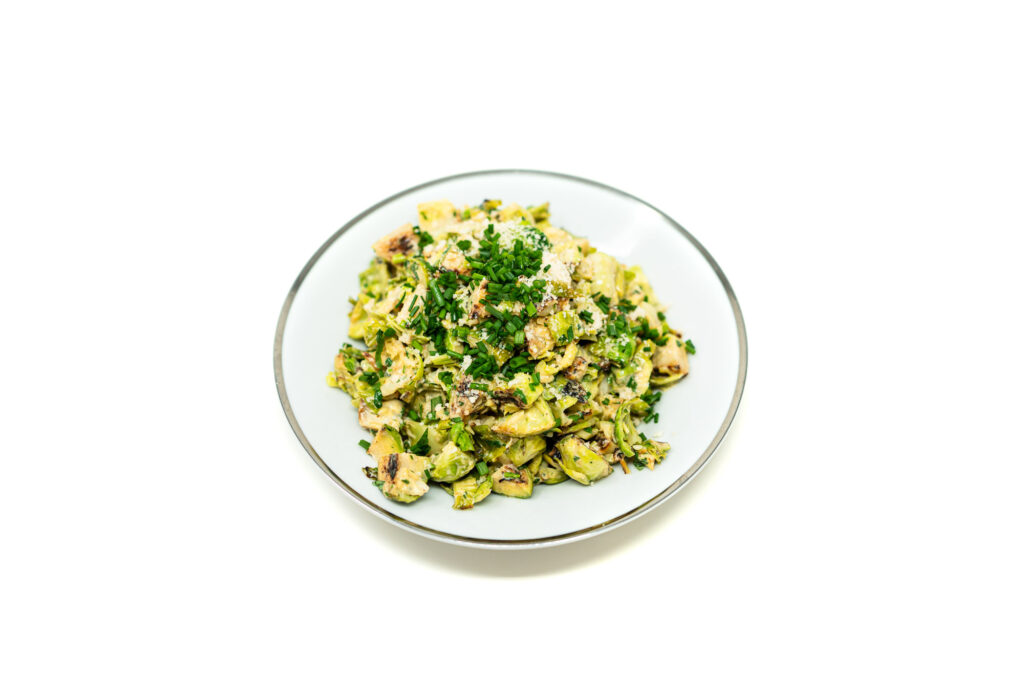
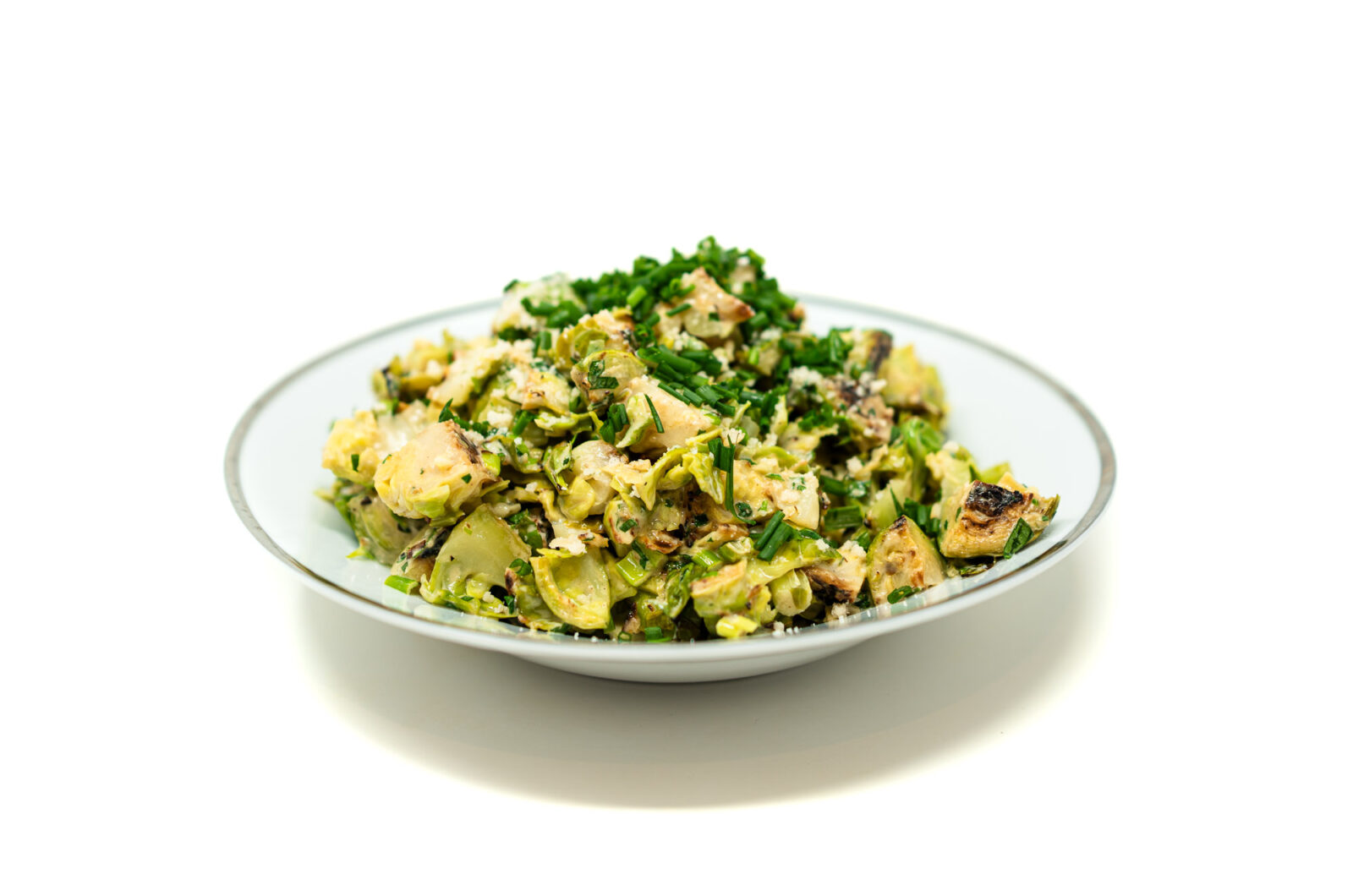
Temperature dictates how this dish comes together. The charred sprouts must move directly from the hot sheet pan into the mixing bowl with the emulsion. Tossing the vegetables while they are still radiating heat alters the dressing. The warmth gently melts the finely grated Parmigiano-Reggiano and thins the thick egg yolk base just enough to coat every layer of the quartered sprouts.
As the hot vegetables hit the chopped parsley, the residual heat releases the oils in the herbs. The result is a heavy, clinging sauce that binds the char, the lactic funk, and the rich fat together. Finishing the plate with finely minced chives and another layer of grated cheese cuts through the density of the emulsion with fresh, sharp allium notes.
Caesar Dressed Broiled Nukazuke Brussels Sprouts
4
servings36
hoursBurying Brussels sprouts in an active roasted rice bran bed strips away their raw sulfur notes and replaces them with a deep lactic funk. Broiling the fermented quarters under intense heat chars the edges before they are folded warm into a thick egg yolk and anchovy emulsion.
Keeps the screen of your device on while you cook
Ingredients
1 pound Brussels sprouts, trimmed and outer leaves removed
4 cups Active nukadoko (rice bran fermentation bed)
1 tablespoon avocado oil
2 large egg yolks
1 teaspoon Dijon mustard
1 tablespoon lemon juice, freshly squeezed
1/2 cup grapeseed oil
2 fillets anchovy, smashed into a paste
1 teaspoon soy sauce
2 cloves garlic, grated
1/4 cup Parmesan cheese, grated
2 tablespoons chives, minced
1 teaspoon ground black pepper
1/4 cup parsley, freshly chopped
Directions
- Ferment the Sprouts (The Nuka Cure):
- Wash and thoroughly dry the trimmed Brussels sprouts. Bury them whole in your active nukadoko (rice bran bed), ensuring they are completely submerged and packed tightly. Let them ferment at room temperature for 24 to 36 hours, depending on the maturity of your nuka bed and how funky you want the final flavor.
- Prep and Char:
- Remove the sprouts from the nuka bed and rinse them thoroughly under cold water to remove all the bran. Pat them completely dry. Turn your oven broiler to HIGH and place an empty sheet pan on the top rack to get ripping hot. Quarter the fermented sprouts, toss them lightly in the olive oil, and spread them evenly onto the hot sheet pan. Broil for 5 to 7 minutes, watching closely, until the edges are deeply charred and crisp but the center retains a slight bite.
- Build the Caesar Dressing:
- In a large mixing bowl, whisk the egg yolks, Dijon mustard, and lemon juice until combined. While whisking continuously and vigorously, slowly drizzle in the grapeseed oil, starting drop by drop, then moving to a slow, steady stream, until the mixture thickens, turns pale, and fully emulsifies. Whisk in the smashed anchovy, grated garlic, soy sauce, Parmigiano-Reggiano, and ground black pepper.
- Toss and Serve:
- Pull the charred sprouts from the oven and immediately dump them into the mixing bowl with the dressing and the chopped parsley while the sprouts are still hot. Toss thoroughly. The heat from the sprouts will slightly melt the cheese in the dressing and release the oils in the parsley, creating a thick, herbaceous coating that clings to every charred edge.
- Transfer the dressed sprouts to a shallow serving bowl. Top heavily with the finely minced chives and grate another fresh layer of Parmigiano-Reggiano over the top before serving.
Did you make this recipe?
Tag @hecooksco on Instagram
Like this recipe?
Follow @hecooksco on Pinterest
Frequently Asked Questions
Why ferment the Brussels sprouts in a nukadoko before cooking?
Burying the sprouts in a nuka bed introduces salt and lactic acid into the dense layers of the vegetable. This process extracts internal moisture and strips away the raw sulfuric bitterness of the brassica, leaving behind a deeply seasoned, funky profile that pairs well with high-heat charring.
Why must the Nukazuke Brussels Sprouts be completely dry before broiling?
Surface moisture prevents browning. If the sprouts go into the oven wet from being rinsed, the water will turn to steam and boil the outer leaves. Drying them completely allows the high heat of the broiler to immediately blister and char the exterior.
How does residual heat affect the Caesar emulsion?
Tossing the charred sprouts directly out of the oven into the dressing uses their residual heat to slightly melt the grated Parmigiano-Reggiano. This warmth loosens the thick egg yolk emulsion just enough to create a cohesive coating that clings to the textured layers of the vegetables.
Why add soy sauce to a traditional Caesar dressing base?
The soy sauce serves as a flavor bridge. It connects the salty, lactic qualities developed during the Japanese nuka fermentation with the heavy, savory notes of the anchovy and parmesan in the dressing.
What happens if the oil is added too quickly when making the Caesar emulsion?
Dumping the oil in too quickly overwhelms the egg yolks and prevents the fat from suspending evenly in the liquid. This causes the dressing to break into a thin, greasy liquid rather than forming a thick, creamy sauce. Streaming it slowly ensures the emulsion remains stable.