The kitchen smells like hot cast iron and rendering fat. There is a specific rhythm required when breaking down thick cuts of meat, demanding high heat up front and a long window of patience right after. We are building carnitas-style Texas pork ribs today. It is a process that forces heavy pork through a strict sequence of intense searing and slow reduction. You start with boneless cuts, seasoning them aggressively with heavy cracked black pepper and coarse sea salt. When the meat drops into a hot Dutch oven coated in avocado oil, the sound is violent. You step back. You let the metal do the work until a dark, hard crust forms on the exterior.
The Uncovered Braise for Carnitas-Style Texas Pork Ribs
Once that initial crust is locked in, the technique shifts. You drop in chopped white onion, smashed garlic, and chipotle peppers. Pouring in the chicken broth immediately deglazes the pan, and a wooden spoon scrapes up the fond stuck to the bottom. This is the foundation of the flavor profile. The absolute secret to proper carnitas-style Texas pork ribs is leaving the lid off the pot. Dropping the heat to low, you let the liquid simmer and roll for nearly two hours. The water evaporates slowly, forcing the broth and the chipotle oils to reduce down into a thick, highly concentrated glaze. The pork fibers soften and surrender to the heat, leaving the air heavy with the smell of smoke.

Toasting the Pancetta Pearl Couscous
While the meat breaks down, the plate needs a base that can actually handle the weight of the rich chipotle shredded pork ribs. Plain boiled grains will get completely lost. Instead, we start by rendering diced pancetta in a separate pan over medium heat. Letting the fat render out slowly ensures the meat becomes crisp and golden. Leaving that rendered pork fat right in the pan, you stir in a spoonful of palm oil to build a deeply savory base. The dry pearl couscous goes straight into that hot fat. Stirring continuously, you watch the pale grains turn a deep, nutty shade of brown. Pouring the chicken broth over the toasted grains causes the pan to hiss aggressively. You cover it and let the grains swell, absorbing the fat and the broth perfectly.
The Final Oven Blast for Carnitas-Style Texas Pork Ribs
By the time the grains are tender, the pork is completely yielding. Pulling the chunks of meat from the heavy pot, you shred them using two forks, looking for a mix of fine strands and rustic bites. Do not discard the liquid in the pot. Taking that shredded meat, you toss it directly back into the reduced glaze. Every single fiber gets coated in that dark syrup. Spread the wet meat evenly across a heavy baking sheet and slide it into a hot 425 degree oven. This extreme heat is what separates standard cast iron pulled pork from true carnitas-style Texas pork ribs. The remaining sugars caramelize rapidly, blistering the edges and turning them violently crisp.

Plating with Fresh Cherry Tomato Salsa
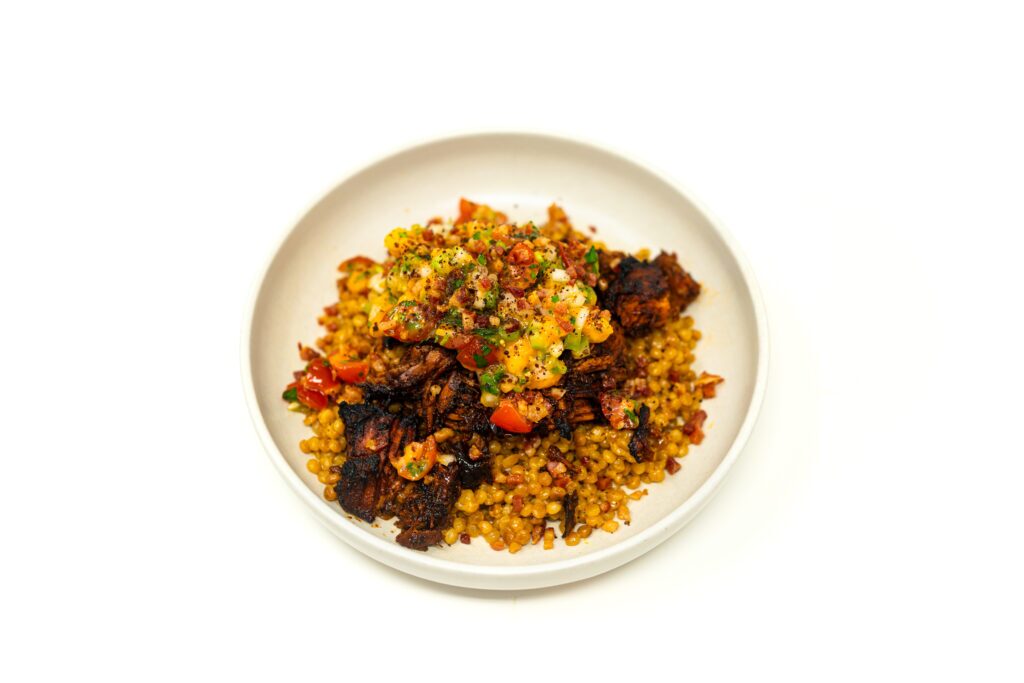
The final composition is an exercise in extreme contrast. Spooning a warm bed of the toasted pancetta pearl couscous into a shallow bowl creates a solid foundation. You pile the violently crisped carnitas-style Texas pork ribs right in the center. Because the meat is intensely rich and heavy, it requires a sharp counterpunch to cut through the rendered fat. That is where the fresh salsa comes into play. Combining chopped cherry tomatoes, finely diced white onion, diced orange bell pepper, and minced jalapeño provides a raw, crunchy texture. Folding in fresh chopped cilantro and green onion adds brightness. Finally, hitting the mixture hard with fresh lime juice and white wine vinegar creates a sharp, bracing acid. Spooning this bright salsa directly over the heavy pork lets the citrus juice run straight down into the savory grains. The plate is balanced, and the execution is completely clean.
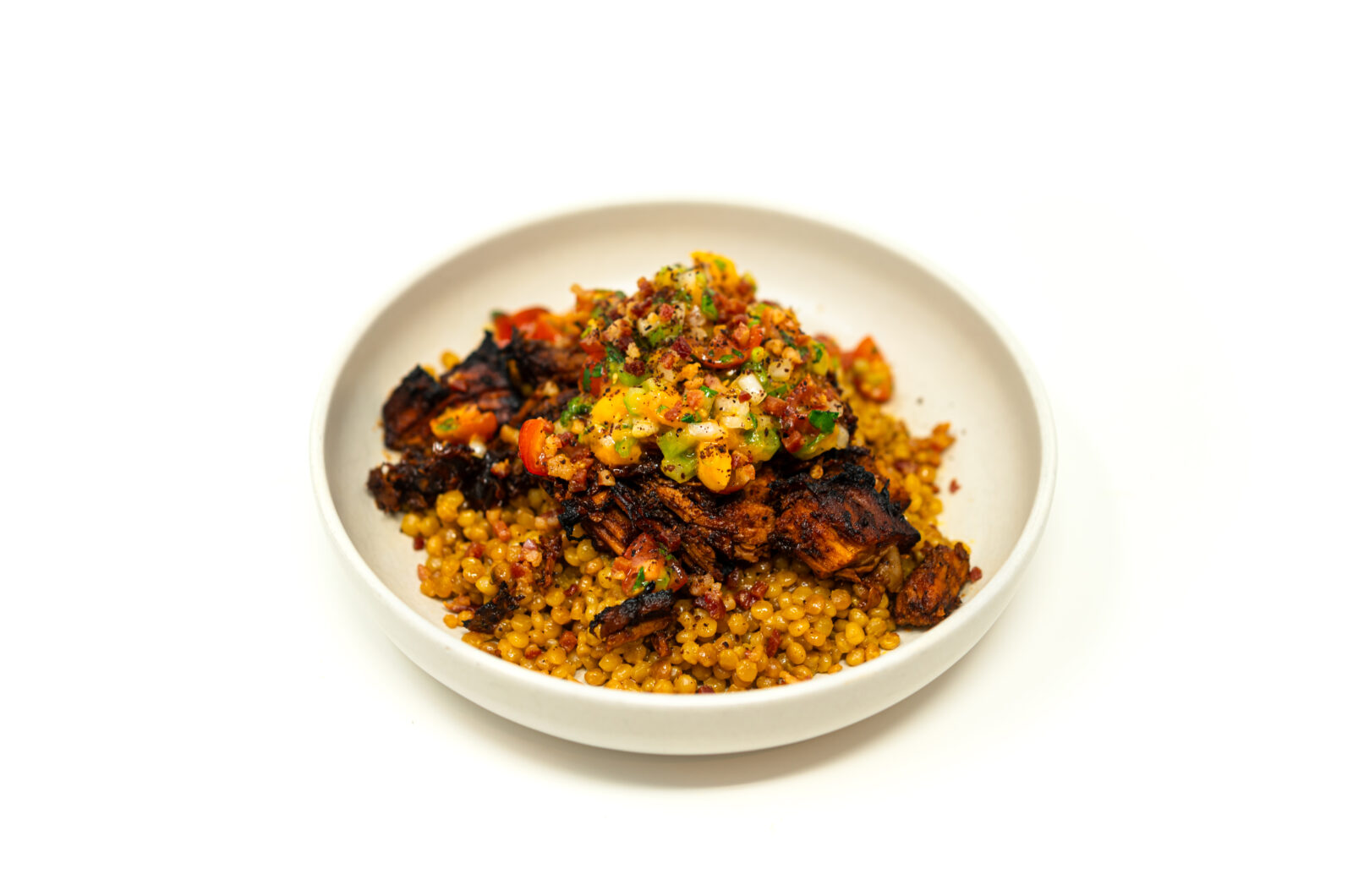
Crispy Carnitas-Style Texas Pork Ribs with Pancetta Pearl Couscous
4
servings30
minutes2
hours30
minutes1
hour10
minutesThis dish forces heavy pork through a strict sequence of intense searing, slow uncovered braising, and a final aggressive oven blast. The result is deeply caramelized meat cut by a sharp citrus salsa, resting on a heavy foundation of fat-toasted grains.
Keeps the screen of your device on while you cook
Ingredients
- For the Pork:
2-3 pounds Texas-style (boneless) pork ribs
to taste, salt
to taste, ground black pepper
1 tablespoon avocado oil
6 cups chicken broth
1 white onion, chopped
6 cloves garlic, smashed
2 dried chipotle peppers
- For the Pancetta Pearl Couscous:
1 cup pearl couscous
4 ounces pancetta, diced
1 tablespoon palm oil
2 cups chicken broth
pinch of salt
- For the Cherry Tomato Salsa:
2 cups cherry tomatoes, chopped
1 small white onion, finely diced
1 small orange bell pepper, diced
1 jalapeno, seeded and minced
1 handful cilantro, freshly chopped
3-4 green onion, chopped
1 lime, juiced
1 teaspoon white wine vinegar
pinch of sea salt
Directions
- Sear and Braise the Pork:
- Heat a heavy Dutch oven over medium-high heat and add a splash of avocado oil. Season the boneless Texas ribs aggressively with salt and ground black pepper. Drop them into the hot oil and sear hard until a dark, uniform crust forms on all sides, about 6 to 8 minutes.
- Toss in the chopped white onion, smashed garlic, and chipotle peppers. Pour in the chicken broth and use a wooden spoon to scrape up any stuck bits (fond) from the bottom of the pot. Bring the liquid to a hard boil, then reduce the heat to low and simmer for 2 hours, until the pork fibers melt and pull apart effortlessly.
- Prepare the Salsa:
- While the meat simmers, combine the chopped cherry tomatoes, finely diced white onion, diced orange bell pepper, and minced jalapeño in a mixing bowl. Fold in the fresh cilantro and chopped green onion. Hit the mixture with the fresh lime juice and white wine vinegar. Season with sea salt and set aside to macerate.
- Render and Toast the Couscous:
- Place a separate pan over medium-low heat and drop in the diced pancetta. Render it completely until the pancetta turns crisp and golden. Leave the rendered pork fat in the pan and stir in the palm oil to build a deep, rich fat base. Dump the dry pearl couscous directly into the hot fat. Toast, stirring constantly for 2 to 3 minutes, watching the grains closely to prevent burning. Pour in the chicken broth, bring to a quick boil, then reduce the heat to low, cover, and simmer for 10 to 12 minutes, until the grains swell and absorb the liquid.
- Shred and Crisp the Pork:
- Preheat your oven to 425°F (220°C). Pull the tender pork chunks out of the Dutch oven and shred the meat into a mix of fine shreds and rustic, heavy bites. Toss the shredded meat directly back into the remaining concentrated braising liquid to coat it completely. Spread the pork onto a heavy baking sheet and roast it for 15 minutes.
- Plate and Serve:
- Spoon a warm, solid foundation of the pancetta and palm-oil-toasted couscous into a shallow bowl. Pile the crisped, chipotle-infused pork directly over the center. Finish by topping with the bright cherry tomato salsa, allowing the citrus and vinegar to run straight through the pork fat and down into the grains.
Did you make this recipe?
Tag @hecooksco on Instagram
Like this recipe?
Follow @hecooksco on Pinterest
Frequently Asked Questions
Why leave the pot uncovered when cooking carnitas-style Texas pork ribs?
Leaving the Dutch oven uncovered allows the chicken broth to evaporate slowly. This forces the liquid to reduce into a tight, highly concentrated glaze that coats the meat.
Can I use a different cut of meat for these carnitas-style Texas pork ribs?
Boneless Texas ribs offer the ideal ratio of meat to fat for this specific technique. Standard pork shoulder will work, but you must cut it into smaller, uniform chunks before searing.
Why do you toast the pearl couscous before boiling it?
Toasting the dry grains in hot pancetta fat and palm oil locks in a deep, nutty flavor and prevents the couscous from becoming overly soft or mushy during the simmer.
How do I ensure my carnitas-style Texas pork ribs get completely crispy?
The secret is the final high-heat oven blast. Tossing the shredded meat back into the reduced cooking liquid and spreading it flat on a baking sheet allows the extreme heat to caramelize the sugars and violently crisp the edges.
What is the purpose of adding white wine vinegar to the cherry tomato salsa?
The pork and the pancetta couscous are intensely rich. The sharp acid from the fresh lime juice and the white wine vinegar cuts straight through the heavy fat and balances the entire plate.