Heat breaks down the dense collagen grid of pork belly over three hours at 300 degrees Fahrenheit. The intramuscular fat liquefies, converting tough connective tissue into soft gelatin while the liquid in the braising vessel prevents the protein strands from drying out. The braising base contains water, soy sauce, mirin, brown sugar, garlic, and ginger. As steam circulates beneath the lid, the aromatic compounds permeate the surface layers of the meat, setting a savory foundation.
Extracted separately, kombu seaweed releases glutamic acid into warm water without the bitter tannins that emerge from boiling. Steeping the dried kelp at 175 degrees Fahrenheit yields a clean, mineral dashi. Combining this fresh dashi with the strained, fat-separated pork braising liquid creates a complex solution. When simmered in a wide pan, water evaporates rapidly. The sugars, soy solids, and gelatin left behind in the pan concentrate into a dark, viscous liquid that clings to the back of a spoon.
Constructing the Sushi-Spiced Orzo Base
Orzo pasta provides the starch vehicle for this preparation. Cooked in boiling salted water to al dente, the small grain-shaped pasta retains enough exterior starch to hold an emulsion. While the pasta is hot, folding in cold-pressed sesame oil coats the individual pieces, preventing them from clumping.
Raw cucumber diced to the exact dimension of the pasta introduces a cold, crisp structural contrast. Rice vinegar supplies acetic acid, which penetrates the warm starch and cuts directly through rendered animal fat. Finely chopped cilantro and vegetable broth distribute herbal notes and moisture throughout the warm grain bed, recreating the aromatic balance of seasoned sushi rice without relying on short-grain sticky rice.
High-Heat Searing and Final Plating
Slicing the chilled, braised belly into square slabs exposes crisp cross-sections of muscle and rendered fat layers. Dropping these slabs onto a dry, hot skillet triggers the Maillard reaction on the outer edges. Amino acids and sugars fuse under extreme contact heat, creating a crisp brown crust across the skin and flesh.
Pouring the kombu glaze directly over the pork in the hot skillet causes the remaining moisture in the sauce to flash into steam. The concentrated sugars caramelize instantly, coating the meat in a dark, reflective lacquer. Placing the hot pork directly over the tempered orzo transfers warmth into the grain bed, releasing the volatile aromatics of the sesame oil and rice vinegar. Pickled shallots and raw chives placed over the top deliver a sharp hit of raw acid and onion oil to break up the rich fat of every bite.
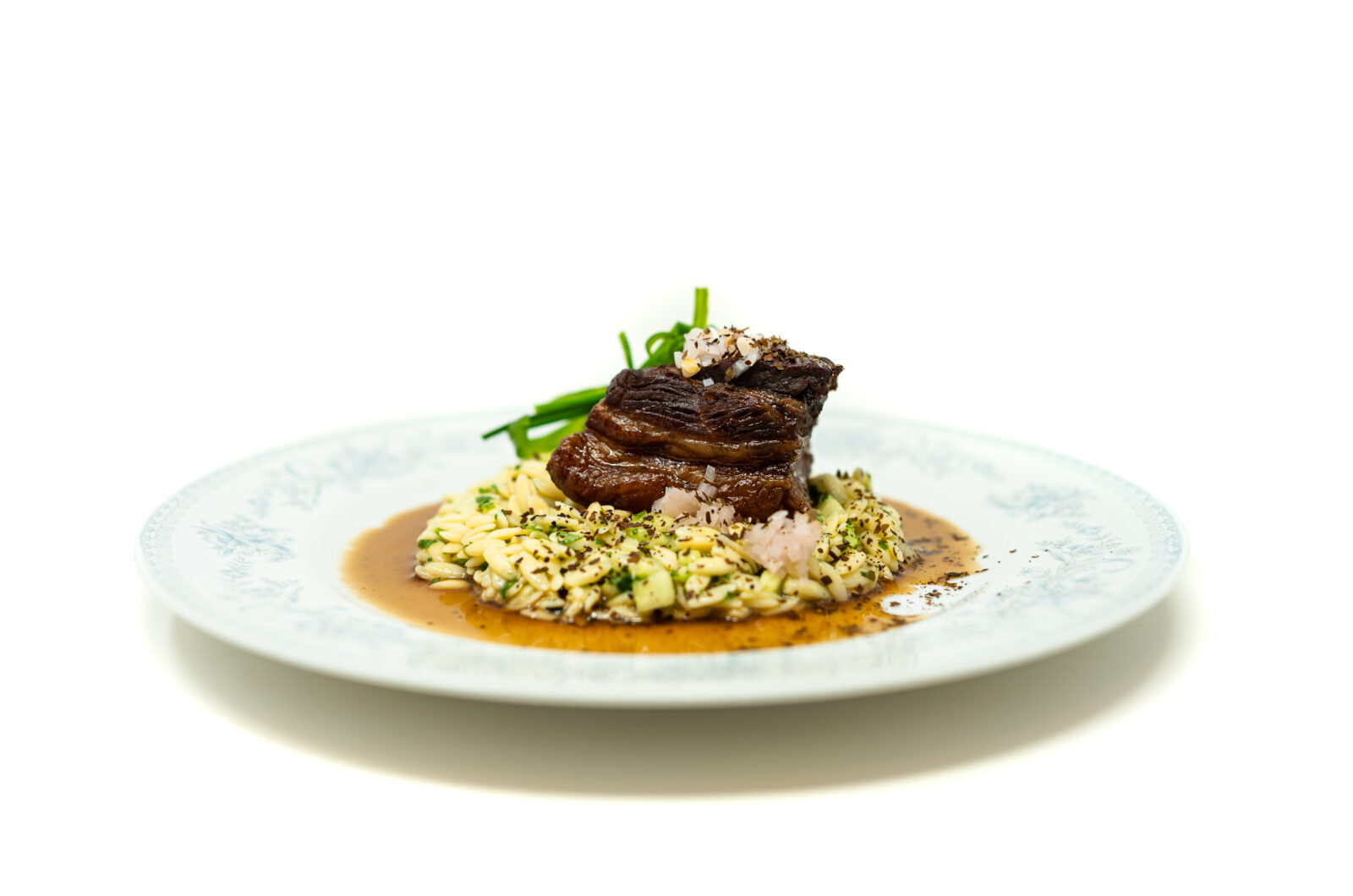
Kombu-Glazed Pork Belly with Sushi-Spiced Orzo
4
servings30
minutes3
hours30
minutes4
hoursA slow-braised slab of skin-on pork belly is seared and lacquered in a concentrated reduction of kombu dashi and pork aromatics. It rests over warm, tender orzo dressed with rice vinegar, sesame oil, and cucumber to mirror the thermal and acidic balance of seasoned sushi rice.
Keeps the screen of your device on while you cook
Ingredients
- For the Kombu-Braised Pork Belly:
1-2 pounds pork belly
1 piece dried kombu
6 cups water
1/4 cup mirin
1/4 cup soy sauce
2 tablespoons brown sugar
3 cloves garlic, smashed
1 inch piece ginger, smashed
- For the Sushi-Spiced Orzo:
2 cups orzo
1/2 cup vegetable broth
1 English cucumber, peeled and diced
1 teaspoon toasted sesame oil
2 tablespoons cilantro, freshly chopped
1 tablespoon rice vinegar
pinch of salt
- For Serving:
pickled shallots
chopped chives
Directions
- Extract the Kombu Base:
- Steep the dried kombu in 3 cups of hot water for at least 30 minutes to create a clean, aromatic dashi. Remove and discard the kombu.
- Braise the Pork Belly:
- Preheat your oven to 300°F (150°C). Place the scored pork belly into a Dutch oven with the water, mirin, soy sauce, brown sugar, garlic, and ginger. Cover and braise in the oven for 3 hours until completely fork-tender.
- Strain and Reduce the Glaze:
- Remove the pork belly and let it cool slightly before slicing into neat square slabs. Strain the remaining braising liquid through a fine-mesh sieve into a saucepan to remove all solids. Pour the fresh steeped kombu dashi directly into the strained braising liquid. Simmer over medium-high heat until it reduces into a dark, glossy, glaze – 10 to 15 minutes.
- Assemble the Sushi-Spiced Orzo:
- Cook the orzo in boiling salted water until al dente; drain well. While warm, fold in the vegetable stock, diced cucumber, toasted sesame oil, chopped cilantro, and rice vinegar until cohesive and aromatic.
- Sear the Pork Belly:
- Slice the cooled pork belly into squares. Sear the pork belly slabs a hot skillet, basting continuously with the kombu-infused reduction until deeply lacquered.
- Plate and Serve:
- Spoon a bed of the warm orzo into the center of the plate and ring the base with the hot glaze. Top with the lacquered pork belly, pickled shallots, and chives.
Notes
- To make quick pickled shallots: Thinly slice 2 large shallots into rounds or fine dice, place them in a heatproof jar, and pour over a warm brine of 1/2 cup vinegar, 1/2 cup water, 1 tbsp sugar, and 1 tsp kosher salt; let sit at room temperature for at least 20 minutes before serving.
Nutrition Facts
- Total number of serves: 4
- Calories: 680kcal
- Fat: 46g
- Saturated Fat: 16g
- Sodium: 1120mg
- Carbohydrates: 44g
- Protein: 22g
Did you make this recipe?
Tag @hecooksco on Instagram
Like this recipe?
Follow @hecooksco on Pinterest
Frequently Asked Questions
Why steep kombu separately instead of braising the pork with it?
Boiling or long-braising kombu over 180°F causes the kelp to release bitter tannins and slimy alginates. Steeping it separately at 175°F extracts pure glutamic acid, ensuring a clean umami base for the kombu glazed pork belly without off-flavors.
How does sushi-spiced orzo mimic the structure of sushi rice?
Orzo matches the physical footprint of short-grain rice. Dressing the pasta warm with rice vinegar, sesame oil, and diced cucumber allows the starch to absorb the acid while maintaining distinct bite and structural temperature contrast against hot pork.
What causes the kombu dashi reduction to become glossy without added cornstarch?
As the pork belly braises, collagen melts into natural gelatin. Straining this gelatin-rich liquid and simmering it with the steeped dashi evaporates water, forcing the natural proteins and sugars to concentrate into a thick glaze.
Why chilled pork belly is easier to slice cleanly before searing?
Warm, freshly braised pork belly contains soft liquid fat and delicate gelatin layers that slip apart under a knife. Cooling the meat solidifies the fat cap, locking the layers together so you can cut sharp, uniform square slabs.
How do pickled shallots function technically on this plate?
Pickled shallots contribute acetic acid and raw crunch. The acid cuts through the rendered pork fat on the tongue, resetting the palate between bites of rich meat and warm orzo.