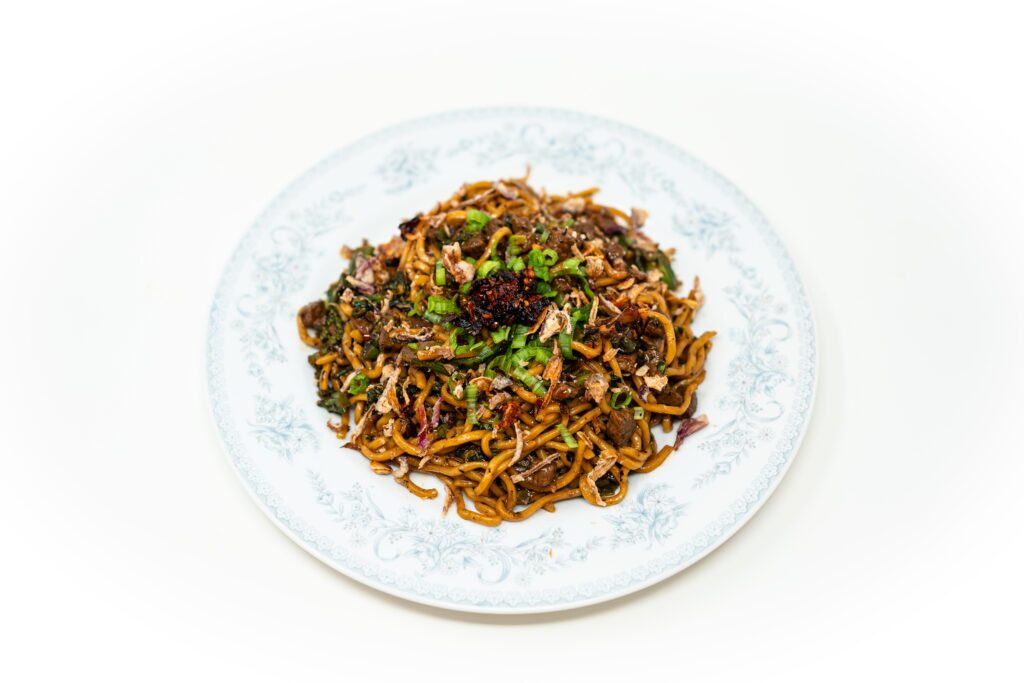
Traditional beef and broccoli operates on a flawed architecture. Large florets repel sauce. Sliced beef often steams in its own released moisture. Starch slurries coat the exterior but fail to penetrate the fiber. This Wagyu beef lo mein dismantles that structure entirely. By altering the cut of the meat and the size of the vegetables, the wok mechanics change fundamentally.

Engineering a Better Wagyu Beef Lo Mein
The physical process begins with the vegetables. Broccolini and shishito peppers go into a smoking hot wok with a minimal splash of neutral oil. The goal is rapid cellular breakdown and immediate blistering. The intense heat of the carbon steel chars the exterior before the internal moisture can steam and soften the stalks. Once they take on a hard, blackened sear, they must be removed immediately. Leaving them in the pan would invite residual moisture from the incoming ingredients, effectively boiling the greens and destroying their rigid crunch.

Next, the protein requires careful thermal management. Standard stir fry relies on lean cuts velveted in baking soda and starch to retain moisture under high heat. Wagyu dictates a completely different approach. The exceptionally high concentration of intramuscular fat requires intense, direct contact with the metal to render properly. Diced into uniform half inch cubes, the beef hits the bare steel and sits completely undisturbed. A hard Maillard crust forms on the exterior. As the protein structure tightens from the heat, it physically forces liquid fat out into the wok basin. This rendered animal lipid is the structural foundation of the entire dish.
Constructing the Wok Sauce
Pushing the seared beef up the sloping sides of the wok exposes a pooling reservoir of liquid wagyu fat at the base. Chopped scallion whites, minced garlic, and fresh ginger drop directly into this boiling lipid. The alliums fry instantly. Their cellular walls burst, releasing highly volatile aromatic oils directly into the fat.
The liquid components follow in rapid succession. Light soy sauce provides the necessary salinity. Dark soy sauce provides intense dark pigment and deep, oxidized notes. Oyster sauce adds heavy viscosity, while Shaoxing wine deglazes the steel, lifting the caramelized proteins left behind by the beef. As this mixture hits the hot steel, it undergoes rapid reduction. The water content evaporates violently, leaving a concentrated sauce bound tightly by the rendered animal fat. Two tablespoons of coarse chili crisp are introduced, adding toasted chili flakes and suspended vegetable oil to the dark emulsion.

The Integration of Fresh Wheat Noodles
Fresh lo mein noodles are critical for the final stage. Dried pasta lacks the necessary surface starch required to grip the heavy liquid. The cooked, slightly alkaline wheat noodles drop directly into the bubbling wok. As they are tossed rapidly, the starch on the exterior of the noodles binds with the wagyu fat and the soy reduction. The sauce ceases to be a loose, separate liquid in the pan and physically transforms into a tight glaze fused to the pasta.

The charred broccolini and shishitos return to the wok at the final moment. The finely chopped vegetables act as a physical aggregate. They catch naturally in the tangled strands of pasta rather than sliding off to the bottom of the plate. Off the heat, shredded red cabbage is folded in, providing a raw, rigid texture to contrast the gelatinized noodles and the tender beef. The final result is a structurally integrated dish where every strand of starch is coated in rendered fat, smoke, and sharp chili heat.
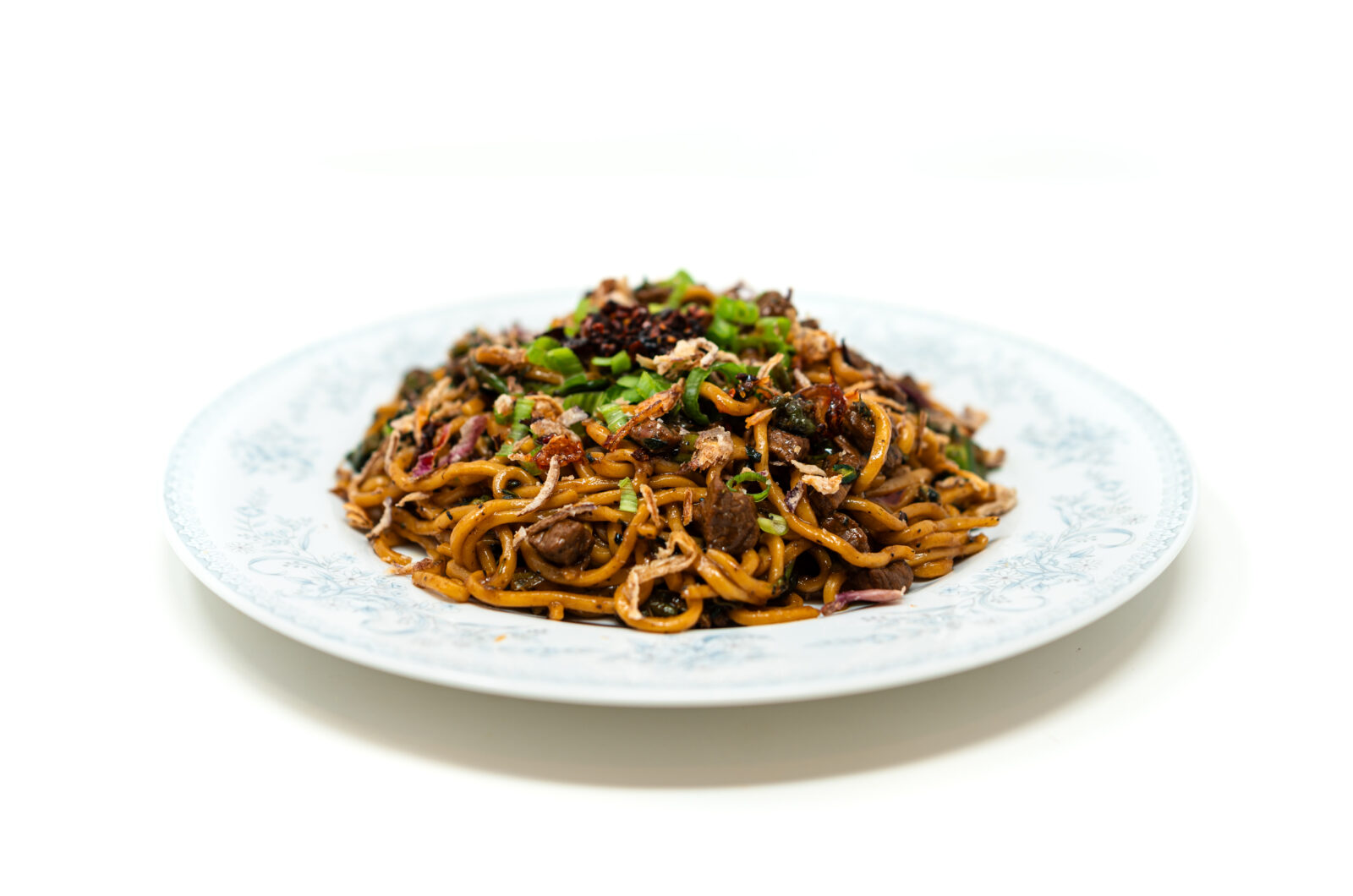
Wok-Charred Wagyu Beef and Broccolini Lo Mein with Chili Crisp
2
servings15
minutes15
minutes30
minutesDiced wagyu beef sears in a smoking wok, releasing heavy fats that bind dark soy and chili crisp into a clinging sauce. Fresh lo mein noodles and blistered broccolini integrate directly into the rendered fat for a dense, structurally sound stir-fry.
Keeps the screen of your device on while you cook
Ingredients
8 ounces Wagyu beef, diced into 1/2-inch cubes
1 bunch broccolini, chopped
1 handful shishito peppers, sliced into rings
1-2 cups red cabbage, finely shredded
3 scallions, whites chopped and greens sliced
3 cloves garlic, minced
1 tablespoon ginger, freshly grated
2 tablespoons light soy sauce
1 tablespoon dark soy sauce
1 tablespoon Shaoxing wine (or dry sherry)
2 tablespoons oyster sauce
1 teaspoon toasted sesame oil
3 tablespoons chili crisp
8 ounces fresh lo mein noddles
Directions
- Cook the Vegetables:
- Heat a wok until smoking with a minimal splash of neutral oil. Toss the shishito rings and chopped broccolini rapidly until they take on an aggressive, blistered char. Remove from the wok immediately to retain their crunch and set aside.
- Prepare the Beef:
- Return the wiped wok to high heat and add the diced wagyu in a single layer. Leave undisturbed for 1 to 2 minutes to build a hard crust, then toss briefly to brown the remaining sides, allowing the meat to release its heavy rendered fat, 4 to 6 minutes.
- Make the Sauce:
- Reduce the heat to medium. Push the beef aside and drop the scallion whites, garlic, and ginger directly into the rendered wagyu fat. Stir-fry briefly until aromatic. Pour in the light soy sauce, dark soy sauce, oyster sauce, and Shaoxing wine. Allow the liquid to bubble and reduce for 30 seconds, then stir in two tablespoons of the chili crisp.
Did you make this recipe?
Tag @hecooksco on Instagram
Like this recipe?
Follow @hecooksco on Pinterest
Frequently Asked Questions
Why dice the meat for Wagyu beef lo mein instead of slicing it?
Dicing the highly marbled beef exposes more surface area to the hot steel, allowing for a rapid Maillard reaction on all sides. This shape also forces the intramuscular fat to render outward efficiently, creating the liquid base necessary to coat the noodles.
What is the purpose of chopping the vegetables so finely?
Large florets repel sauce and separate from the pasta. Chopping the broccolini and shishitos into fine pieces turns them into an aggregate that physically clings to the fresh wheat noodles, ensuring an even distribution of charred vegetables in every bite.
Why must the wok-charred broccolini be removed before cooking the beef?
If left in the wok, the vegetables will release internal moisture as they continue to cook. This trapped steam prevents the beef from forming a hard crust and dilutes the rendered fat. Cooking them in isolated stages controls the moisture content.
How does dark soy sauce differ from light soy sauce in this application?
Light soy sauce provides the primary salinity. Dark soy sauce is aged longer and provides deep pigment that stains the fresh wheat noodles, while also adding viscosity to the final emulsion.
Why add the chili crisp directly to the bubbling wok rather than just as a garnish?
Heating the chili crisp in the reduced soy and rendered fat blooms the spices. The suspended chili oil integrates directly into the emulsion, ensuring the heat and toasted garlic notes coat the pasta evenly rather than sitting on the surface.