Building this dish requires manipulating ingredients that normally resist each other. You are forcing the ocean into dairy and pushing sugar to the absolute edge of combustion. The result relies entirely on physical tension. The cake itself uses semolina flour for a coarse structural framework, while cake flour provides a tender crumb. Farmer’s cheese introduces a heavy lactic moisture that prevents the starches from drying out during the bake. The defining variable is the liquid fat. Instead of standard dairy, the batter utilizes heavy cream steeped with foraged oyster shells.
Extracting Minerality for Oyster Shell Cream

Oyster shells are predominantly calcium carbonate. When you scrub them clean, boil them to remove organic matter, and subject them to extreme heat, you alter their physical state. Blasting dry shells in a 500-degree oven for twenty minutes toasts the residual minerals. Dropping those screaming hot shells directly into cold heavy cream causes an immediate thermal shock. The fat in the cream rapidly absorbs the toasted, saline notes from the calcium. After a twenty-four-hour steep in the refrigerator, the cream transforms. It thickens slightly and carries a distinct, sharp minerality that cuts through the inherent sweetness of the dessert.
Controlling the Burnt Honey
Raw honey is too singular for this batter. It needs to be pushed past its breaking point. Boiling the honey in a saucepan drives off its water content. As the temperature climbs, the sugars undergo the Maillard reaction, darkening into a deep amber. The liquid begins to smoke slightly as it nears combustion. At this exact threshold, you must halt the cooking process. Whisking cold oyster shell cream into the boiling honey drops the temperature immediately. The mixture bubbles violently as the water in the cream hits the superheated sugar. Once the violent reaction subsides, you are left with a stable, emulsified burnt honey cream that carries a bitter complexity. This liquid hydrates the semolina and farmer’s cheese batter.
Tension in the Fish Sauce Caramel
Traditional caramel relies on scorched white sugar and butter. This muscovado fish sauce caramel bypasses that process entirely. Muscovado sugar retains a high percentage of natural molasses. Melting it directly with the heavy cream prevents the sugar from seizing. As the mixture simmers, the water evaporates, and the sugar and fat emulsify into a dark, viscous syrup. Removing the pan from the heat and stirring in a premium first-press fish sauce completely alters the profile. The fermented anchovy introduces glutamates and inosinates. These compounds bind with the sugar receptors on the palate, amplifying the perception of both sweetness and salinity simultaneously.
Stabilizing the Strawberry Puree
Plating requires structural control. A standard fruit puree will separate and bleed water into the caramel as it sits on the plate. To prevent this, the fresh strawberries and honey are blended and passed through a fine mesh sieve to remove the seeds. The resulting liquid is placed back into the blender. Shearing xanthan gum into the vortex creates a stabilized fluid gel. The complex carbohydrates in the xanthan gum trap the free water in the strawberry puree. The sauce tightens instantly. It will hold a perfect dot or drag across the plate without weeping into the surrounding fish sauce caramel.
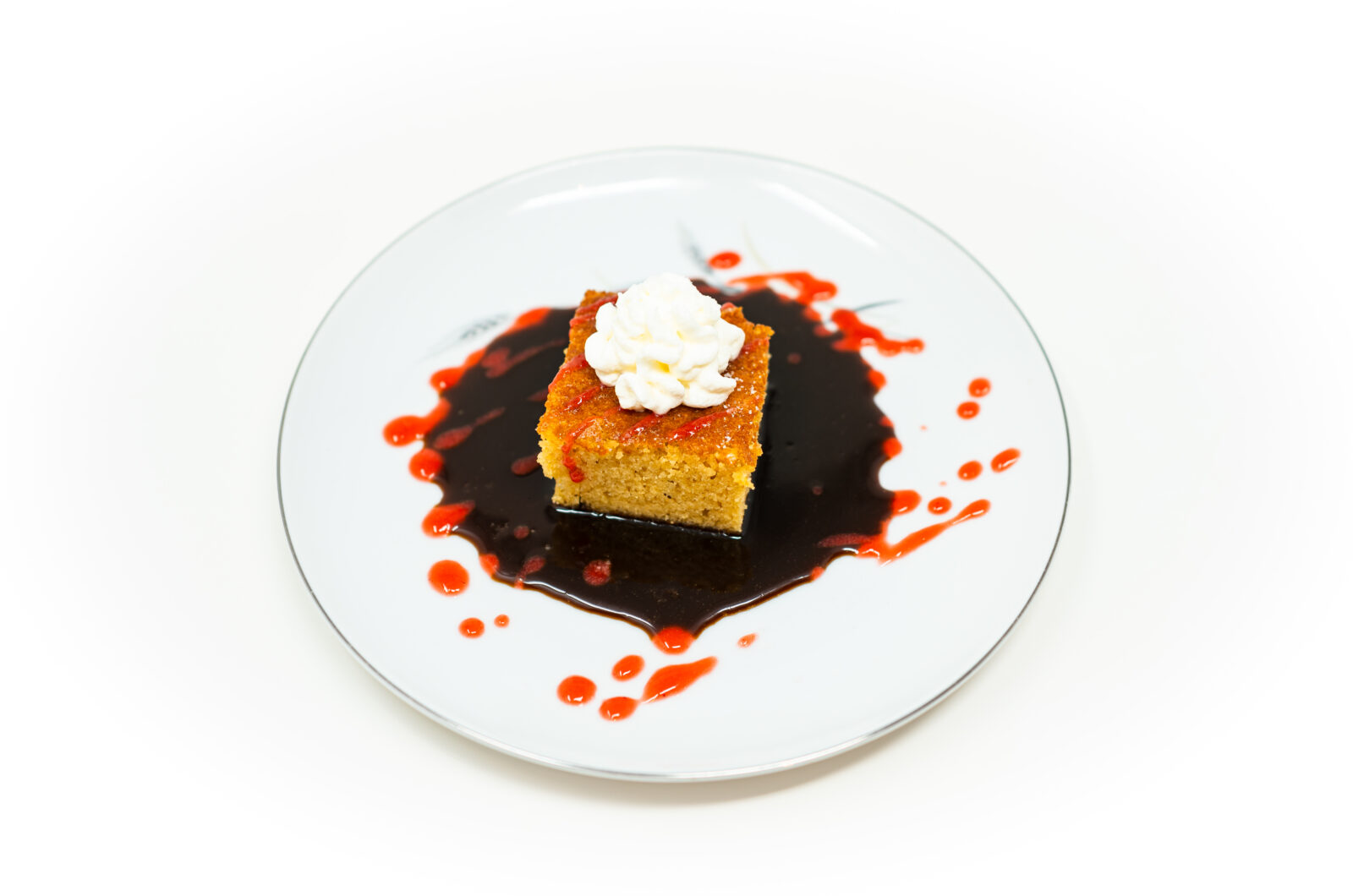
Burnt Honey and Shell Cream Cake with Fish Sauce Caramel
4
servings24
hours45
minutes45
minutes25
hours30
minutesToasted oyster shells undergo thermal shock in cold heavy cream to extract residual coastal minerality. This infused cream anchors a dense semolina and farmer’s cheese cake, cut by the sharp tension of muscovado sugar and fermented fish sauce.
Keeps the screen of your device on while you cook
Ingredients
- For the Shell Cream:
12-15 foraged oyster shells
1 quart heavy cream
- For the Cake:
1 cup honey
1 cup semolina flour
1 cup cake flour
1 tablespoon baking powder
1 cup shell cream
1 cup farmer’s cheese
1 cup sugar
3 large eggs
1/2 cup unsalted butter, melted
1 pinch sea salt
- For the Fish Sauce Caramel:
1 cup muscovado sugar
1 cup shell cream
1-2 tablespoons fish sauce
- For the Whipped Cream:
1 cup shell cream
1 tablespoon powdered sugar
pinch of sea salt
- For the Strawberry Puree:
1 cup fresh strawberries, hulled
2 tablespoons honey
1/8 teaspoon xanthan gum
Directions
- Steep the Shell Cream (24 Hours Prior)
- Thoroughly scrub and boil your oyster shells to completely sanitize them. Let them air dry. Preheat your oven to 500°F. Blast the dry shells for 15 to 20 minutes until they are screaming hot and faintly toasted. Pour the heavy cream into a heat-safe container, while keeping it as cold as possible. Drop the 500°F shells directly into the cold cream. Cover and refrigerate for 24 hours to extract the minerality. Strain through a fine chinois. You will use this master batch for the cake, the caramel, and the whip.
- Burn the Honey:
- In a small saucepan, bring the honey to a simmer over medium heat. Cook until it darkens to a deep amber, just past the caramelization stage, 7 to 10 minutes. Remove from heat and let it cool slightly. Remove from the heat and carefully whisk in 1 cup of the strained Shell Cream. It will bubble up aggressively. Whisk until smooth to stop the cooking process, then let the honey-cream mixture cool.
- Bake the Cake:
- Preheat your oven to 350°F. Grease and line an 8×8 or 9×9 baking pan. In a stand mixer, beat the farmer’s cheese and granulated sugar until smooth. Add the eggs one at a time, followed by the melted butter and the cooled burnt honey cream mixture. In a separate bowl, whisk the semolina, cake flour, baking powder, and salt. Gently fold the dry ingredients into the wet mixture until just combined. Pour the batter into your prepared pan and bake for 35 to 45 minutes, or until the center is set. Let cool completely before portioning.
- Build the Caramel:
- Combine the muscovado sugar and 1 cup of the Shell Cream in a heavy-bottomed saucepan over medium heat. Whisk gently until the sugar is completely dissolved and the mixture begins to simmer and thicken. Remove from the heat and stir in the high-quality fish sauce. Let it cool to a pourable viscosity.
- Stabilize the Strawberry Puree:
- Blend the fresh strawberries and honey until completely smooth. Pass the mixture through a fine-mesh sieve to remove the seeds. Return the strained liquid to the blender, turn it on low, and shear in the xanthan gum. Blend for 30 seconds until slightly thickened and stabilized. Transfer to a squeeze bottle.
- Whip the Cream and Assemble:
- Whip 1 cup of the remaining cold shell cream with the powdered sugar and flaky sea salt until it holds medium-stiff peaks. To plate, flood the center of the dish with the warm Muscovado Fish Sauce Caramel. Drizzle or dot the strawberry puree through the caramel. Place a squared portion of the Cake directly in the center, and crown it with a quenelle of the salted Shell Cream whip. Serve immediately.
Notes
- The fish sauce caramel relies heavily on the quality of the fish sauce you use. We strongly recommend reaching for a premium first-press bottle like Red Boat 40°N for a clean, deep umami that won’t overwhelm the dessert with harsh fishiness.
- On Foraging & Shell Prep: Do not rush the cleaning process. Whether you pulled these from the coast yourself or saved them from a raw bar, you must aggressively scrub them with a stiff brush to remove all sand, grit, and loose calcium. Boiling them for a full 10 to 15 minutes is non-negotiable—it completely sterilizes the shells and strips away any lingering organic matter. You want the clean, structural minerality of the ocean to infuse your cream, not the taste of low tide.
Did you make this recipe?
Tag @hecooksco on Instagram
Like this recipe?
Follow @hecooksco on Pinterest
Frequently Asked Questions
Why must the shells be heated to 500 degrees to make the oyster shell cream?
Heating the sterilized shells to an extreme temperature causes a violent thermal shock when they hit the cold dairy. This rapid temperature drop forces the fat molecules in the heavy cream to absorb the toasted calcium and coastal minerality much more efficiently than a standard cold steep.
How does farmer’s cheese affect the texture of the burnt honey and shell cream cake?
Farmer’s cheese introduces a dense, lactic moisture to the batter. Because semolina flour absorbs a significant amount of hydration, the high protein and fat content of the cheese prevents the crumb from drying out during the bake, resulting in a hybrid texture sitting between a sponge and a cheesecake.
Why use muscovado sugar instead of white sugar for the fish sauce caramel?
Muscovado is an unrefined cane sugar that retains its natural molasses content. It already possesses a dark, complex flavor profile. Melting it directly with the oyster shell cream prevents seizing and creates a deeper base note that stands up to the aggressive glutamates in the fermented fish sauce.
What physically stops the honey from burning completely into carbon?
Introducing cold heavy cream directly into the boiling honey drops the temperature of the sugar instantly. This physical action halts the Maillard reaction and prevents the honey from crossing the threshold from deeply caramelized into scorched, bitter carbon.
Why is xanthan gum necessary for the strawberry puree?
Fresh fruit purees contain a high percentage of unbound water. Without stabilization, this water will separate and weep into the surrounding sauces on the plate. Shearing a fraction of a percent of xanthan gum into the puree traps the free water, creating a stable fluid gel that holds its shape indefinitely.