Beef needs salt, time, and a dry surface. A thick ribeye gets salted well before it sees a pan. At first, the salt draws moisture toward the surface. That moisture dissolves the salt, creating a concentrated brine that gradually moves back into the meat. Given enough time, seasoning works its way beyond the surface rather than remaining a crust of salt on top.
For a steak over an inch thick, that means thinking in hours rather than minutes. A day long dry brine gives the salt time to move through the cut while the exposed surface dries. If you try to sear a wet steak, the heat from the pan must first evaporate the surface water before any browning can occur. That creates steam, which turns the exterior gray.
That dry surface is the real prize. Cast iron hits it with intense heat, and instead of boiling away a film of moisture, the steak can begin browning immediately. Avocado oil goes into the smoking hot pan. The pan-seared ribeye follows. Fat renders. The surface darkens. The crust builds.
Then the steak comes out of the pan, but cooking does not stop. Heat continues moving from the hotter exterior toward the center, raising the internal temperature several degrees during the rest. Given time to settle, the juices stay where they belong rather than flooding the cutting board the moment the knife arrives.
Building Crispy Potato Wedges
A potato is a study in contrast, requiring a crisp exterior wrapped around a soft center. The first cook happens in salted water. Russet wedges are blanched until the starches swell and the edges begin to soften. This is also the moment to season the potato from within. Once the wedges are cooked, they need to dry completely. Water is the enemy of frying.
The second cook is all about removing that remaining surface moisture. Hot oil drives water out rapidly, leaving behind a thin, dehydrated layer of starch that turns crisp and brittle. The best crispy potato wedges have a clear divide between the two stages of cooking. The outside shatters. The inside gives way immediately. They are sturdy enough to carry the ribeye and its sauces without collapsing underneath them.
Cutting the Fat with Tartare Relish
Ribeye brings plenty of fat to the plate. The relish needs to push back. The fat from the steak and the oil from the fried potatoes will quickly overwhelm the palate. A sharp, acidic component acts as a necessary reset.
Capers and brined green peppercorns bring acidity and salinity. Shallot and garlic bring a sharp bite that makes the richness of the beef feel less heavy. Dijon adds characteristic heat while helping bind the mayonnaise and sour cream into a cohesive tartare relish.
The ingredients should remain identifiable rather than disappearing into a paste. A few short pulses in the food processor are enough to break down the capers and peppercorns while leaving some texture behind. The olive oil goes in at the end. Not enough to make the relish richer, just enough to give the sharper ingredients somewhere to land. Against the warm ribeye, the sauce softens slightly. It finds the edges of the potatoes. The acid arrives exactly where the fat has already settled.
Dehydration and Tomato Skin Dust
The figs and tomatoes are pushed toward concentration. Heat drives off their water while their natural sugars become deeper and denser. The figs turn sticky and jammy. The roasted tomatoes lose their excess moisture and become intensely savory.
The tomato skins take that idea even further. After the tomatoes are peeled, the skins are dried in a low oven until brittle, then ground into a fine powder. What was once waste becomes tomato skin dust. Scattered across the plate, the dust adds concentrated flavor without introducing another sauce, garnish, or competing texture.
The entire plate is built around the same principle as the steak. Remove water, concentrate flavor, preserve contrast.
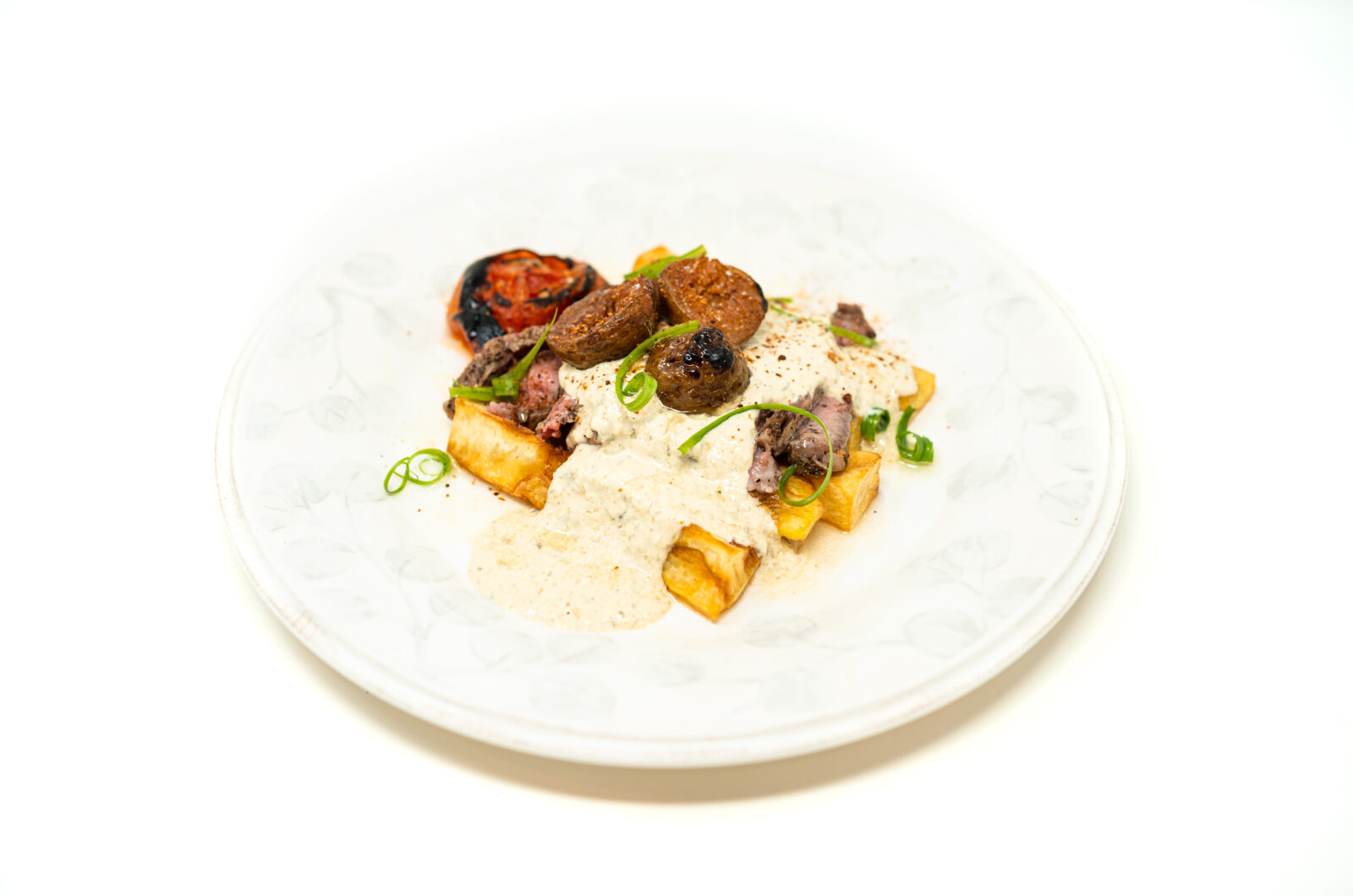
Pan-Seared Ribeye with Crispy Potato Wedges, Tartare Relish & Roasted Figs
2
servings2
hours30
minutes30
minutes3
hoursA dry brined ribeye develops a dark mahogany crust in a smoking cast iron skillet while rendering its internal fat. Thick russet potatoes are blanched in highly salted water before pan frying to create a rigid exterior structure that supports a highly acidic tartare relish.
Keeps the screen of your device on while you cook
Ingredients
- For the Dry-Brined Ribeye:
1 (12-14 ounces) ribeye steak
salt
ground black pepper
avocado oil
- For the Potato Wedges:
2 large Russet potatoes, sliced into wedges
salt
neutral oil (canola or vegetable)
- For the Roasted Figs and Tomatoes:
4-6 figs, halved
2 medium vine-ripe tomatoes, halved
1 teaspoon extra virgin olive oil
pinch of salt
- For the Tartare Relish:
1 tablespoon capers
1 teaspoon brined green peppercorns
1 shallot, minced
1 tablespoon Dijon mustard
1 tablespoon mayonnaise
1 tablespoon sour cream
1 tablespoon extra virgin olive oil
pinch of salt
pinch of ground black pepper
- For Serving:
fresh chives
Tomato skin dust (dehydrated and pulverized tomato skins)
Directions
- Dry-Brine the Ribeye:
- Season the ribeye generously with kosher salt on all sides. Place on a wire rack set over a sheet pan and refrigerate uncovered for at least 2 hours, ideally overnight, to draw out surface moisture and concentrate flavor.
- Blanch and Fry the Potato Wedges:
- Bring a pot of heavily salted water to a gentle boil. Add the potato wedges and blanch for 5 to 6 minutes until slightly tender on the exterior but fully intact. Drain and pat dry completely.
- Heat 1/4 inch of oil in a heavy skillet over medium-high heat. Fry the wedges in a single layer, turning occasionally, until deep golden-brown and crispy on all sides, 6 to 8 minutes. Drain on paper towels and dust immediately with sea salt.
- Roast the Figs and Tomato:
- Preheat oven to 400°F (200°C). Toss the fig and tomato halves in extra virgin olive oil and a pinch of salt. Place cut-side up on a parchment-lined tray and roast for 10 to 12 minutes until softened and nicely charred around the edges.
- Blend the Tartar Relish:
- Combine the capers, green peppercorns, shallot, garlic, Dijon mustard, mayonnaise, sour cream, and extra virgin olive oil in a small blender or food processor.
- Pulse briefly until fully emulsified while retaining slight flecks of texture. Season with black pepper to taste.
- Sear the Steak:
- Place a cast-iron skillet over high heat until wisps of smoke appear. Lightly oil the steak.
Sear the ribeye for 3 to 4 minutes per side, or until the internal temperature reaches 130°F (54°C) for medium-rare. Transfer to a cutting board and rest for 5 to 10 minutes before slicing across the grain. - Plate and Serve:
- Lay the crispy, pan-fried potato wedges in an interlocking stack at the center of the plate.
Fan sliced ribeye over the potatoes. Drape a generous ribbon of tartar relish across the steak and wedges. Top with warm roasted figs and tuck the roasted tomato halves into the side of the build.
Finish with thin-sliced chives and a generous scattering of tomato skin dust around the negative space of the plate.
Notes
- The Tomato Skin Dust Flex: To make this umami-packed garnish, save the skins the next time you blanch tomatoes, dehydrate them in a low oven (150°F) until completely brittle, and blitz them in a spice grinder to create a vibrant red powder that instantly elevates the negative space on your plate.
Did you make this recipe?
Tag @hecooksco on Instagram
Like this recipe?
Follow @hecooksco on Pinterest