The kitchen runs on rhythm and heat. When the board fills up with tickets, there is no time for the sluggish pace of a traditional three-step breading station. You need a method that builds texture rapidly without sacrificing structural integrity. That necessity is how these salt and vinegar brined chicken tenders became a staple on the line. The technique strips away the excess, relying on raw acidity and a fast wet-drop dredge to create a shattered, jagged crust.
It starts with the brine. Sliced chicken breasts plunge into a harsh, cold bath of distilled white vinegar, water, and kosher salt. The air in the prep area immediately carries the sharp, unmistakable sting of a grocery store potato chip. Distilled vinegar is aggressive. It penetrates the protein fast, tenderizing the meat while embedding a deep, resonant tang. Two hours is the absolute limit. Pushing past that window allows the acid to chemically cook the protein, leaving you with mush instead of tension.
The mechanics of the wet-drop method are simple. You pull the meat from the liquid and bypass the towels. You want that residual moisture. The wet chicken drops directly into a dry mix of flour, coarse yellow cornmeal, black pepper, and paprika. The acidic liquid catches the dry ingredients, dragging them into a thick, shaggy paste that clings to the surface. The cornmeal is the crucial element here. It acts as the rigid backbone of the crust. When that battered meat hits the 350 degree oil, the exterior seizes instantly. The crust forms deep ridges that hold up under intense heat.
Balancing the Acid with Fermented Chili Emulsion
Fried food demands an acidic counterweight. But since these salt and vinegar brined chicken tenders already carry a sharp internal tang, the accompanying sauce must deliver heavy fat and deep, lactic funk. The fermented chili emulsion provides exactly that balance.
We originally built this exact sauce to cut through the heavy char of our hard charred cauliflower, and it performs the identical function here. A base of rich mayonnaise catches a heavy spoonful of cloudy garlic brine and smashed cultured garlic cloves pulled directly from our master batch of lacto-fermented garlic. That slow salt cure is completely non-negotiable here. It strips away the aggressive heat of the raw allium, leaving only a deep, complex umami that anchors the emulsion. Honey, lime juice, and toasted sesame oil cut the sharp edges, while a dense fermented chili paste tightens the mixture into a thick, vibrant orange cream.

Plating Salt and Vinegar Brined Chicken Tenders
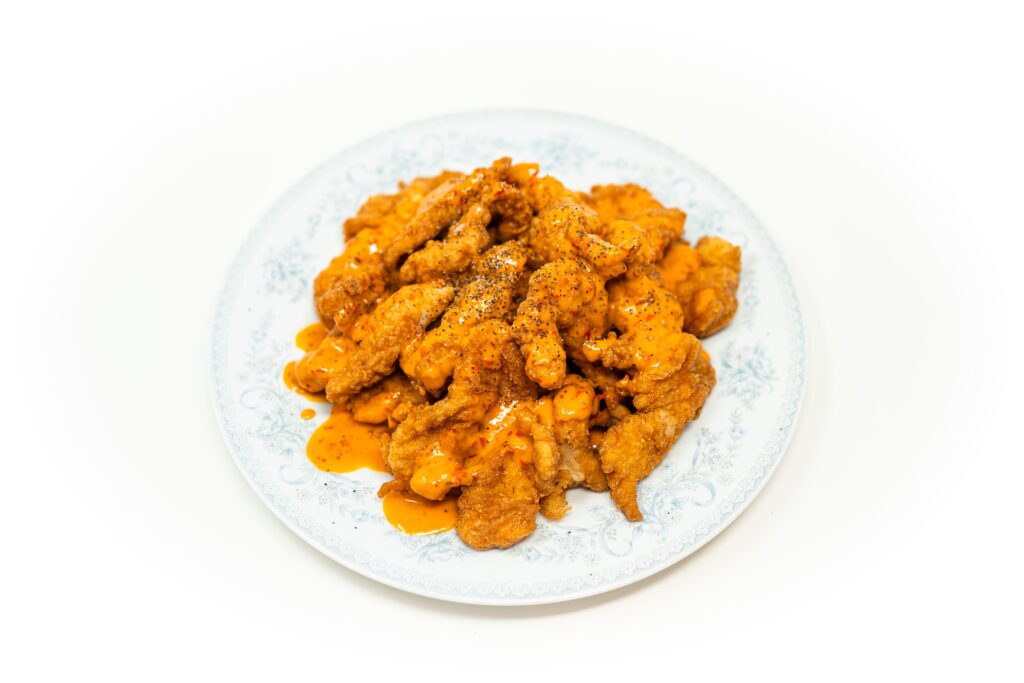
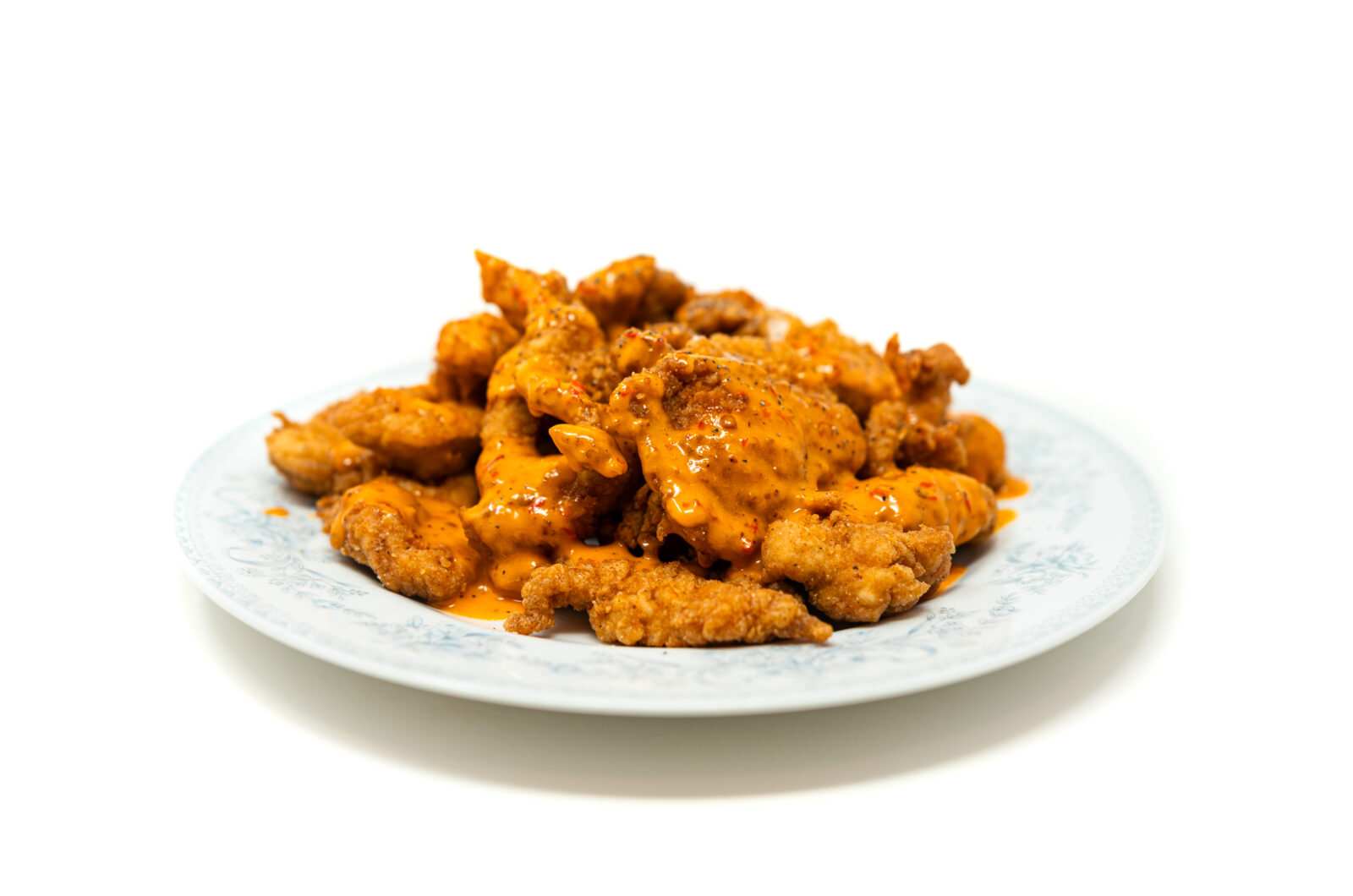
The baskets come up from the fryer dripping hot oil. The meat hits a wire rack and takes a final, generous dusting of kosher salt while the fat is still slick. You pile the golden, jagged strips high on a plate. There are no side ramekins. You drag a heavy spoon of the fermented emulsion directly across the top of the pile, letting that thick orange sauce pool into the deep crevices of the cornmeal crust. A final crack of black pepper finishes the visual.
These salt and vinegar brined chicken tenders are built on deliberate contrasts. The sharp bite of the vinegar meets the heavy fat of the aioli. The shattered crunch of the dredge gives way to the tenderized protein. It is fast, highly technical, and entirely uncompromising.
Salt and Vinegar Brined Chicken Tenders with Fermented Chili Emulsion
4
servings2
hours15
minutes15
minutes2
hours30
minutesThe sharp bite of white vinegar permeates the meat before a wet-drop cornmeal dredge creates a shattered, highly textured crust. A heavy pour of fermented chili emulsion brings fat and funk to balance the aggressive acid profile.
Keeps the screen of your device on while you cook
Ingredients
- For the Chicken:
2 pounds boneless, skinless chicken breasts, sliced into strips
2 cups white wine vinegar
2 tablespoons salt
2 cups flour
1 cup white cornmeal
1 tablespoon ground black pepper
1 tablespoon smoked paprika
1 teaspoon garlic powder
- For the Emulsion
1 cup mayonnaise
2 tablespoons fermented chili paste
4-6 cloves lacto-fermented garlic cloves
1 tablespoon lacto-fermented garlic brine
1 tablespoon honey
1 teaspoon toasted sesame oil
1 lime, juiced
Directions
- Build the Brine:
- In a non-reactive container, whisk together the white vinegar, water, and kosher salt until the salt is completely dissolved. Drop in the sliced chicken breast strips. Cover and refrigerate for 1.5 to 2 hours. Do not leave them in much longer than 2 hours; the high acid content will begin to chemically cook and denature the proteins, turning the meat mushy.
- Prep the Emulsion:
- While the chicken brines, whisk together all the ingredients for the fermented chili emulsion until smooth and tightly bound. Set aside in the fridge so the flavors meld.
- In a separate large, shallow hotel pan or mixing bowl, whisk together the flour, cornmeal, black pepper, garlic powder, paprika, and salt.
- Dredge the Chicken:
- Remove the chicken from the fridge and pour the contents through a mesh strainer to drain the brine. Do not pat the chicken dry. While the strips are still wet with the acidic brine, drop them directly into the dry flour and cornmeal mix. Toss aggressively, pressing the dry mix into the meat so the wet brine pulls the flour and cornmeal into a thick, shaggy crust. Shake off the excess.
- Fry the Chicken:
- Heat your oil in a heavy-bottomed Dutch oven or deep fryer to 350°F. Drop the tenders in batches, being careful not to crowd the oil. Fry for about 5 to 7 minutes, flipping halfway, until the crust is deep golden brown and the internal temperature hits 165°F. Remove to a wire rack and immediately hit them with a light dusting of finishing salt.
- Plate and Serve:
- Pile the hot, crispy tenders high on the plate. Generously drizzle the fermented chili emulsion over the top so it pools in the crevices of the cornmeal crust. Finish with a heavy crack of fresh black pepper across the top, exactly as it looks in the photo.
Did you make this recipe?
Tag @hecooksco on Instagram
Like this recipe?
Follow @hecooksco on Pinterest
Frequently Asked Questions
Why do we use a wet drop breading technique for these salt and vinegar brined chicken tenders?
Using the residual moisture from the acidic brined chicken strips eliminates the need for a messy egg wash station. The liquid binds the flour and cornmeal directly to the meat, creating a thick, shaggy crust that holds up incredibly well in the fryer.
How long can I leave the meat in the vinegar solution?
Keep the soaking time strictly between 90 minutes and two hours. The high acidity of the distilled white vinegar will chemically cook the proteins if left too long, resulting in a mushy texture rather than a firm bite.
What type of chili paste works best for the fermented chili emulsion?
You need a paste with a deep, developed funk to balance the sharp acid of the chicken. Gochujang, Calabrian chili paste, or a fermented sambal are the best options to provide the necessary weight and heat for this cultured pepper mayonnaise.
Why include cornmeal in the dry dredge for this fried chicken technique?
The fine yellow cornmeal adds structural integrity to the crust. It provides a rigid, shattered texture that prevents the breading from turning soggy when smothered under the heavy chili aioli.
Can I substitute apple cider vinegar for the distilled white vinegar in these salt and vinegar brined chicken tenders?
You can, but it will change the flavor profile. Distilled white vinegar delivers that distinct, aggressive tang reminiscent of a classic potato chip, whereas apple cider vinegar introduces a softer, sweeter fruit note.