The knife hits the cutting board with a sharp, rhythmic crack. Breaking down a solid block of Benoît Nihant cacao takes physical effort. The chocolate is unyielding. It snaps into jagged shards, releasing a dry, earthy smell into the kitchen. This is a single estate Madagascar bean. It carries bright, acidic fruit notes buried under an aggressive bitterness. The objective today is simple. Capture that exact profile in a 100% dark chocolate ice cream. We are not hiding the chocolate behind eggs or heavy vanilla extracts. We are building a structure to support it.

Building the Base for 100% Dark Chocolate Ice Cream
An eggless base requires careful manipulation of water and fat. Standard milk brings too much water. That water turns into ice crystals in the freezer. We use heavy cream and evaporated milk instead. The evaporated milk delivers concentrated milk proteins and structural density. It creates a rich mouthfeel without diluting the final flavor. We pour the cream, the evaporated milk, and the agave syrup into a heavy saucepan. The agave is doing two jobs. It provides the necessary sweetness to combat the raw cacao. It also acts as a liquid stabilizer. It physically interferes with the freezing process, keeping the texture pliant. The pot goes over medium heat. You watch the edges. You wait for the steam to rise and the tiny bubbles to form along the steel. You do not let it boil.
Emulsifying the Pure Cacao
The hot liquid pours directly over the chopped chocolate in a glass bowl. The heat instantly begins melting the cocoa butter. The smell of roasted fruit and heavy cream fills the air. You do not touch it. You let it sit for three minutes. Patience here dictates the final texture. Once the heat penetrates the center of the chocolate shards, you take a whisk. Start in the exact center of the bowl. Move in tight, slow circles. The friction forces the fat and the water to bind. The pale liquid gradually darkens, pulling in the chocolate until it turns into a glossy, heavy syrup. A proper 100% dark chocolate ice cream relies entirely on this tight emulsion. If the emulsion breaks, the final product feels grainy on the tongue.
The Role of Sea Salt
Working with pure cacao demands an amplifier. You need sea salt. Without it, the chocolate remains flat and punishingly bitter. A heavy pinch of coarse salt cuts through the fat of the cream. It pulls the hidden acidity of the Madagascar beans right to the front of the palate. You taste the warm liquid. It should taste slightly too sweet and slightly too salty. The freezing process will mute both of those elements later.
Chilling and Churning the 100% Dark Chocolate Ice Cream
The bowl goes into the refrigerator. It needs to sit overnight. The proteins hydrate. The cocoa butter firms up slowly. The next morning, the base is thick and cold. It goes into the churn. The machine hums, dragging the paddle through the heavy liquid. You watch the texture shift from a thick soup to a dense paste. It pulls away from the walls of the frozen canister. This is the moment the 100% dark chocolate ice cream takes its final shape. You scoop it into a container, press parchment directly against the surface to block the air, and let it freeze solid. The result is unapologetic. A dense, heavy coating on the tongue, followed by the sharp bite of raw cacao.

Benoît Nihant 100% Madagascar Dark Chocolate Ice Cream
4
servings15
minutes10
minutes8
hours25
minutesThis uncompromising 100% dark chocolate ice cream utilizes a dense, eggless base of heavy cream, evaporated milk, and agave syrup to completely support the raw intensity of single-estate Madagascar cacao. Elevated by a crucial pinch of sea salt, the final churn delivers a pliant, heavy mouthfeel that immediately gives way to the chocolate’s aggressive, earthy bitterness and bright fruit notes.
Keeps the screen of your device on while you cook
Ingredients
3 cups heavy cream
1 cup evaporated milk
1 cup agave syrup
4 ounces Benoît Nihant 100% Madagascar Dark Chocolate, chopped
1/4 teaspoon sea salt
Directions
- Prep the Chocolate:
- Finely chop the Benoît Nihant chocolate bar and place it in a medium heat-proof mixing bowl. The finer the chop, the smoother the melt.
- Heat the Base:
- In a medium saucepan, combine the heavy cream, evaporated milk, agave syrup, and sea salt. Place over medium heat, whisking occasionally, until the mixture steams and small bubbles form around the edges.
- Emulsify and Whisk:
- Pour the hot, salted dairy mixture directly over the chopped chocolate. Let it sit completely undisturbed for 2 to 3 minutes to let the heat penetrate the cocoa butter. Whisk the mixture gently, starting from the center and moving outward, until the chocolate is completely melted and the base is dark, glossy, and uniform.
- Chill:
- Cover the bowl and refrigerate it. Let it chill until completely cold, ideally for 4 to 6 hours or overnight.
- Churn:
- Pour the chilled chocolate base into your ice cream maker and churn according to the manufacturer’s instructions (usually about 20–25 minutes) until it reaches the consistency of thick soft serve.
- Freeze and Serve:
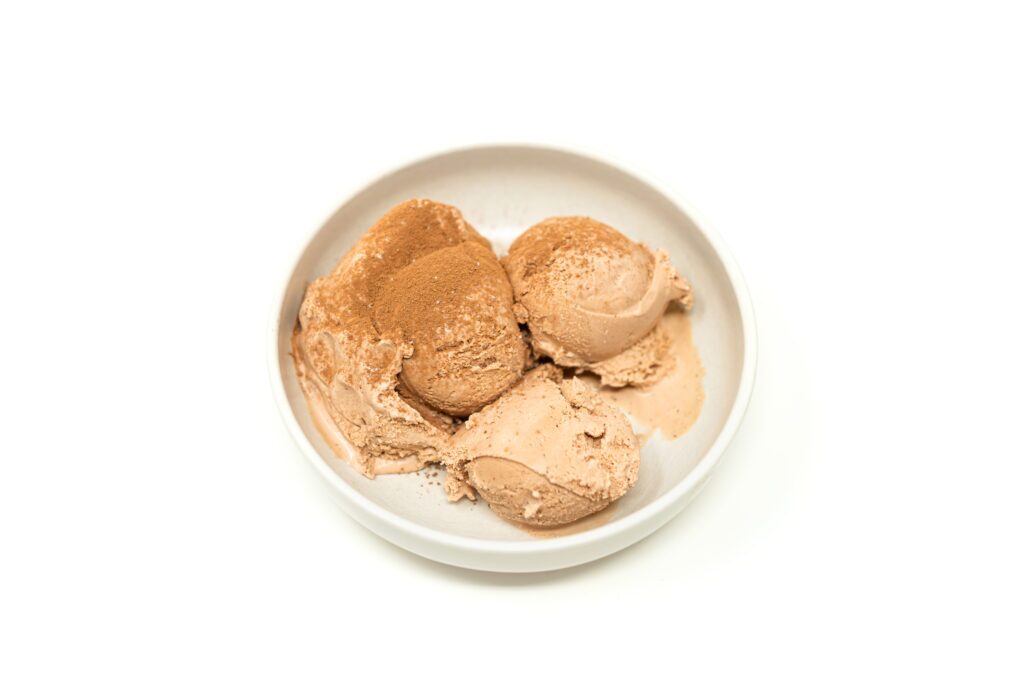
- Transfer the churned ice cream to an airtight container. Press a piece of parchment paper or plastic wrap directly onto the surface of the ice cream to prevent ice crystals, cover, and freeze for at least 4 hours to firm up. Scoop into chilled bowls. Finish with a heavy dusting of cocoa powder and, if you really want to lean into it, one extra tiny pinch of flaky sea salt right on top.
Did you make this recipe?
Tag @hecooksco on Instagram
Like this recipe?
Follow @hecooksco on Pinterest
Frequently Asked Questions
Why use evaporated milk in a 100% dark chocolate ice cream?
Evaporated milk provides concentrated milk proteins without excess water. This prevents ice crystals from forming, ensuring a dense and smooth texture in the final churned dessert without the need for eggs.
Can I substitute standard white sugar for the agave?
You can, but agave syrup acts as a liquid stabilizer in this eggless ice cream base. It lowers the freezing point, keeping the pure cacao ice cream pliant rather than freezing rock hard.
Do I have to use Madagascar chocolate?
No, but the specific fruity acidity of a Madagascar cacao preparation balances well against the heavy cream. If you use a different origin bean, the flavor profile will shift heavily toward earthy or nutty notes.
Why add sea salt to a dessert?
Salt acts as an amplifier. In an intense dark chocolate frozen dessert, it cuts through the raw bitterness of the cacao and forces the hidden flavor notes to the front of your palate.
How long does the base need to chill before churning?
The base needs a minimum of four hours in the refrigerator, but resting it overnight is better. The cold allows the cocoa butter to stabilize and the flavors to meld, resulting in a superior texture.