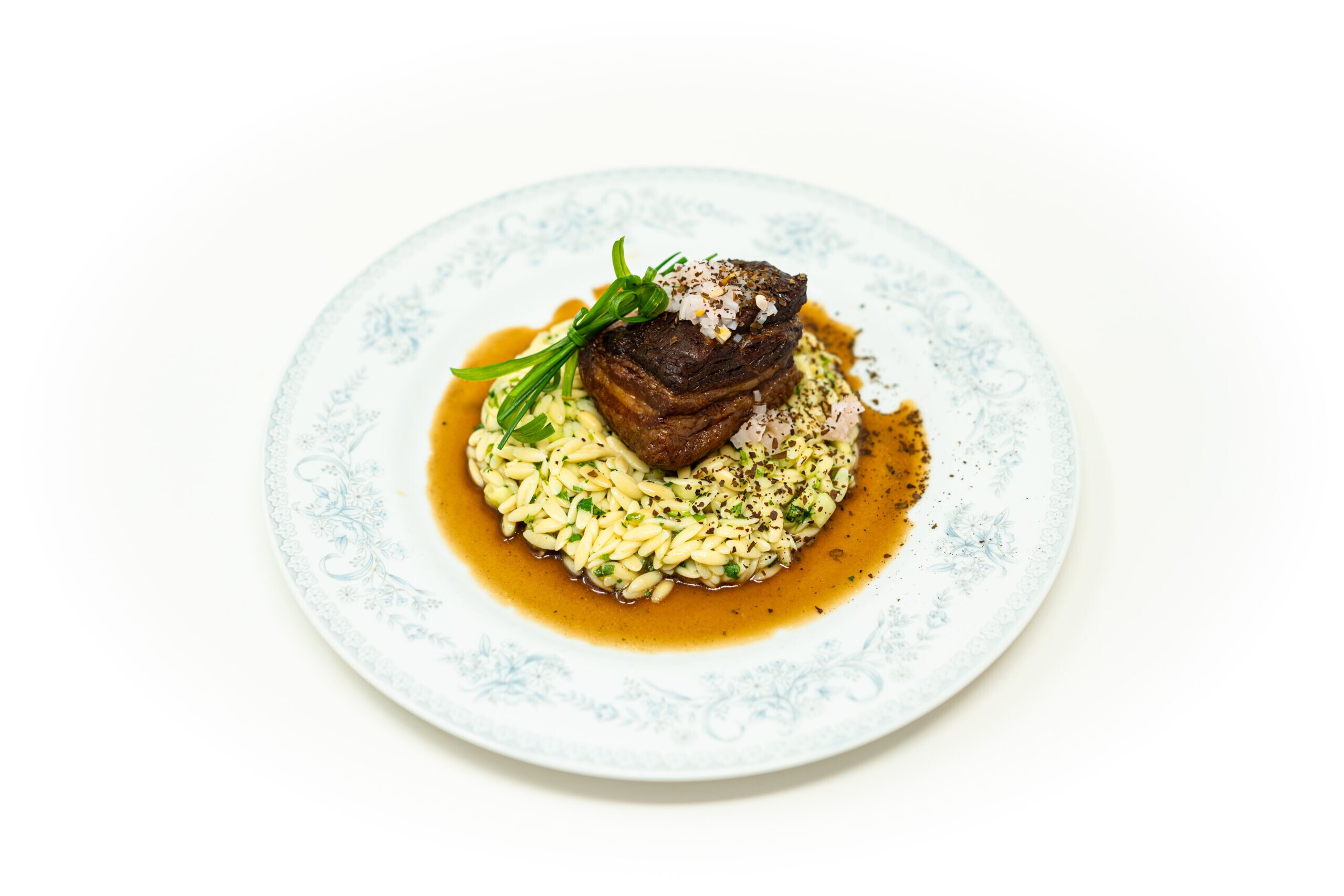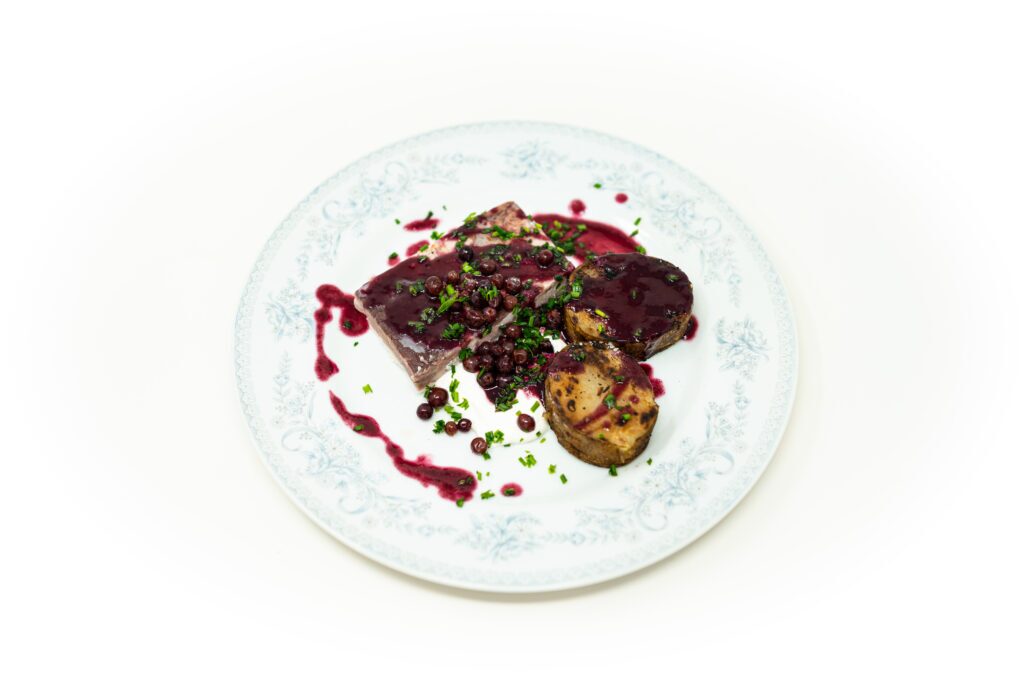
The Architecture of Compressed Pork Belly
The execution of compressed pork belly relies entirely on structural manipulation. The meat first undergoes a low and slow braise. Prolonged heat breaks down the tough connective tissues and renders the initial layers of hard fat. The protein matrix relaxes and the muscle fibers tenderize. A standard braise leaves the belly loose and difficult to portion cleanly. The remedy is physical force. Removing the hot belly from the braising liquid and immediately pressing it under heavy weight in a cold environment forces the layers of fat and meat to compact tightly together. As the lipids cool and solidify under this immense pressure, they lock the new structure into place. The final result is a dense, uniform slab of meat that slices with absolute precision.
Forging the Thyme Braised Potatoes
The foundation for the plate demands contrasting textures. Thyme braised potatoes provide structural starch and fat absorption. Dropping bare potato cylinders into a dry, smoking-hot cast-iron skillet triggers immediate blistering. The starches on the surface of the potato dehydrate and caramelize rapidly against the unlubricated metal, forming a thick, blackened crust. Once the crust is fully set, dropping the temperature and introducing stock and butter shifts the cooking method from a dry sear to a gentle, wet braise. The hot liquid penetrates the dense interior, hydrating the starch granules until the core yields entirely while the seared crust maintains its exterior integrity.
Building the Concord Grape Agrodolce
Constructing a proper Concord grape agrodolce requires attention to how natural pectins behave under heat. Whole Concord grapes hit the pan with sugar and high-quality vinegar. As the liquid comes to a simmer, the grape skins burst. Heat extracts the deep purple pigment and the astringent tannins directly from the skins. Simultaneously, natural pectins release into the surrounding vinegar, acting as a binding agent that thickens the reduction naturally. Straining the solids out leaves a heavy, glossy liquid devoid of seeds or rustic skins. Keeping this agrodolce scorching hot during service is a non-negotiable mechanical requirement. Its raw thermal energy is required to finish the dish at the table.
Pickled Champagne Grapes and Lemon Whipped Ricotta
Underneath the solid components, lemon whipped ricotta acts as a cold, rich buffer. Mechanical aeration in the food processor shears the dairy curds, incorporating microscopic air pockets and olive oil to create a completely smooth emulsion. The sharp acidity of the lemon cuts the inherent dairy weight. Above the plate, pickled champagne grapes introduce a sudden, sharp interruption. Submerging fresh, de-stemmed micro-grapes in a boiling solution of white wine vinegar, water, sugar, and salt forces osmosis. The hot, acidic liquid penetrates the thin grape skins, displacing the natural internal moisture with a highly seasoned brine. Cooling them rapidly locks in that sharp contrast, ensuring each grape snaps against the teeth.
The Final Thermal Assembly
Service dictates precise temperature control across all components. Slices of compressed pork belly must sit at room temperature before plating. Serving them straight from the walk-in preserves the cold fat too aggressively, leaving it unpleasantly waxy. The room-temperature fat softens just enough to prepare for the final thermal shock. To finish, the boiling Concord grape agrodolce pours directly over the meat. The intense heat of the strained reduction hits the room-temperature pork, instantly yielding the exterior fat and glossing the entire cut while bringing the core to the perfect serving temperature.
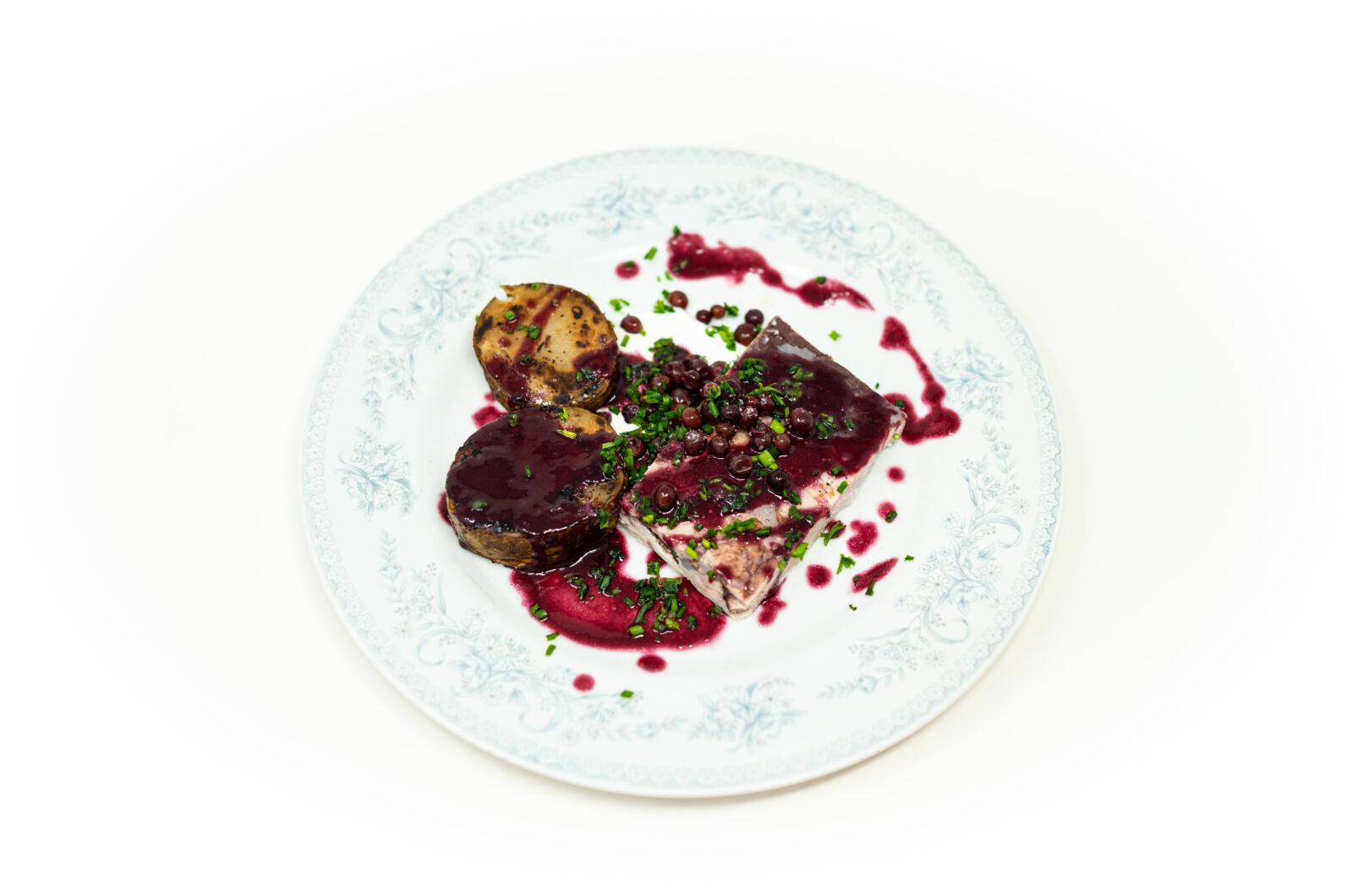
Compressed Pork Belly with Concord Grape Agrodolce and Thyme-Braised Potato
4
servings24
hours3
hours27
hoursCold fat yields to boiling acid in this temperature-manipulated plate. A slow braise and heavy overnight press give the meat struc`tural integrity while a strained grape reduction forces a rapid thermal release at the pass.
Keeps the screen of your device on while you cook
Ingredients
- For the Compressed Pork Belly:
1-2 pounds pork belly, skinless
1 quart chicken broth
1 head garlic, halved horizontally
1 large yello onion, quartered
pinch of salt
pinch of ground black pepper
- For the Thyme Braised Potatoes:
3 large Yukon gold potatoes, peeled and cut into thick, uniform cylinders
2 tablespoons avocado oil
2 cups chicken broth
1 bunch fresh thyme
- For the Pickled Champagne Grapes:
1 cup champagne grapes, de-stemmed
1/2 cup white wine vinegar
1/2 cup water
1/4 cup sugar
pinch of salt
- For the Concord Grape Agrodolce:
2 cups concord grapes, de-stemmed
1/4 cup sherry vinegar
2 tablespoons sugar
pich of salt
- For the Lemon Whipped Ricotta:
1 cup whole milk ricotta
1 lemon, juiced and zested
1 tablespoon extra virgin olive oil
pinch of salt
- For Serving:
chives, freshly chopped
Directions
- Braise and Compress the Pork (Day 1):
- Preheat the oven to 275°F. Season the pork belly heavily with salt and ground black pepper. Place it in a deep braising pan with the stock, garlic, and onion. Cover tightly with foil and braise for roughly 3 hours, or until the meat yields but the structure remains completely intact. Carefully transfer the hot pork belly to a parchment-lined baking sheet. Place another piece of parchment and a second baking sheet on top. Weigh it down aggressively (using heavy cans or a heavy pot) and place it in the fridge overnight to compress the layers.
- Pickle the Champagne Grapes:
- In a small saucepan, combine the white wine vinegar, water, sugar, and salt. Bring to a rapid boil until the sugar and salt dissolve. Place the de-stemmed champagne grapes in a heat-proof container and pour the hot liquid over them. Let them cool completely to room temperature, then store them in the fridge.
- Whip the Ricotta:
- In a food processor, combine the ricotta, lemon zest, lemon juice, extra virgin olive oil, and a pinch of salt. Blitz until completely smooth, aerated, and silky. Transfer to a container or piping bag and hold in the fridge until service.
- Dry-Sear and Braise the Potatoes:
- Get a dry cast iron skillet smoking hot over high heat. Add the potato cylinders directly to the dry metal and sear them hard on one side until a deep, dark, blistering crust forms. Flip them, immediately drop the heat, and carefully pour in the stock. Add the butter and thyme sprigs. Simmer gently, basting occasionally, until the potatoes are tender all the way through and the braising liquid has reduced to a heavy glaze.
- Build the Agrodolce:
- In a saucepan, combine the whole Concord grapes, vinegar, and sugar. Bring to a simmer over medium heat. As they cook, let the grapes burst and break down, releasing their natural juices and pectins. Reduce it slowly until it becomes a heavy, jammy, syrupy glaze. Taste and adjust with a pinch of salt. Keep this scorching hot on the stove for service.
- Plate and Serve:
- Pull the compressed pork belly from the fridge. Trim the uneven edges to create a perfect rectangle, then slice it into uniform portions. Allow the slices to sit out until they reach exactly room temperature.
Did you make this recipe?
Tag @hecooksco on Instagram
Like this recipe?
Follow @hecooksco on Pinterest
Frequently Asked Questions
Why is it necessary to press and cool compressed pork belly overnight?
Pressing the hot meat under heavy weight while it cools forces the rendered fat and relaxed muscle fibers to compact tightly. As the fat solidifies in the cold environment, it acts as a physical binder, locking the distinct layers together to allow for clean, precise slicing without the meat falling apart.
Why sear the thyme braised potatoes in a dry cast-iron skillet?
Placing the potato cylinders directly onto smoking-hot, dry metal rapidly dehydrates the surface starches and triggers an aggressive Maillard reaction. This creates a thick, blistered crust that maintains its structural integrity even after the liquid braising phase begins, preventing the potatoes from turning to mush.
What causes the Concord grape agrodolce to thicken without a roux or slurry?
Whole Concord grapes contain high levels of natural pectin in their skins. As they simmer and burst in the acidic vinegar solution, the heat extracts this pectin. The pectin binds the liquid and naturally thickens the reduction into a heavy, syrupy glaze without the need for added starches.
Why must the pork be served at room temperature before adding the hot sauce?
Serving the pork straight from the refrigerator leaves the high fat content cold and waxy on the palate. Allowing it to reach room temperature softens the lipids just enough so that the boiling thermal shock of the agrodolce instantly yields the exterior fat without leaving the core cold.
How does mechanical aeration change the lemon whipped ricotta?
Processing the ricotta in a food processor physically shears the dairy curds while incorporating microscopic pockets of air and emulsifying the olive oil. This breaks down the inherently grainy structure of the cheese, transforming it into a completely smooth, airy foundation for the plate.