Summer heat demands a specific kind of cooking. You want depth without weight. You want absolute clarity. This corn poached amberjack is an exercise in building complex layers from a single, humble ingredient. We strip the corn down to its bare architecture to create a foundation that respects the delicate nature of the protein. Before the heat ever touches the pan, the prep dictates the final plate. The amberjack arrives cold, firm, and clean. Running a sharp knife through the flesh requires smooth, deliberate strokes. You portion it into thick chunks, salting them lightly to draw out a fraction of the moisture and firm up the exterior.

The cobs go into a heavy pot with smashed garlic and water. The water boils, then settles into a steady, rhythmic simmer. You watch the liquid pull the raw sweetness out of the discarded cobs. It slowly turns a pale, golden yellow. It takes time. You let it reduce until the flavor is concentrated, sweet, and direct.
The rest of the raw corn gets blended with a splash of that hot stock. Straining it through a fine mesh sieve requires physical pressure. You push with the back of a ladle until you extract every drop of the thick, starchy milk. This liquid is the true base. It holds fat beautifully and coats the palate.
The Technique Behind Corn Poached Amberjack
A wide skillet goes over the burner. Olive oil hits the pan, followed immediately by thin slices of garlic and a pinch of smoked paprika. The spices bloom the second they hit the heat. The kitchen fills with the sharp smell of roasted garlic and warm wood smoke. Before the garlic takes on too much color, the corn milk goes in. It hisses violently against the hot metal. The strained cob reduction follows. You bring the temperature down to a lazy, rolling simmer.

This is where the corn poached amberjack truly comes together. The fish needs respect. Amberjack is firm but delicate. Aggressive boiling will tear the flesh. You slide the seasoned fillets into the opaque yellow liquid. The heat wraps gently around the protein.
You stand at the stove and baste the tops with a spoon. You watch the meat turn from translucent to opaque. The transition is subtle. The fish becomes firm but yields under gentle pressure. When you lift it from the pan, it flakes perfectly while retaining a deeply moist center. You transfer the fish to a warm plate and let it rest.

Tension on the Cast Iron
While the fish rests, a dry cast iron skillet gets punishingly hot on the adjacent burner. No oil. You drop in torn kale, snapped asparagus, and the reserved raw corn kernels. The residual moisture inside the vegetables hits the dry metal and steam erupts instantly. You let them sit untouched long enough to blister and catch black, roasted marks. The kitchen smells of toasted greens and caramelized sugar. It is a necessary, bitter contrast to the sweet broth.
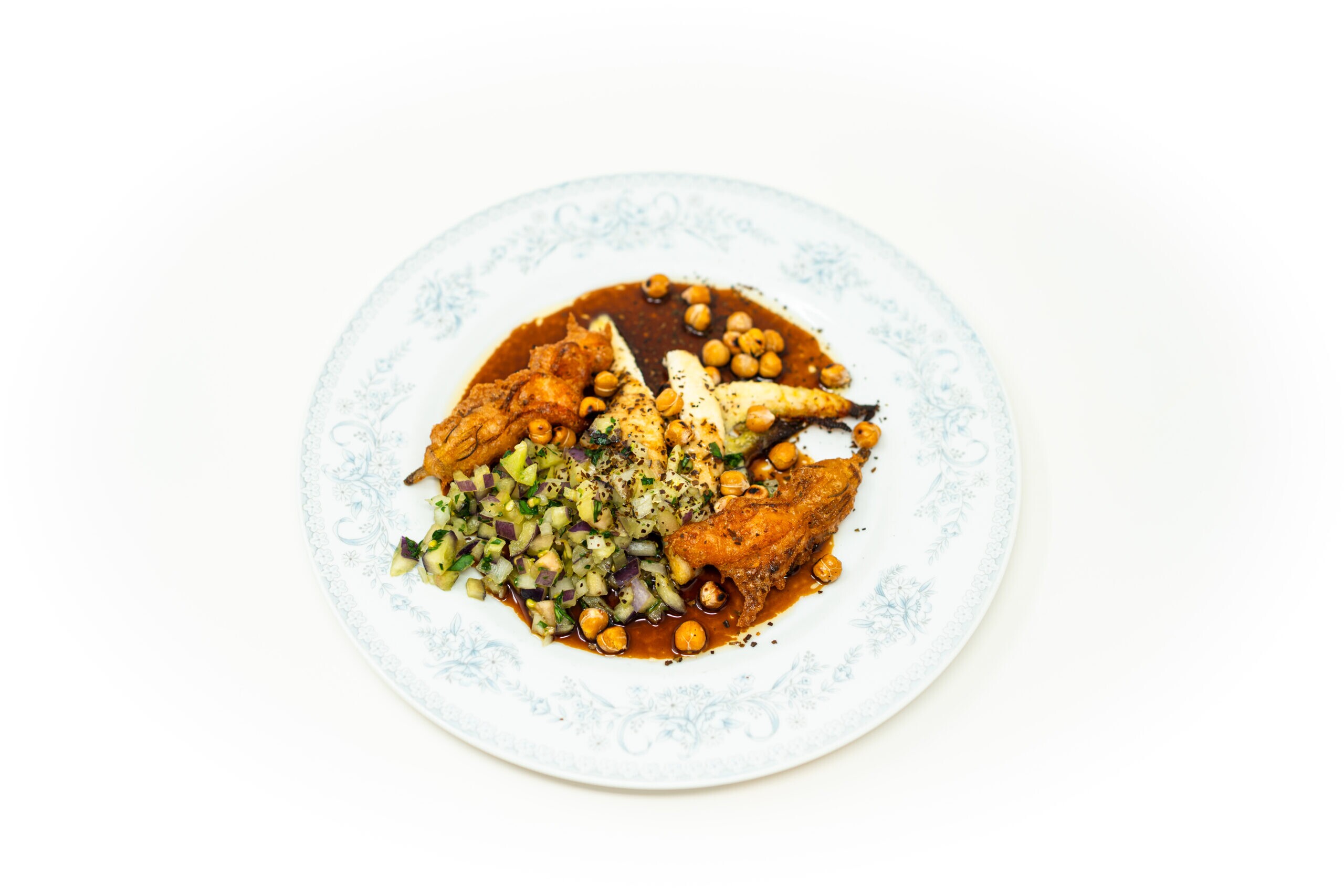
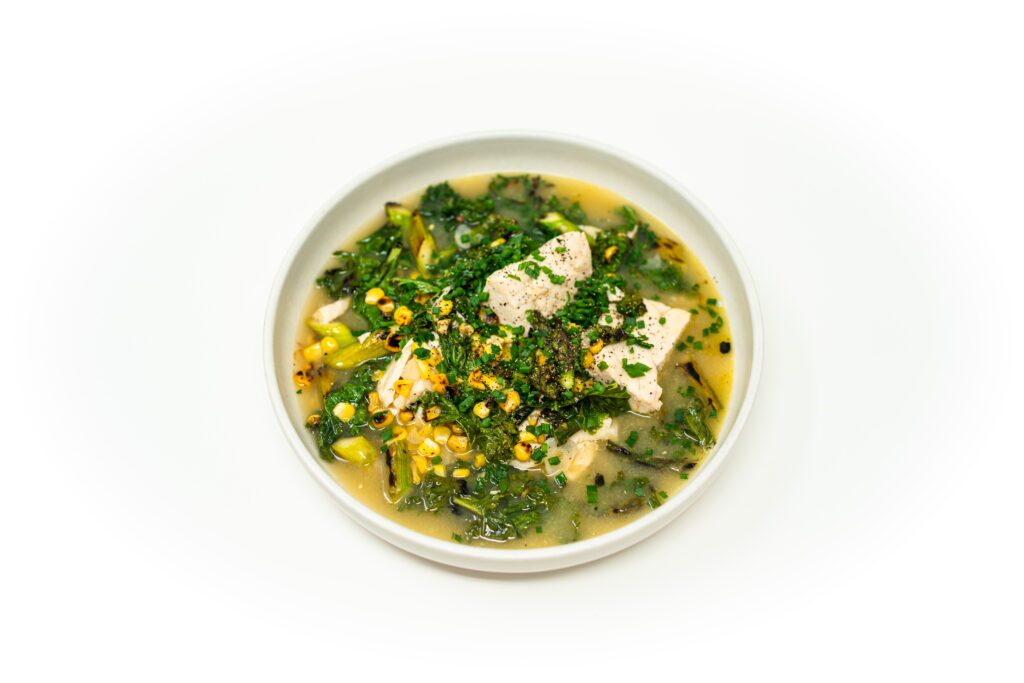
To finish the sauce, cold cubed butter and fresh lime juice meet the hot poaching liquid. The butter melts. It emulsifies the starchy broth into a glossy, tight glaze. You place the resting corn poached amberjack into the center of a shallow, clean bowl. The blistered vegetables are folded loosely into the warm sauce. A heavy ladle of the rich, bright broth goes directly over the top. A tight cluster of minced chives and cracked black pepper finishes the plate.
Building a perfect corn poached amberjack is a quiet process. The final taste is a study in balance. The fat from the butter carries the sweet corn, the lime cuts through the richness, and the bitter char grounds the entire dish. It is a plate born completely from the season and structured entirely by technique.
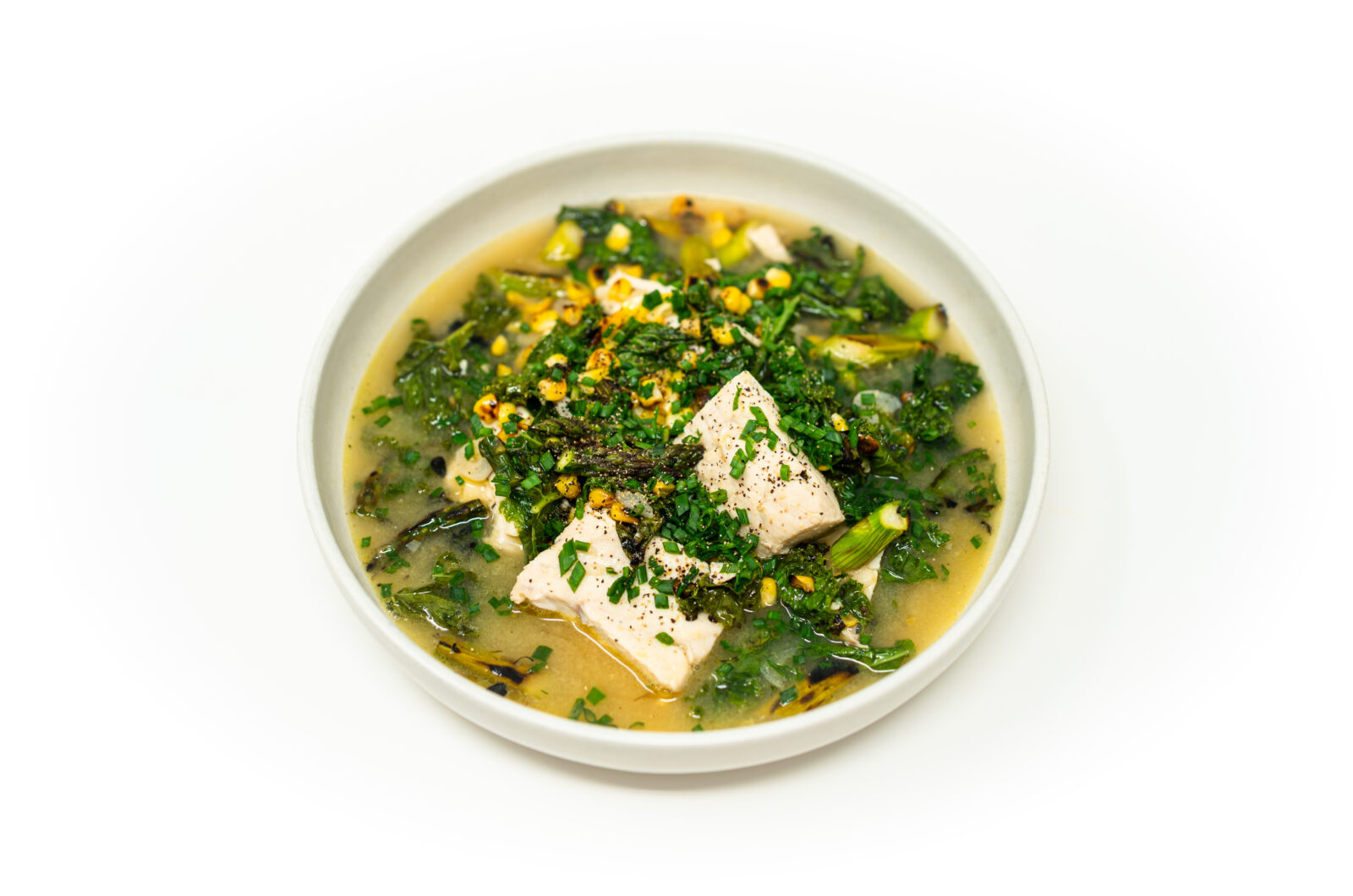
Corn-Poached Amberjack with Charred Summer Vegetables
4
servings30
minutesAmberjack requires a gentle hand and a fragrant liquid to reach its full potential. This preparation utilizes the entire ear of corn to build a rich, starchy broth that respects the delicate nature of the fish.
Keeps the screen of your device on while you cook
Ingredients
1 pound amberjack fillets, cut into chunks
4 ears corn, kernels cut off the cob
8 cups water
1 small yellow onion, diced
3 cloves garlic, smashed
3 cloves garlic, thinly sliced
1 bunch kale, woody stems removed and leaves roughly torn
1/2 pound asparagus, cut into pieces
2 tablespoons extra virgin olive oil
2 tablespoons unsalted butter
1/2 teaspoon smoked paprika
1 lime, juiced
1/4 cup chives, chopped
to taste salt
to taste ground black pepper
Directions
- Make the Corn Broth:
- Place the bare corn cobs, onion, and smashed garlic into a large pot. Cover with water, bring to a boil, and simmer until the liquid reduces by about half, 30 to 45 minutes. Strain the liquid and discard the solids.
- Make the Corn Milk:
- Take half of the reserved raw corn kernels and about 1/4 cup of your hot corn broth. Blend it thoroughly. Strain this puree through a fine-mesh sieve or cheesecloth, squeezing out all the sweet, starchy corn milk. Discard the remaining pulp.
- Dry-Char the Vegetables:
- Heat a dry cast-iron skillet over high heat. Add the asparagus, kale, and the remaining half of the whole corn kernels. Blister and dry-char them until they develop deep, roasted marks. Remove from heat and set aside.
- Build the Poaching Liquid:
- In a wide skillet or sauté pan, heat 2 tbsp of EVOO over medium heat. Add the thinly sliced garlic and the 1/4 tsp of paprika. Sauté for about 30 seconds until the spices bloom, the oil takes on color, and the garlic is fragrant but not browned. Pour in the freshly extracted corn milk, followed by the rest of the strained corn broth. Bring the mixture to a gentle simmer.
- Poach the Amberjack:
- Lightly season the amberjack portions with salt. Adjust the heat under your skillet to maintain a bare, gentle simmer. You are looking for lazy, occasional bubbles breaking the surface, not a rolling boil. Carefully nestle the fillets into the liquid. Allow the fish to poach gently for 4 to 6 minutes, spooning warm corn broth over the fillets periodically to ensure even cooking. The amberjack is ready when the flesh turns completely opaque, feels firm yet springy to the touch, and yields easily into large flakes while retaining a moist, tender center. Carefully transfer the cooked fish to a warm plate to rest while you finish the broth.
- Finish and Serve:
- Once the fish is cooked, stir the cold cubed butter and fresh lime juice directly into the hot poaching liquid to emulsify and brighten the sauce. Gently fold in your dry-charred asparagus, corn, and kale just to warm them through. Serve in shallow bowls, ensuring every piece of fish gets a generous pour of the rich broth. Garnish heavily with fresh chives and ground black pepper.
Did you make this recipe?
Tag @hecooksco on Instagram
Like this recipe?
Follow @hecooksco on Pinterest
Frequently Asked Questions
What makes amberjack an ideal fish for a corn poached amberjack recipe?
Amberjack has a firm, meaty texture that holds its structure well in hot liquids. Its clean, slightly sweet flavor profile absorbs the rich starchy notes of the corn milk without falling apart during a gentle simmer.
How do you prevent the sweet corn broth from splitting when adding butter?
Heat control is critical. You must lower the heat and ensure the poaching liquid is no longer at a rolling boil before adding the butter. Using cold, cubed butter and stirring constantly allows the fat to slowly emulsify with the starchy corn stock, creating a glossy sauce.
Why dry char the vegetables for this corn poached amberjack dish instead of sautéing them in oil?
Dry charring in a cast iron skillet creates aggressive, smoky flavor notes without adding extra fat to the final plate. The lack of oil allows the kale and asparagus to blister instantly, bringing a necessary bitter contrast to the sweet broth.
How do you know when the corn poached amberjack is fully cooked?
The fish is ready when the flesh transitions from translucent to completely opaque white. It should feel firm to the touch with a slight spring back, and it will flake easily with a fork while the core remains tender and moist.
Can I prepare the corn milk and cob stock in advance?
Yes. You can boil the bare cobs to create the stock and blend the raw kernels to extract the milk up to two days ahead. Store the liquids in airtight containers in the refrigerator until you are ready to build the sauce and cook the fish.