A Study in Textural Contrast
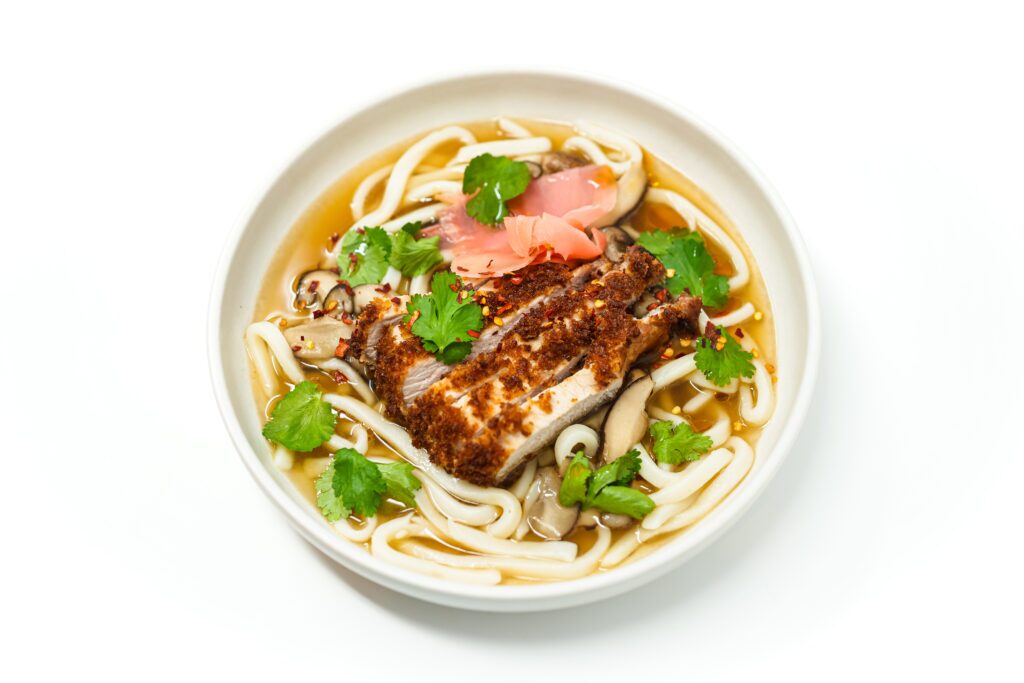
The magic of this dish lies in the tension between the crispy pork and the steaming broth. Most western palates might hesitate at the idea of putting fried food into soup but the result is a culinary masterpiece. The golden panko crust stays crunchy on top while the bottom absorbs the savory dashi broth. It becomes a savory sponge that delivers flavor and texture simultaneously. The udon noodles provide a chewy and substantial foundation that stands up to the rich pork. This is not a delicate appetizer. It is a hearty and soul warming meal that satisfies on every level.
The Science of the Clear Broth
The hallmark of a refined udon soup is the clarity of the broth. Unlike the milky richness of a tonkotsu ramen this broth is translucent and elegant. It begins with a classic dashi made from kombu kelp and bonito flakes which provides a massive hit of natural umami. To build complexity without clouding the liquid you must process aromatics like ginger, garlic, and shallots into a paste and simmer them in the stock. The crucial step is straining these solids out completely. This infusion technique leaves behind all the flavor oils but none of the grit. The addition of soy sauce and mirin adds depth and a subtle sweetness that rounds out the savory notes of the dried shiitake mushrooms.
Perfecting the Tonkatsu
The pork cutlet acts as the crown jewel of the bowl. To achieve the perfect texture you must start with a pork loin pounded to an even thickness. This ensures the meat cooks through at the exact moment the breading turns golden. The coating follows the standard three stage dredging procedure of seasoned flour, beaten egg, and panko breadcrumbs. Panko is essential here because its large and airy flakes create a crust that is light rather than dense. Frying at a consistent temperature of 350°F ensures the exterior shatters upon impact. You must slice the cutlet into strips before serving to preserve its structural integrity and make it easy to eat with chopsticks.
The Importance of Noodle Preparation
Udon noodles are prized for their unique texture known in Japan as mochi-mochi which translates to a distinct chewiness. To preserve this texture you must cook the noodles separately from the broth. If you boil the noodles directly in the soup they will release excess starch and turn your beautiful clear broth into a cloudy and thick gravy. By boiling them in plain water and rinsing them briefly you stop the cooking process and ensure they remain slippery and distinct. They are then placed in the bowl and covered with the hot broth just before serving.
Balancing Richness with Garnish
Because this dish features deep fried pork and a savory broth it requires bright garnishes to cut through the richness. Fresh cilantro leaves offer a herbaceous note that lifts the heavy flavors. Paper thin slices of pickled ginger or beni shoga provide a sharp acidity that cleanses the palate between bites. Scallions add a mild onion bite and a pop of green color while toasted sesame seeds introduce a nutty aroma that complements the soy based broth. These are not just decorations. They are integral components that bring the entire bowl into harmony.
Don Katsu Pork Udon Noodle Soup
4
servings30
minutes20
minutes50
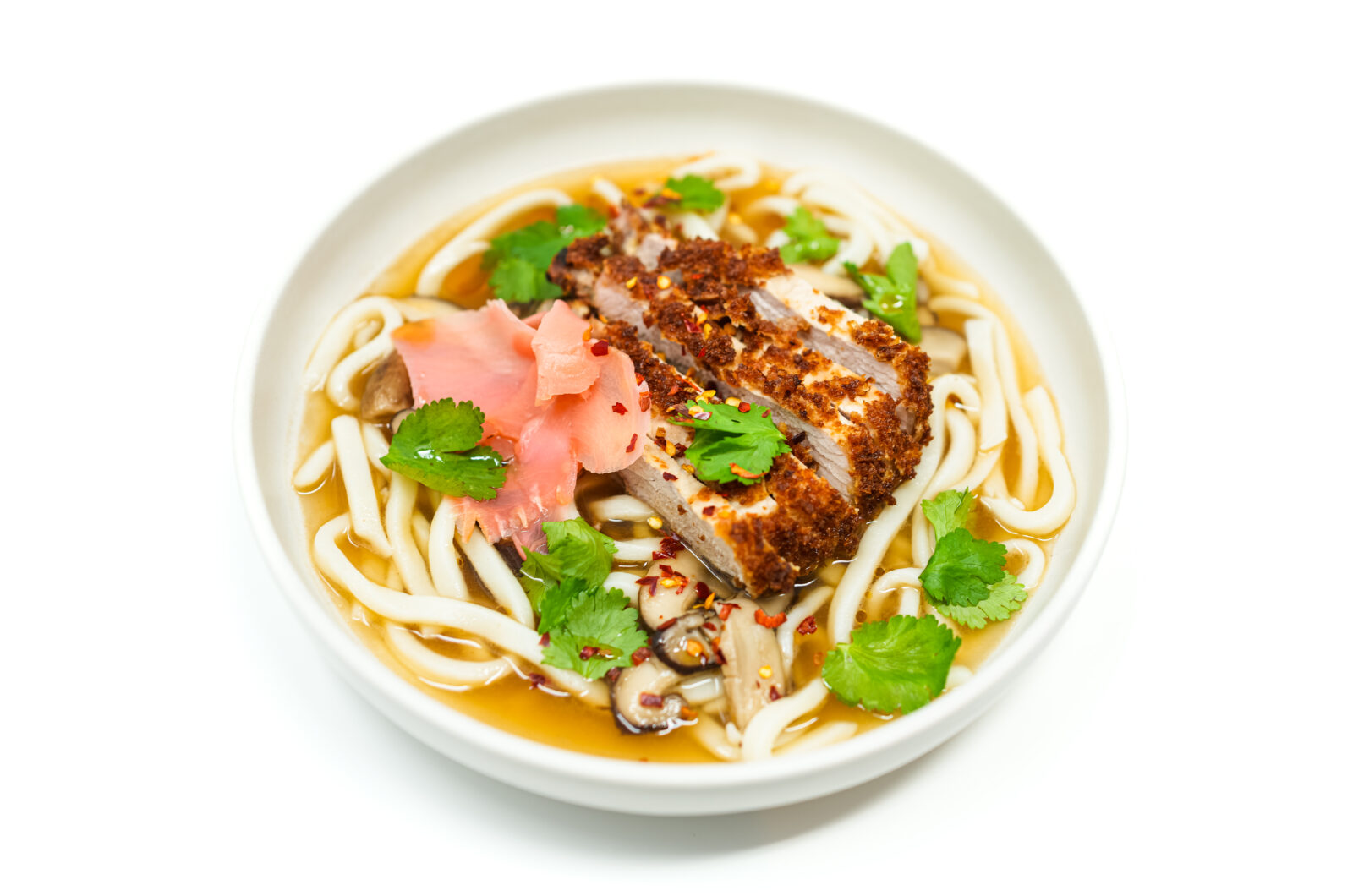
minutesDon Katsu Pork Udon Noodle Soup is a comforting Japanese-inspired dish that combines crispy, golden-fried pork cutlets with chewy udon noodles in a savory broth made from a smooth blend of ginger, garlic, and shallots, garnished with fresh cilantro and pickled ginger for a flavorful finish.
Keeps the screen of your device on while you cook
Ingredients
- For the Don Katsu Pork
4 pork cutlets
1 cup panko breadcrumbs
2 eggs, beaten
1/2 cup flour
1 teaspoon garlic powder
to taste, salt and ground black pepper
for frying, vegetable oil
- For the Soup
8 ounces udon noodles
1/2 pound shiitake mushrooms, sliced
6 cups dashi broth
5 cloves of garlic
1 shallot
1-inch piece of ginger
1 tablespoon mirin
1 tablespoon rice vinegar
to taste, salt and ground black pepper
Directions
- Prepare the Soup Base:
Blend the ginger, garlic, and shallot with a small amount of water until smooth. Strain the mixture and sicard the fibrous pieces.
In a large pot, bring the dashi broth to a boil. Add the strained ginger-garlic-shallot mixture, soy sauce, mirin, and rice vinegar. Season with salt and ground black pepper pepper. Add the sliced shiitake mushrooms and simmer for 10-15 minutes. - Cook the Udon Noodles:
While the soup simmers, cook the udon noodles according to package instructions. Drain and set aside. - Prepare the Don Katsu Pork:
Season the pork cutlets with salt and ground black pepper. Dredge each cutlet in flour, dip in the beaten eggs, and coat with panko breadcrumbs.
Heat 1″ of vegetable oil in a skillet over medium-high heat. Fry the breaded pork cutlets until golden brown and crispy, about 3-4 minutes per side. Drain on paper towels, then slice into strips. - Assemble and Serve:
Divide the cooked udon noodles into bowls. Ladle the hot broth with shiitake mushrooms over the noodles, then top with sliced don katsu pork.
Garnish with fresh cilantro leaves and pickled ginger. Serve hot and enjoy!
Did you make this recipe?
Tag @hecooksco on Instagram
Like this recipe?
Follow @hecooksco on Pinterest
Katsu Udon FAQ’s
What is the difference between Udon and Ramen?
Udon noodles are thick wheat noodles that are white in color and have a distinct chewy texture. Ramen noodles are thinner, yellow in color due to the addition of alkaline water, and have a springier bite. Udon is typically served in a lighter dashi based broth while ramen is often served in heavier meat based broths.
Can I make the broth ahead of time?
Yes you can make the broth up to three days in advance. In fact the flavors of the shiitake mushrooms and kombu will deepen as they sit. Store the broth in an airtight container in the refrigerator. Reheat it to a simmer before ladling it over the fresh noodles and pork.
How do I keep the pork crispy in the soup?
The key to maintaining crunch is the assembly. Place the noodles in the bowl first then add the broth. Finally lay the sliced pork cutlet on top of the noodles so that only the bottom of the pork touches the liquid. This allows the bottom to absorb flavor while the top remains shatteringly crisp.
Can I use chicken instead of pork?
Absolutely. This recipe works perfectly with chicken breast or thighs. If using chicken the dish becomes a Chicken Katsu Udon. The pounding and breading technique remains exactly the same.
Where can I find dashi ingredients?
You can find instant dashi powder in the international aisle of most grocery stores which is a great time saver. For the best results look for dried kombu and bonito flakes at an Asian grocery store or order them online to make the stock from scratch.
You Might Also Like:
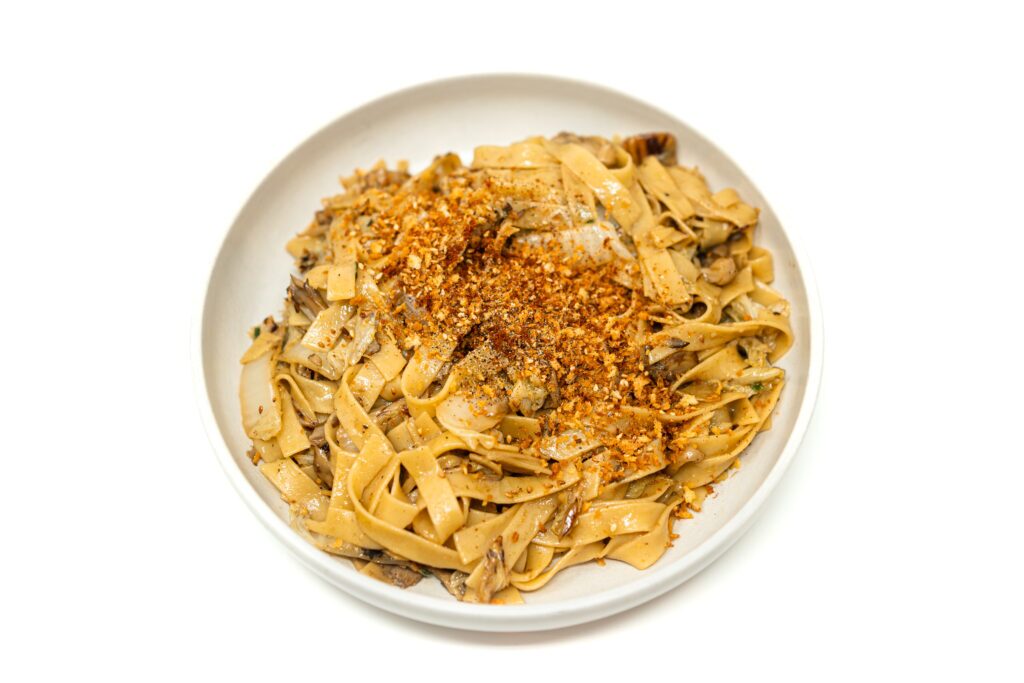
Wok-Charred Maitake Mushroom and Napa Cabbage Wafu Pasta
This thirty minute recipe builds a rich soy butter emulsion that coats every strand of tagliatelle and is finished with a crunchy sesame topping. It is a masterclass in texture that delivers a massive umami punch without any meat.