The kitchen is quiet, but inside the glass jar, a riot is building. Fermentation is a slow motion magic trick. It starts with a heavy pineapple. You want the kind that perfumes the entire room before you even touch a knife. Most people throw the skins away, but we use the armor. The scales of the fruit hold the microbial life necessary to bring this Pineapple Sugar Cane Tepache to life.

Harnessing Wild Fermentation
Start by breaking down the pineapple. Leave a generous half inch of golden flesh attached to the rinds. That fruit sugar is the starting fuel. Then comes the raw cane. It is a stubborn, beautiful ingredient. You have to peel back the green, woody exterior to find the pale, marrow like center. Splitting those stalks into batons exposes the rawest form of sweetness available to a chef. It lacks the flat, one note hit of refined white sugar. It tastes like the soil and the rain. The slow release of Sugar Cane Extract from these fibers gives the brew its foundation.

In the jar, the colors settle into a muted landscape of golds and tans. Add orange peels, making sure no white pith hits the water. Pith brings bitter regret. We just want the essential oils to brighten the liquid. A single cinnamon stick and a few cloves provide the warm bass notes. Then, add salt. Just a pinch. Salt is the sharpener. It makes the fruit taste more like itself and keeps the sweetness in check.
The Role of Water in a Fermented Pineapple Drink
You cannot build a house on a bad foundation. The same rule applies here. If you run water straight from a municipal tap, you introduce chlorine to the jar. Chlorine exists to sanitize. It will kill the delicate microbial life living on the fruit skin before it ever wakes up. You must use filtered or spring water. Pouring clean water over the spices and fruit allows the natural alchemy to begin without interference. The water acts as a blank canvas for the Pineapple Sugar Cane Tepache to paint its flavors across.
Watch the Step-by-Step

The Mechanics of Pineapple Sugar Cane Tepache
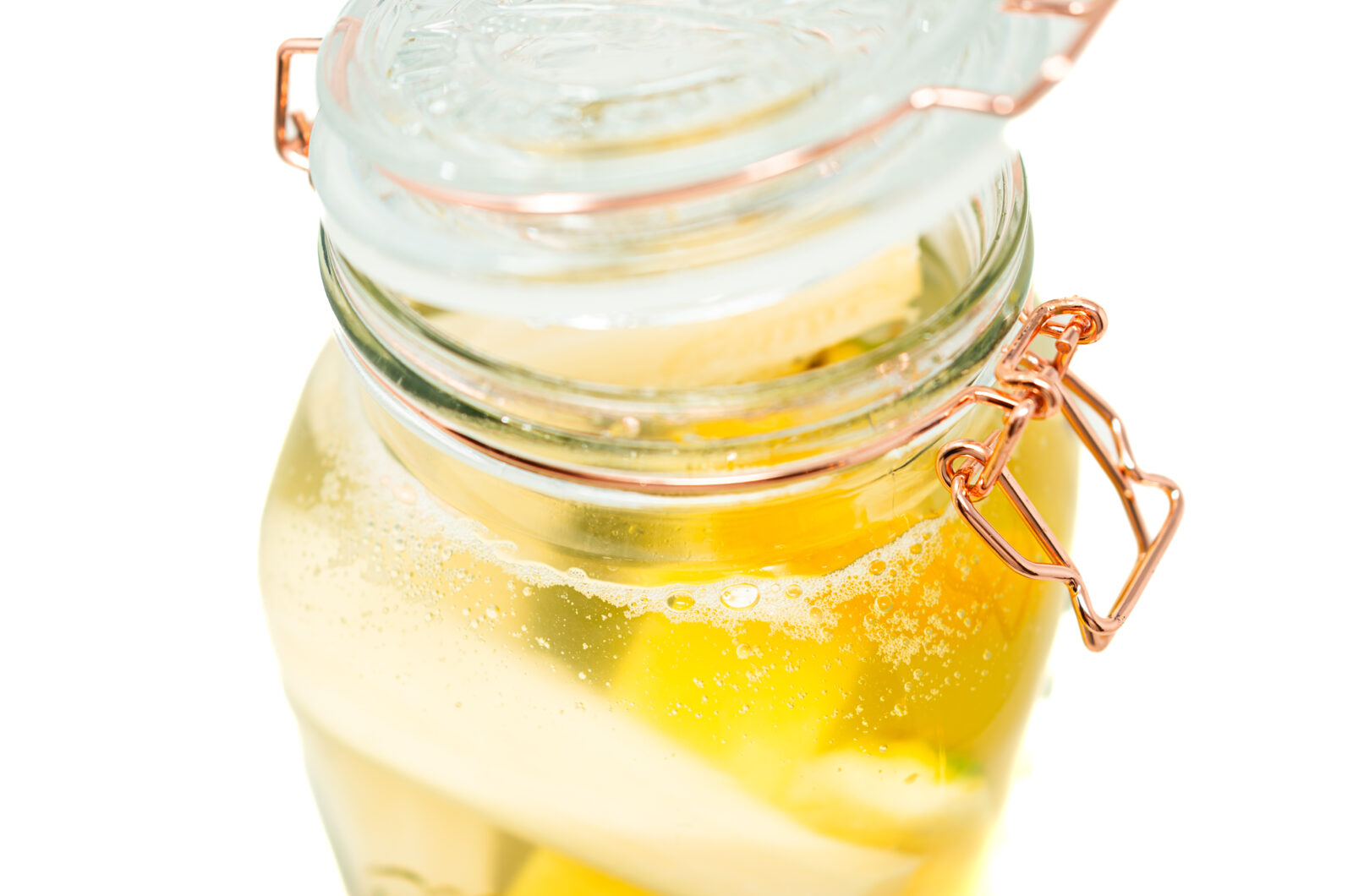
You pour the water over the pile and you wait. This is the hardest part for most. You have to watch the water turn cloudy. By the second day, the liquid loses its transparency. It becomes a living thing. By day three, you hear it. A soft, rhythmic fizzing echoes in the glass. Small white bubbles gather at the surface, crowning the pineapple skins. It smells like a tropical orchard after a heavy summer storm. When making Pineapple Sugar Cane Tepache, your nose tells you more than a timer ever could.

Bottling an Artisanal Tepache
Tasting the liquid on day three reveals the bite. It should hit the back of the tongue with a fermented tang, followed immediately by the grassy mellow of the cane. If it is too sweet, let it ride another twelve hours. If it is sharp enough to widen the eyes, it is done.
Strain the liquid through a fine mesh. Watch the golden nectar separate from the spent fibers. The liquid goes into the cold. The chill of the refrigerator snaps the yeast into a deep slumber, locking in that exact moment of balance. Pour it over heavy ice. The crackle of the carbonation is your reward for three days of observation. It is crisp. It is alive. Every glass of this Pineapple Sugar Cane Tepache is a captured timeline of heat and raw sugar.
Pineapple and Sugar Cane Tepache
4
servings72
hoursWe strip the rough armor off the fruit and split the woody stalks to build a drink from the ground up. The resulting Pineapple Sugar Cane Tepache is a sharp, hissing tonic that carries the heavy scent of a wet tropical orchard and the deep, grassy bite of raw sugar.
Keeps the screen of your device on while you cook
Ingredients
1 ripe pineapple, cored and peeled
1 stalk sugar cane, peeled and split
1 stick cinnamon
3 whole cloves
2 liters filtered water, do not use tap water
1 orange, peeled
pinch of, salt
Directions
- Prep the Base:
- Wash the pineapple thoroughly. Peel it, then separate the skin and core. Slice the core into chunks. Peel the tough outer green skin off the sugar cane and split the fibrous center into batons to expose the juice.
- Assemble the Jar:
- In a large glass vessel, layer the pineapple skins, core, sugar cane batons, orange peels, cinnamon, and cloves. Add the pinch of salt and pour in the filtered water. Ensure all ingredients are submerged (use a fermentation weight if needed). Cover with a breathable cloth or a loose lid to allow carbon dioxide to escape while keeping dust out.
- Monitor the Fermentation:
- Store the jar in a warm, dark place. You will see the transformation over 2-3 days. On the first day, the water will remain quite clear as the ingredients settle and the sugar cane begins to slowly release its sweetness into the liquid. By the second day, you will notice the liquid becoming noticeably cloudy as the wild yeast begins to consume the sugars. By the third day, the fermentation should be in full swing, characterized by a distinct layer of white foam or “fizz” forming on the surface.
- Harvest and Chill:
- After 3 days, taste the brew. It should be tangy, slightly effervescent, and smell like a tropical cider. Strain the liquid into bottles and refrigerate immediately to halt the fermentation process.
- Store and Serve:
- For the best flavor, consume your tepache within 3 to 5 days. Because this is a “live” raw product, the flavor will continue to sharpen slightly even in the fridge. Serve ice cold.
Notes
- Chlorine is a Yeast Killer: Municipal tap water is treated with chlorine to eliminate bacteria, but it will also kill the wild yeast required for fermentation. Always use filtered, spring, or distilled water to ensure your microbial colony stays healthy and active.
- Don’t skip the pinch of salt! In fermentation, a tiny amount of sodium helps draw out the juice from the fruit and acts as a flavor “amplifier” for the natural sugars in the cane.
Did you make this recipe?
Tag @hecooksco on Instagram
Like this recipe?
Follow @hecooksco on Pinterest
Pineapple Sugar Cane Tepache Kitchen Notes
Why is the white foam appearing on top of my brew?
That foam is a sign of a healthy Pineapple Sugar Cane Tepache. It is the byproduct of wild yeast consuming the sugars and releasing carbon dioxide. Simply skim it off if it becomes excessive, or stir it back in.
Can I reuse the sugar cane stalks for a second batch?
While you can reuse the pineapple rinds for a weaker second ferment, the sugar cane stalks usually give up their best sugars in the first round. For the best flavor profile, use fresh batons for every new batch.
What happens if my sugar cane tepache smells like vinegar?
If the aroma is harshly acidic, it has fermented too long or the room was too warm. At this stage, it has transitioned from a probiotic drink to a fruit vinegar. It is still usable for marinades but will be too sharp for drinking.
Do I need to add commercial yeast to this recipe?
No. The beauty of this fermented pineapple brew is that it relies entirely on the wild yeast naturally present on the pineapple skin and the raw cane. Adding commercial yeast will make it too alcoholic and strip away the subtle botanical notes.
How do I achieve a higher carbonation in the bottle?
After straining your Pineapple Sugar Cane Tepache, seal it in swing-top bottles at room temperature for 12 to 24 hours before refrigerating. This secondary fermentation traps the gas, creating a more aggressive, champagne-like fizz.