Most home cooks relegate plantains to one of two fates: smashed and fried green (tostones) or fried sweet (maduros). This recipe treats the ingredient with the same reverence usually reserved for a high-end potato purée. By boiling ripe plantains and whipping them with full-fat coconut milk and aromatics, we create a side dish that is texturally silken and complex in flavor. It creates the perfect textural counterpoint to the aggressive spice of Caribbean mains by balancing heat with creamy, tropical sweetness.
The Ingredient: The “Ugly” Stage
Success here relies entirely on the ripeness of the fruit. You are looking for plantains that appear past their prime, with deep yellow skins aggressively spotted with black. At this stage, the starches have fully converted to sugars. This provides a natural sweetness that renders added sugar unnecessary. Do not attempt this with green or firm yellow plantains. They are too starchy and will result in a gluey, savory mash rather than a light, whipped purée. If your plantains are yellow but unspotted, let them sit on the counter for another few days.
Building a Savory Backbone
The danger with using fully ripe plantains is creating a dish that veers too close to dessert. We avoid this by building a savory base of fresh ginger, garlic, and green onions sautéed in butter. These aromatics provide an essential sharp contrast to the fruit’s natural sugars. This isn’t just a sweet mash. It is a balanced, savory side dish with nuance. The ginger provides warmth, while the garlic grounds the sweetness.
The Liquid: Fat and Acid
We use full-fat coconut milk exclusively. The viscosity and fat content are necessary to achieve the whipped, velvety consistency we are after. “Light” coconut milk will result in a watery dish that lacks body. To cut through that richness, fresh lime juice is non-negotiable. It provides a bright acidic finish that keeps the palate refreshed. This ensures the dish complements, rather than competes with, rich meats like braised oxtail or jerk pork.
The Technique: Aeration
Unlike a rustic mash where lumps are acceptable, we want air. After boiling the plantains until they are falling-apart tender, we combine them with the sautéed aromatics and liquids and use an electric mixer. The goal is aeration. We whip the mixture until it is smooth, light, and emulsified. Proper whipping incorporates air for a lighter consistency and ensures the coconut milk is evenly distributed. This creates a luxe mouthfeel that feels intentional rather than improvised.
Service and Pairing
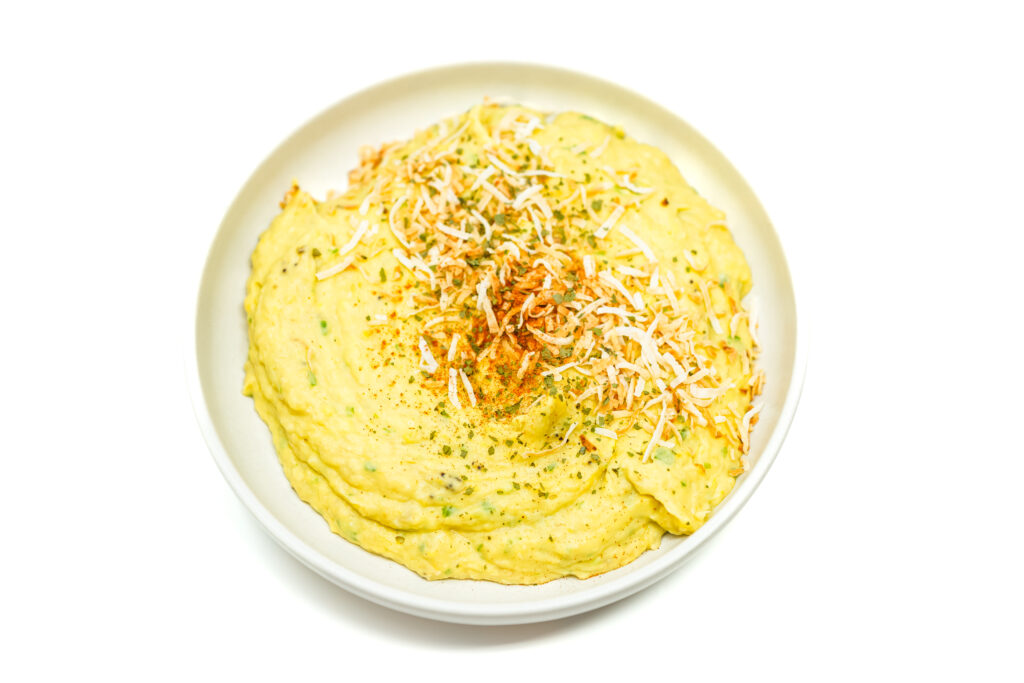
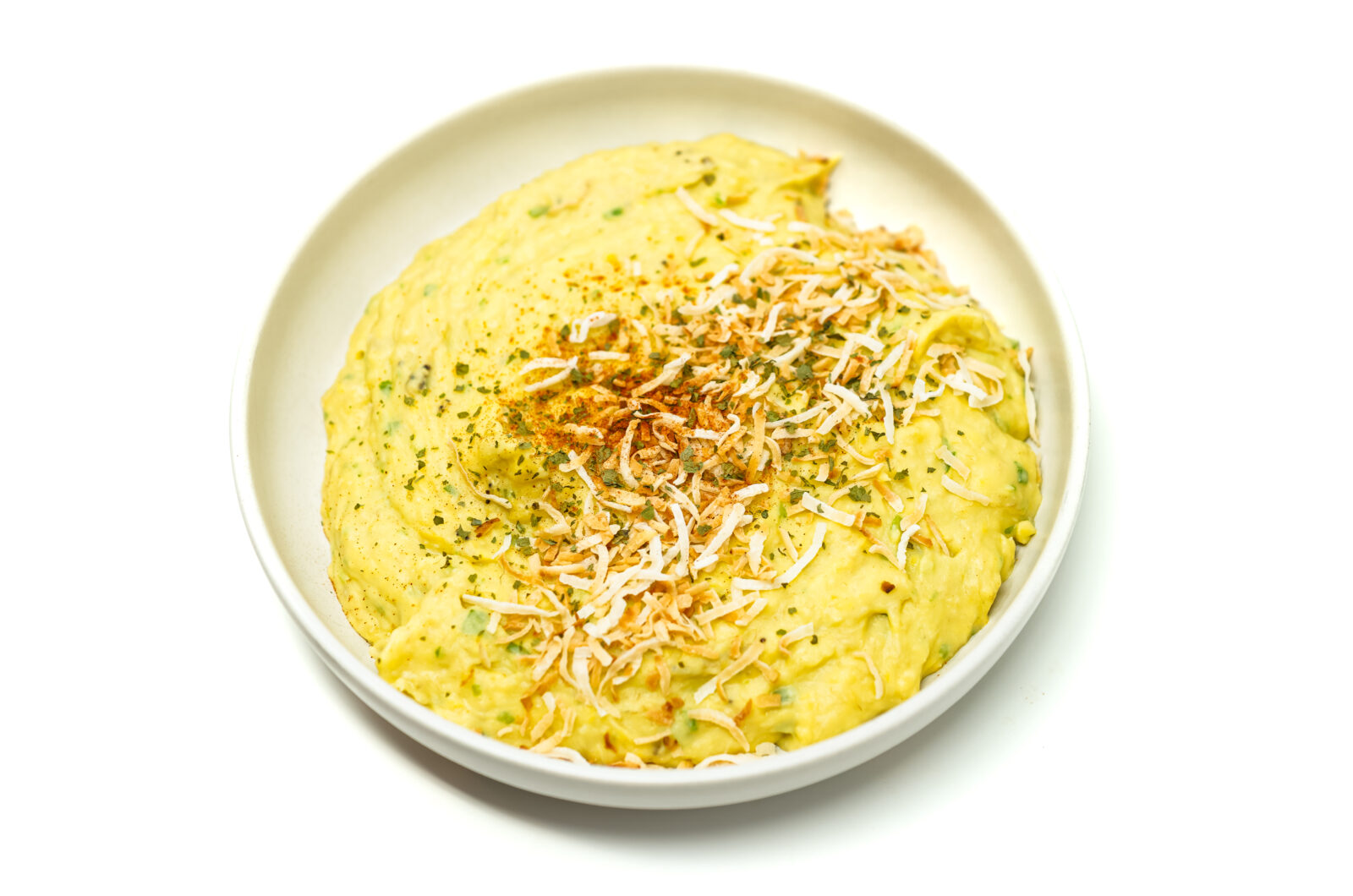
This dish is the ideal foil for heat and smoke. It stands up beautifully next to Jerk Chicken, Grilled Snapper, or Slow-Braised Pork. The sweetness tames the fire of Scotch bonnet peppers, while the creamy texture contrasts perfectly with charred proteins. Serve it in a warmed bowl topped with toasted coconut flakes for crunch and a light dusting of paprika for color. For a more polished presentation, portion it into individual ramekins with a fresh lime wedge on the side.
Caribbean Creamed Plantains
4
servings10
minutes20
minutes30
minutesCaribbean Creamed Plantains combine ripe yellow plantains with coconut milk, lime, ginger, and garlic for a sweet-savory side dish that pairs perfectly with bold Caribbean mains. It’s rich, tropical, and the kind of side that makes people ask for the recipe.
Keeps the screen of your device on while you cook
Ingredients
4 ripe yellow plantains, peeled and chopped
1/2 cup coconut milk
2 tablespoons unsalted butter
1 tablespoon ginger, freshly grated
1 clove of garlic, minced
3 green onions, chopped
1 lime, freshly juiced
to taste, salt and ground black pepper
for garnish, paprika
for garnish, toasted coconut
Directions
- Cook the Plantains:
- Bring a pot of salted water to a boil and cook the plantain chunks until tender, about 15-20 minutes. Drain and set aside.
- Sauté the Aromatics:
- Melt the butter in a small saucepan over medium heat. Add the freshly grated ginger, garlic, and green onions. Sauté for 2-3 minutes, until fragrant and softened. Whisk in the coconut milk. Let it simmer for 2-3 minutes to allow the flavors to meld.
- Blend the Plantains:
- Transfer the cooked plantains and sautéed aromatics into an electric blender. Blend until smooth and creamy. Add more coconut milk as needed to reach your desired consistency.
- Season and Serve:
- Season the plantain mixture with lime juice, salt, and ground black pepper to taste. Garnish with toasted coconut and paprika if desired.
Did you make this recipe?
Tag @hecooksco on Instagram
Like this recipe?
Follow @hecooksco on Pinterest
Frequently Asked Questions
No. This recipe relies on the natural sugar development that occurs only when the fruit is fully ripe. Yellow plantains without spots are still too starchy. They will result in a savory, firm mash rather than a light, sweet whip. If your plantains are yellow, place them in a paper bag for 2 to 3 days to accelerate the ripening process.
Gumminess is usually the result of overworking the starch. This happens if you use a food processor, which shears the starch molecules too aggressively. Always use a potato masher or a handheld electric mixer to whip the plantains. This incorporates air without turning the mixture into a paste.
You can, but you will lose the distinct Caribbean flavor profile that defines this dish. Coconut milk adds a specific nutty richness that pairs correctly with the lime and ginger. If you must use dairy, use heavy cream rather than milk to maintain the fat content needed for the texture.
No. As written, this dish uses aromatics like ginger and garlic for flavor depth, not heat. It is designed to be a cooling, creamy counterpoint to spicy main courses. If you want to add heat directly to the mash, mince a small amount of Scotch bonnet pepper and sauté it with the aromatics before whipping.
You Might Also Like
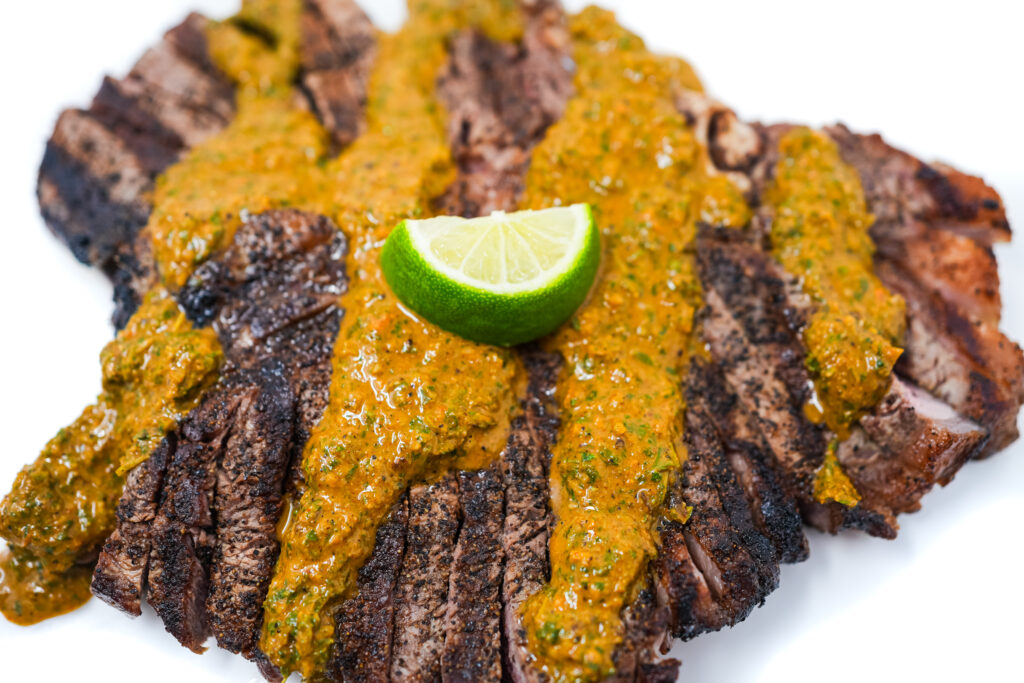
Grilled Porterhouse Steak with Jerk-Inspired Chimichurri Sauce
If you’re already diving into bold Caribbean flavors with these Caribbean Creamed Plantains, let’s take it up a notch. Imagine pairing them with a Grilled Porterhouse Steak, seared to perfection and topped with a Jerk-Inspired Chimichurri Sauce. It’s bright, herbaceous, and packing just the right amount of heat. The smoky char of the steak meets the vibrant spice of jerk seasoning, balanced by the creamy sweetness of the plantains.
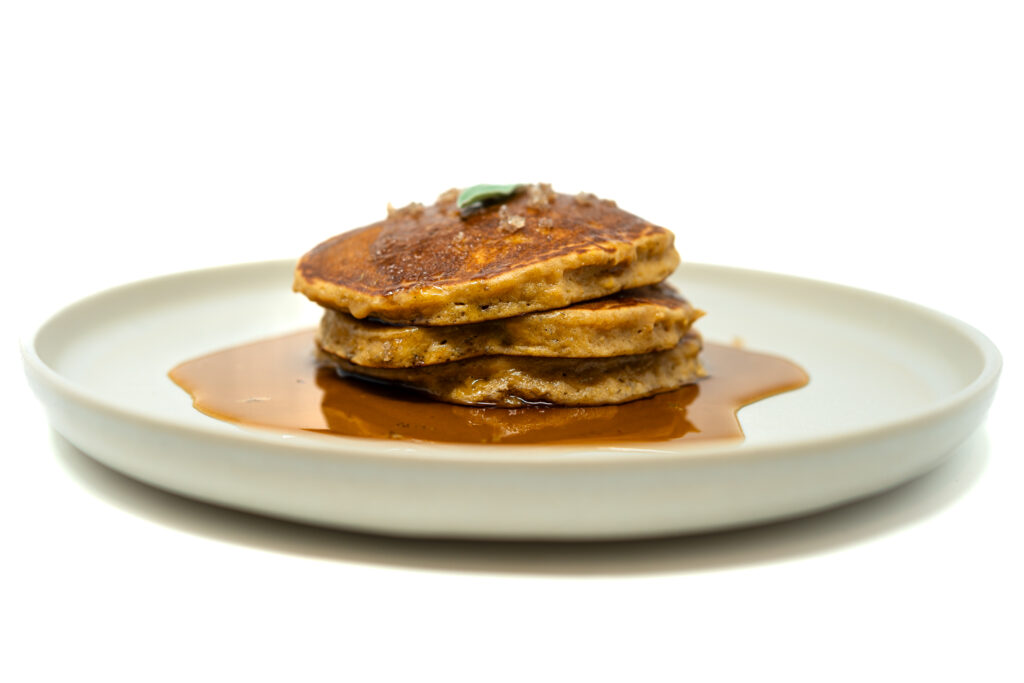
Plantain Pancakes with Coffee Liqueur Syrup
Sweet, caramelized plantains meet the richness of coffee liqueur in these golden pancakes. The syrup is simple but bold, made by melting brown sugar into the liqueur until it turns glossy and fragrant. It’s an easy way to bring a little island warmth to your morning.
New York Strip Steak Dinner Sandwich
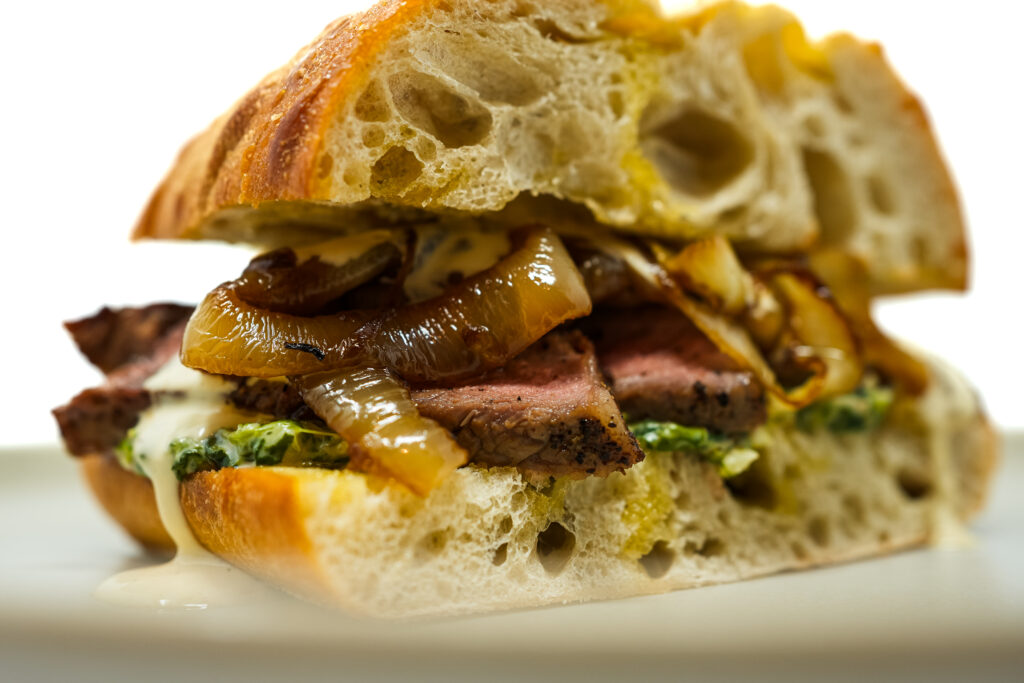
This is the move when you want steak night without the formality. New York strip cooked right, sliced thick, and layered with onions that took their time getting sweet and glossy. Wilted spinach for something green. A creamy sauce to lock it all together. Then it all gets hugged by crusty ciabatta so you can eat it without a fork telling you what to do.