
The kitchen smells like hot oil and toasted chili. There is a specific tension that comes with frying seafood. You are managing heat, time, and the delicate structure of the protein. Making Fried Mahi Mahi requires a quiet focus. You want a crust that shatters under the fork, protecting the moist, dense meat inside. This dish is about striking a harsh balance between the rich, the crisp, and the acidic.
Preparing the Fried Mahi Mahi
Mahi Mahi is a sturdy fish. It holds up to heat and carries a mild, clean flavor. When you prep it, pat the fillets bone dry. Any residual moisture will steam the breading from the inside out, ruining the texture. You are looking for an aggressive sear. Drop the coated fillets into the hot oil. Listen for that sharp, immediate hiss. Do not touch them. Let the heat do the work, turning the pale breadcrumbs into a deep, golden shell. You know the Fried Mahi Mahi is ready when the edges begin to curl slightly and the crust feels rigid against the back of your spatula. Pull it from the pan and let it rest on a wire rack. Let the oil drain. The residual heat will finish the cooking process gently.
Crushing the Fresh Guacamole
While the fish rests, you handle the fat and acid. Avocados are heavy and buttery, but they need tension to wake them up. Slice them open, remove the pits, and scoop the flesh into a stainless steel bowl. Mash them with the back of a fork. Leave some texture. A paste is boring; you want distinct bites of avocado. Fold in finely diced jalapeño for a sharp bite of heat. Mince garlic until it is almost a paste, and chop a handful of fresh cilantro. Squeeze in cold lime juice. The acid cuts the fat immediately. This fresh guacamole acts as the cool, earthy foundation that grounds the Fried Mahi Mahi.
Building the Creamy Chipotle Lime Sauce
The final element bridges the gap between the ocean and the earth. Rehydrate dried chipotles, letting them steep until pliable. Their smell is deep, smoky, and almost sweet. Blend them into a smooth paste. In a separate bowl, whisk sour cream until it loosens. Fold the chipotle puree into the cream. Watch the stark white turn into a muted, dusty brick color. Add more lime juice and a heavy grating of lime zest. The zest carries essential oils that give the creamy chipotle lime sauce a floral, piercing aroma. Taste it. It should hit you with smoke first, follow up with dairy richness, and finish with a sharp citrus sting.
Sourcing for Pan Fried White Fish
Sourcing your ingredients dictates the final result before you even turn on the stove. When buying the fish for your Fried Mahi Mahi, look for fillets that are firm to the touch with a translucent, pinkish hue. Avoid anything that smells overtly fishy. It should smell like cold saltwater. If you cannot find this specific cut, halibut or a thick cod fillet will work in a pinch. However, they lack the same structural integrity. The firm nature of this cut is what allows it to stand up to the heavy breading and the intense heat of the pan. Keep it ice cold until the moment it hits the dredging station. This guarantees the flesh stays firm while the exterior crisps.
Plating the Plate
Plating is about restraint. Smear a generous layer of the guacamole off-center on a warm plate. Lay the crispy Fried Mahi Mahi directly over the avocado. The heat of the fish will slightly warm the guacamole, releasing the smell of the cilantro and garlic into the air. Drizzle the chipotle sauce across the top of the crust, letting it pool slightly on the plate. Eat it while the crust is hot and the sauce is cold.
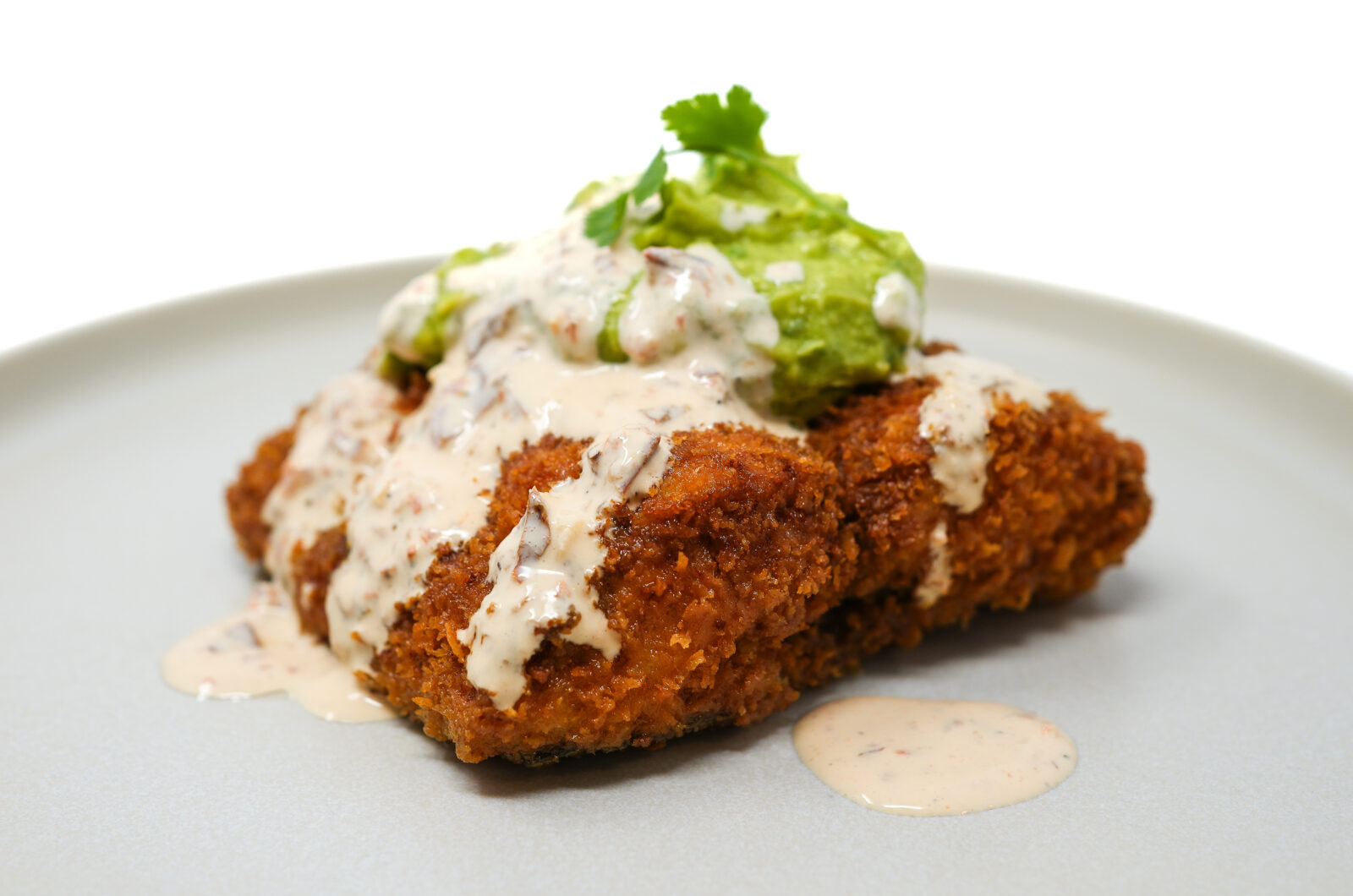
Fried Mahi Mahi with Guacamole and Creamy Chipotle Lime Sauce
4
servings30
minutes15
minutes45
minutesA bold, textured plate where perfectly crisp fish meets the cool fat of fresh avocado. Sharp citrus and smoky chili round out the edges for a grounded, sensory meal.
Keeps the screen of your device on while you cook
Ingredients
- For the Fried Mahi Mahi
4 fillets of mahi mahi
1 cup all purpose flour
2 eggs
1/4 cup heavy cream
1 cup breadcrumbs
1 tablespoon paprika
to taste, salt and ground black pepper
for frying, vegetable oil
- For the Guacamole
2 ripe avocados
1 jalapeno, finely chopped
2 cloves garlic, minced
1 lime, juiced
1 tablespoon cilantro, chopped
to taste, salt
- For the Creamy Chipotle Lime Sauce
3 dried chipotle peppers, rehydrated and chopped
1 cup sour cream
1 clove garlic, minced
1 lime, juiced and zested
to taste, salt and ground black pepper
Directions
- Prepare the Guacamole:
Scoop out the avocado flesh and mash it in a bowl. Mix in the chopped jalapeño, minced garlic, lime juice, and cilantro. Season with salt to taste and set aside until ready for use. Cover and refrigerate to allow the flavors to meld. - Prepare the Creamy Chipotle Sauce:
In a blender or a bowl, combine the rehydrated chipotle peppers, sour cream, minced garlic, lime juice, and lime zest. Blend until smooth, and then season with salt and ground black pepper taste. Set the sauce aside until ready for use. - Prepare the Mahi Mahi:
Season the Mahi Mahi fillets with salt, ground black pepper, and paprika. Combine the eggs and heavy cream in a bowl. Dredge each fillet in flour, then dip into the egg mixture, and finally coat with breadcrumbs. - Fry the Mahi Mahi:
Heat vegetable oil in a deep skillet over medium-high heat. Fry the breaded Mahi Mahi fillets until golden brown and cooked through, about 3-4 minutes per side. Remove the fillets from the skillet and drain on paper towels. - Serve:
Place the fried Mahi Mahi fillets on plates, accompanied by a scoop of guacamole.
Drizzle the Creamy Chipotle Lime Sauce over the fillets. Garnish with a sprig of cilantro and/or a lime wedge.
Did you make this recipe?
Tag @hecooksco on Instagram
Like this recipe?
Follow @hecooksco on Pinterest
Frequently Asked Questions
Why is the breading falling off my Fried Mahi Mahi in the pan?
Moisture is the enemy of a good crust. If the fish is wet before you dredge it, steam builds up between the flesh and the breading, causing it to separate. Pat the fillets bone dry with a paper towel before coating them, and make sure your oil is thoroughly heated before dropping the fish in.
How do I prevent the fresh guacamole from oxidizing and turning brown?
Air exposure causes avocado to brown rapidly. The lime juice mixed into the guacamole helps slow this down. To store it, press a piece of plastic wrap directly flush against the surface of the guacamole to block out all oxygen before refrigerating.
What is the optimal oil temperature for cooking crispy mahi mahi?
You want your oil sitting right around 350°F to 375°F. If the oil is too cold, the breading acts like a sponge and absorbs the grease. If it is too hot, the exterior will burn long before the dense center of the fish finishes cooking.
Can I use canned chipotles in adobo instead of dried peppers for the sauce?
Yes. Canned chipotles in adobo are already rehydrated and pack a lot of vinegar and tomato flavor. If you use them, start with one pepper and a spoonful of the sauce. Taste as you blend, as they can quickly overpower the sour cream and lime.
How do I know when the thick fish fillets are fully cooked inside?
Mahi Mahi is done when the flesh turns completely opaque and flakes away easily with gentle pressure from a fork. If you are using a digital thermometer, pull the fish from the oil when the internal temperature hits 135°F to 140°F. The carryover heat will finish the job while it rests on the wire rack.


One Comment
Pingback: Heirloom Tomato Salsa - He Cooks.™